Comply with the new tax system or else!
Australia is doubling penalties for tax misconduct — but the same bill also rewrites rules complex enough to hand sophisticated advisers new edges to exploit.

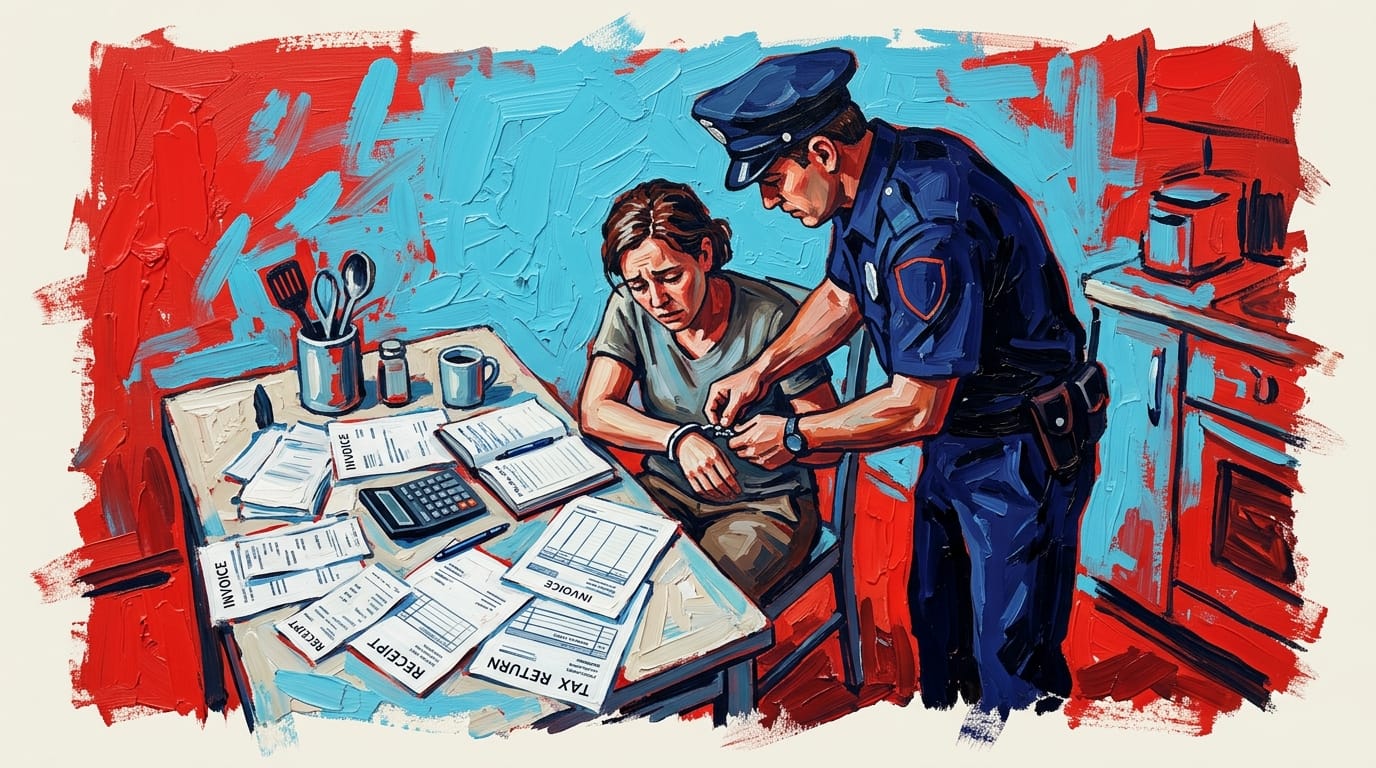
The Albanese Government has chosen an interesting moment to get tough on tax cheats. In the same legislative package that sharpens the foreign resident capital gains tax regime and tidies up Australia's new merger control rules, Canberra is also doubling down on penalties for tax practitioners who misbehave. Criminal sanctions for unregistered preparers, new civil penalties for code breaches, registration bans extended to a decade. The message is clear enough: the era of light-touch accountability for tax advisers is over.
The PwC scandal made a stronger regulator politically unavoidable
The immediate provocation here is no mystery. The PwC tax leaks scandal, in which a senior partner used confidential government briefings to help multinational clients sidestep new tax laws before they passed, was a direct demonstration of what happens when the advisory profession operates without meaningful consequences. The Tax Practitioners Board, it turned out, had the powers of a strongly-worded letter. The Government is now proposing to give it the powers of a regulator.
On those terms, the reform is defensible. The changes address specific recommendations from the TPB's own review, which is the right way to design enforcement architecture. Infringement notice penalties, enforceable voluntary undertakings, the ability to suspend a practitioner's registration while an investigation is still running: these are practical tools, not decorative ones. Doubling the maximum registration ban from five years to ten removes a perverse incentive that allowed serious misconduct to be treated as a career interruption rather than a career-ending event.
So the framework is coherent. The question is what it is being asked to do.
Every reform draws a new boundary, and boundaries are where avoidance begins
Tax law and complexity have a relationship that runs in one direction. Every reform introduces new definitions, new thresholds, new categories of transaction, and each of those creates a boundary. Boundaries, in tax, are where the interesting work happens. The foreign resident CGT changes in this very bill are a case in point: the reforms bring Australia's rules into closer alignment with OECD model rules, extend CGT obligations to a wider class of assets, and introduce new concessions for renewable energy investment. Each of those design choices is a potential edge. The concession for renewables investment, however sensible in principle, is now a structure waiting to be tested.
This is not an argument against tax reform. It is an observation about what tax reform produces. The history of Australian tax law is partly a history of integrity measures generating their own avoidance literature. The original negative gearing rules did not anticipate the scale of what followed. The trust distribution regime that the ATO has spent years fighting over was not built by people who meant to create a minimisation vehicle. Complex systems developed by humans are gamed by humans, and the most sophisticated operators are rarely the ones who end up in the ATO's enforcement queue.
Penalties work best when the behaviour they target is clearly defined and the people committing it know they are doing something wrong.
Penalties work best when the behaviour they target is clearly defined and the people committing it know they are doing something wrong. They work less well when the line between aggressive planning and honest interpretation is genuinely blurry, which in a tax system of this complexity it often is. Criminal sanctions for unregistered preparers are aimed squarely at people who know they are operating outside the law. Civil penalties for breaches of the professional conduct code are aimed at a harder problem: advisers who push right to the edge of what the rules permit, and occasionally through it.
Shifting the cost of being caught is real — just not real enough for the people who matter
The Government cannot solve that problem through penalties alone, and to be fair, it is not claiming to. The broader consultation on regulating accounting, auditing and consulting firms suggests Canberra understands the architecture of professional capture better than it did before PwC made the failure visible. But consultation is not legislation, and legislation is not compliance.
What the new framework does do is shift the cost of being caught. That matters at the margin. Some advisers who might previously have thought the risk acceptable will now recalculate. Some tax preparation mills operating outside the registration system will either register or close. These are genuine gains.
The harder truth is that the people who caused the original problem, the senior advisers in large firms with sophisticated clients and intricate structures, operate in a world where the primary constraint has never been the penalty regime. It has been the complexity they themselves help to create. You cannot out-sanction that with a doubled registration ban.
A stronger TPB is worth having. The reforms are a reasonable response to a real institutional failure. But anyone who thinks tighter penalties will stop the next PwC is reading the incentives wrong.
Sources
Treasury Ministers — Stronger penalties for tax misconduct
Frequently Asked Questions
What did the PwC tax scandal actually involve?
A senior PwC partner used confidential government briefings — received while advising on new tax laws — to help multinational clients structure around those laws before they passed. The Tax Practitioners Board lacked meaningful powers to respond, which is what these reforms are designed to fix.
What are the new penalties for tax practitioners in Australia?
The reforms introduce criminal sanctions for unregistered tax preparers, civil penalties for breaches of the professional conduct code, enforceable voluntary undertakings, and the ability to suspend a practitioner's registration during an active investigation. Maximum registration bans are doubled from five years to ten.
Why won't tougher penalties stop sophisticated tax avoidance?
The most sophisticated tax avoidance operates at the boundary of what the law permits, not clearly outside it. Penalties are most effective when the behaviour being targeted is unambiguously wrong; they are far less effective when the line between aggressive planning and legitimate interpretation is genuinely contested. The people responsible for the PwC scandal were not constrained primarily by the penalty regime.
How does tax reform create new avoidance opportunities?
Every reform introduces new definitions, thresholds, and categories of transaction — and each creates a boundary. Boundaries in tax law are where planning activity concentrates. The same bill that tightens enforcement also introduces new concessions, including one for renewable energy investment, and each design choice is a potential edge that sophisticated advisers will test.
Is the Tax Practitioners Board getting more power?
Yes. The reforms give the TPB practical enforcement tools it previously lacked: infringement notice penalties, the ability to suspend registrations mid-investigation, and enforceable undertakings. The changes address specific recommendations from the TPB's own review, which suggests the new architecture is calibrated to identified institutional failures rather than designed for political optics.