Nuclear Gamble: Coalition Bets $Billions on 2050 Deadline
Australia has never built a nuclear plant, has no trained workforce, and currently bans the technology — so what does $118 billion actually buy?

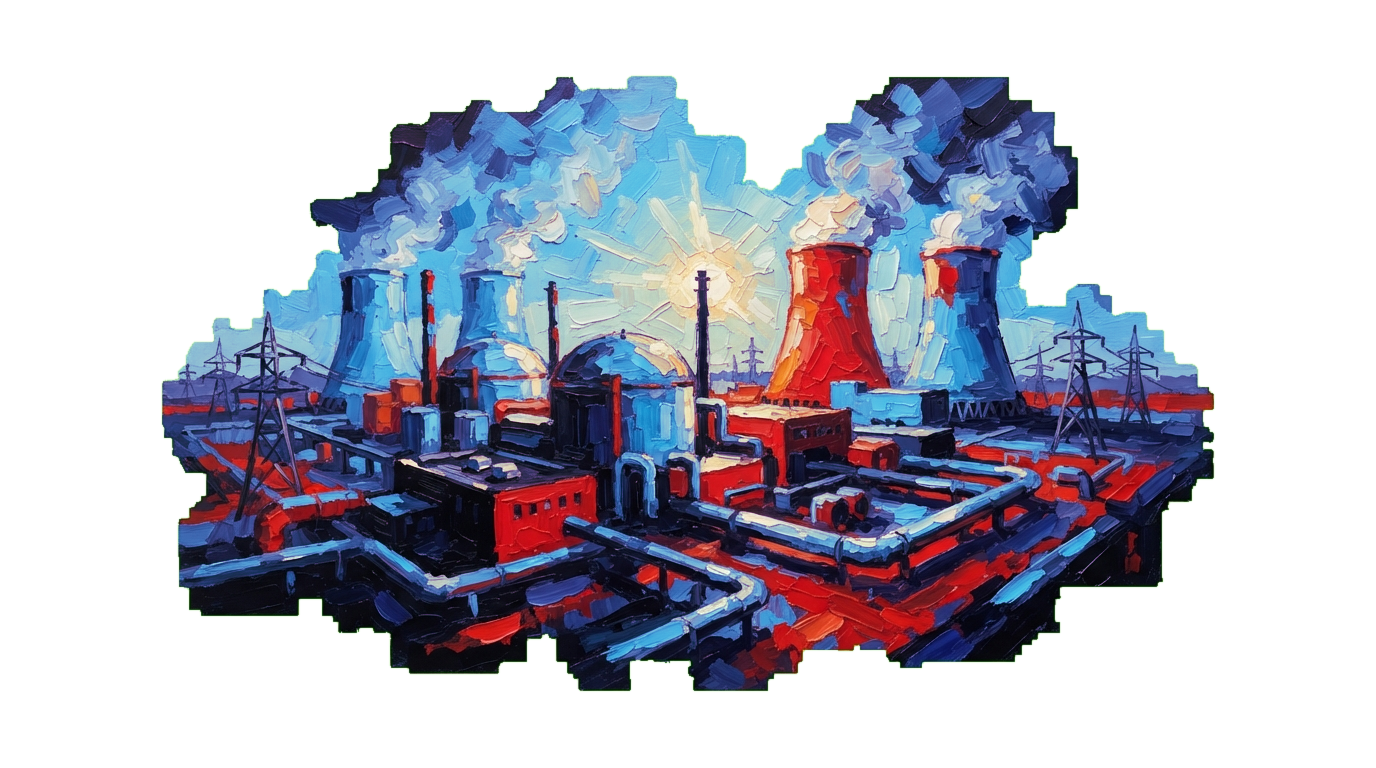
The Coalition went to the 2025 election with a commitment to build seven nuclear power plants across Australia at a cost of $118.2 billion in government equity by 2050, with the first reactors producing power as early as 2035. It is the largest single state-directed energy infrastructure program in Australian history, and it lands in a country that has never built a civilian nuclear plant, has no trained nuclear workforce to speak of, and currently bans the technology outright.
The structure concentrates risk in a familiar and uncomfortable way
The Parliamentary Budget Office costed the commitment at $36.4 billion in government equity through to 2035, rising to $118.2 billion by 2050. The vehicle is a new Government Business Enterprise, established and financed by the Commonwealth, that would partner with international nuclear operators to own and run the plants. Two "establishment projects" would be chosen first, using either large reactor designs like the AP1000 or APR1400, or small modular reactors. The remaining five sites would be built out across the following fifteen years.
The structure concentrates risk in a familiar and uncomfortable way. A GBE with a captive public balance sheet and no private competitors has weak incentives to contain costs. The NDIS started with a ten-year estimate of $22 billion; it is now tracking at multiples of that figure. Snowy Hydro 2.0 was budgeted at $2 billion and is currently projected to cost around $12 billion, with completion delayed by years. Neither comparison is exact, but the pattern they share, government-owned infrastructure projects with optimistic upfront estimates and limited accountability mechanisms once construction begins, is directly relevant here.
A country that banned nuclear while praising its low-carbon credentials was always running a position built more on sentiment than arithmetic.
Nuclear has actually worked at scale — the problem is this particular design
What makes nuclear genuinely different from those comparisons is that it has actually worked at scale, repeatedly, over long periods, in comparable Western democracies. France generates around 70 per cent of its electricity from nuclear. Plants in the United States have operated for more than 60 years. The technology is not theoretical. The carbon credentials are among the best of any dispatchable generation source. And the argument that nuclear is inherently too expensive collapses quickly when you compare it to the full system cost of intermittent renewables, including the storage, transmission, and firming capacity that a grid running on wind and solar actually requires to be reliable.
The honest problem with the Coalition's proposal is not that nuclear is unworkable. It is that this particular design has gaps that matter. The regulatory framework does not yet exist. ARPANSA would need to be significantly expanded to licence and regulate civilian plants, a process that takes years in countries with existing programs. There is no trained workforce. There is no domestic nuclear fuel supply chain. Community consultation at all seven sites has not begun. And the sites themselves, mostly on the footprints of retiring coal plants, have never been assessed for nuclear suitability.
The 2035 target requires things to be stood up from scratch at a pace no comparable country has managed
The 2035 target for first power requires all of those things to be stood up from scratch at a pace that no comparable country has managed in recent decades. The United Kingdom's Hinkley Point C, using the same AP1000-class technology, broke ground in 2017 and is not expected to generate power until the late 2020s, over a decade after planning began, in a country with existing nuclear expertise and an established regulator. That is not an argument against building nuclear. It is an argument for being clear-eyed about what "2035" actually means.
Small modular reactors carry their own uncertainty. They are commercially unproven at scale. No country has yet deployed SMRs in commercial fleet operations. The cost-per-megawatt projections that make them attractive are based on manufacturing efficiencies that only materialise once production volumes are established. Being first to build them in volume is a reasonable bet if you believe the technology will mature. It is a long way from a guarantee.
The alternative path has not been risk-assessed with the same rigour
None of this means the alternative is obviously better. Renewables-led transition has its own cost overruns, its own timeline slippage, and a growing set of questions about system reliability and the true cost of storage at grid scale. A country that banned nuclear while praising its low-carbon credentials was always running a position built more on sentiment than arithmetic. The Coalition at least named a number and submitted it for independent scrutiny. That number is very large, the timeline is very tight, and the structural risks are real. But so is the problem it is trying to solve.
The question worth asking is not whether $118 billion on nuclear is a gamble. It clearly is. The question is whether the alternative path has been risk-assessed with the same rigour, and whether the cost of getting it wrong runs in the same direction.
Sources
Frequently Asked Questions
How much would Australia's nuclear power program cost taxpayers?
The Parliamentary Budget Office independently costed the Coalition's commitment at $36.4 billion in government equity through to 2035, rising to $118.2 billion by 2050. The money would be injected into a new Government Business Enterprise that would own and operate all seven plants.
When would Australia's first nuclear power plant actually produce electricity?
The Coalition's target is 2035 for first power from one of two initial 'establishment projects.' That timeline requires Australia to build a regulatory framework, train a workforce, establish a fuel supply chain, and complete community and site assessments for technology it has never used — all from scratch, at a pace no comparable country has achieved in recent decades.
Why do Australian nuclear power cost estimates keep changing?
The $118.2 billion figure is the PBO's independent costing of the Coalition's commitment, not a final construction estimate — the actual cost depends on which reactor technology is chosen, how quickly the regulatory framework is built, and whether construction stays on schedule. Large government-owned infrastructure projects in Australia, including Snowy Hydro 2.0, have historically run well beyond their original estimates once construction begins.
Are small modular reactors a proven technology?
No country has yet deployed small modular reactors in commercial fleet operations. The cost projections that make SMRs attractive depend on manufacturing efficiencies that only materialise once production volumes are established, meaning the economics are unproven at the scale the Coalition's proposal would require.
Is nuclear power cheaper than renewables in Australia?
This is genuinely contested. The article notes that comparing nuclear directly to wind or solar understates the full system cost of renewables, which includes storage, transmission, and firming capacity needed to make an intermittent grid reliable. The CSIRO's GenCost report, which the Coalition has disputed, is the main published source for this comparison, but no settled consensus exists on the full lifecycle system cost.