Senate launches inquiry into AI data centres as power demands collide with climate goals
Australia's Senate is investigating AI data centres — but the real question is whether clean energy targets will bend to accommodate them.

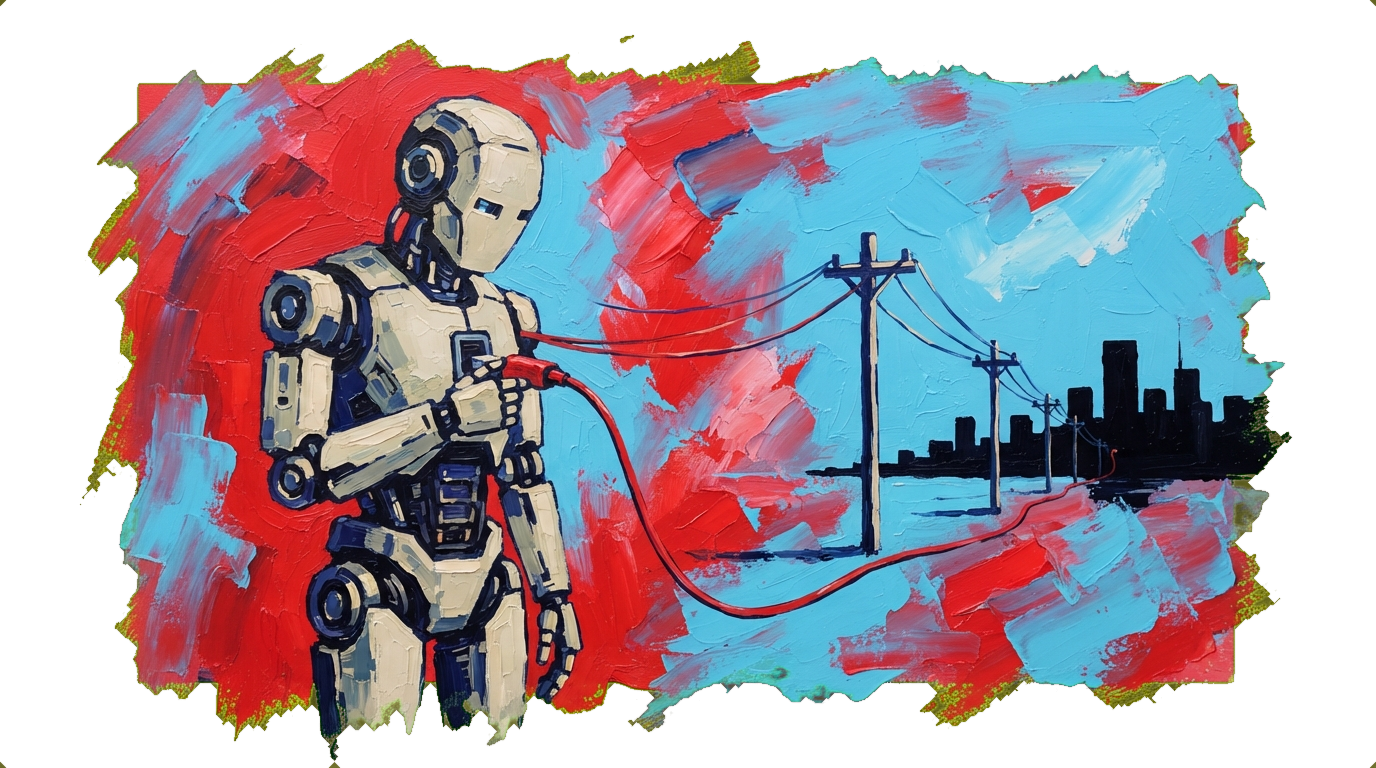
Australia's Senate has opened an inquiry into artificial intelligence data centres, and the question sitting quietly beneath the formal terms of reference is one the government has not yet answered plainly: is the grid there to serve the energy transition, or is the energy transition there to serve the grid?
Australia's renewable build is already straining the grid — AI load arrives at the worst possible moment
The inquiry, referred to the Senate Environment and Communications Committee under the 48th Parliament, arrives at an awkward moment. The government has staked its economic credibility on becoming a renewable energy superpower, with legislated emissions targets and a grid transformation that is already straining the engineering limits of the transition. Into that picture walks an industry with an almost insatiable appetite for firm, reliable, round-the-clock power, the kind of load profile that does not pair neatly with the intermittent generation Australia is racing to build.
Data centres do not just use a lot of electricity. They use it continuously, at high density, in locations that suit the industry's needs for connectivity and cooling rather than the grid's need for distributed, manageable load. A large hyperscale facility can draw several hundred megawatts without interruption, every hour of every day. At scale, a cluster of such facilities in a single region does not just add to peak demand, it reshapes the demand curve in ways that can stress transmission infrastructure and push up wholesale prices for every other user on the network.
At scale, a cluster of such facilities in a single region does not just add to peak demand, it reshapes the demand curve in ways that can stress transmission infrastructure and push up wholesale prices for every other user on the network.
Ireland's data centre lesson is a warning, not a template
The global context makes Australia's dilemma sharper. The United States is already experiencing what analysts have started calling a "data centre power crisis," with utilities in Virginia, Texas, and Georgia warning that planned AI facilities will require generation capacity equivalent to entire cities. Some jurisdictions have begun imposing moratoriums on new connections. Ireland, which became a European hub for hyperscale computing, has watched data centres grow to consume roughly a fifth of the country's total electricity. The regulator there eventually had to restrict new connections in Dublin because the grid simply could not absorb more.
Australia is not Ireland, and the comparison should not be stretched too far. The National Electricity Market covers a much larger landmass with more headroom for distributed generation, and the government's renewable build programme, if it proceeds at pace, will add significant new capacity through the decade. The question is whether it adds capacity fast enough, and in the right places, to absorb what the AI industry is proposing.
The inquiry's real question is which constraint comes first
That is where the two framings of this inquiry diverge in practice. If the government's working assumption is that the clean energy transition sets the constraint, then data centre growth gets approved up to the point the renewables pipeline can support it, demand is shaped to match supply, and the grid's integrity is treated as non-negotiable. Operators who want firm power would need to procure their own storage or generation, or accept interruptible supply arrangements.
If, on the other hand, attracting AI investment is the animating goal, and the energy system is expected to flex around it, the logic runs in the opposite direction. Approvals come first, the grid investment follows, and if that investment requires extending the life of dispatchable fossil generation to maintain system stability, that becomes a pragmatic concession. The economic case writes itself: data centres bring jobs, sovereign capability in AI infrastructure, and tax receipts. The climate cost, like most dispersed costs, is harder to attribute to any single decision.
The trade-off is real on both sides — but voters deserve to see it made explicitly
Neither framing is obviously wrong as a matter of values. A country that cannot keep the lights on for a hyperscale data centre will not attract hyperscale data centres, and there is a genuine national interest in having some of that infrastructure onshore rather than entirely dependent on foreign-owned facilities. The economic opportunity is real. But so is the risk that a series of individually approved projects adds up to a grid transformation that looks nothing like the one voters were promised, and that serves a narrower set of interests than the public cost would justify.
Senate inquiries have a way of surfacing these tensions without resolving them. What this one can do, at minimum, is force the government to state its ordering of priorities clearly enough that Australians can judge whether the trade-off being made is the one they would have chosen. That kind of clarity has been in short supply. It would be a useful place to start.
Sources
Note: The Australian Parliament House source page for this inquiry could not be fetched during research. The inquiry's existence and terms of reference are drawn from the original source URL provided. Readers are encouraged to consult the primary source directly.
Frequently Asked Questions
What is the Australian Senate inquiry into AI data centres about?
The Senate Environment and Communications Committee is examining the growth of artificial intelligence data centres and their implications for Australia's electricity grid. The core tension is whether data centre expansion should be constrained by the pace of the clean energy transition, or whether the energy system should be built around what AI investment demands.
Why do AI data centres put pressure on the electricity grid?
Unlike most electricity users, large hyperscale data centres draw hundreds of megawatts continuously, every hour of every day. That constant, high-density load does not match well with intermittent renewable generation, and a cluster of such facilities in one region can reshape the demand curve in ways that stress transmission infrastructure and push up wholesale electricity prices.
What happened in Ireland with data centres and electricity?
Ireland became a European hub for hyperscale computing, and data centres eventually grew to consume roughly a fifth of the country's total electricity. The regulator ultimately had to restrict new grid connections in Dublin because the network could not absorb further demand.
Could AI data centres in Australia lead to coal and gas plants staying open longer?
That is one of the risks the Senate inquiry is implicitly examining. If approvals for large data centres outrun the renewables pipeline, maintaining grid stability may require keeping dispatchable fossil generators online longer than the emissions targets would otherwise allow — a concession that could be made incrementally, project by project, without ever being stated as a policy choice.
Why does it matter whether Australia hosts its own AI data centres?
There is a national interest argument that having AI infrastructure onshore reduces dependency on foreign-owned facilities and supports sovereign capability in a strategically significant technology. The countervailing concern is that the public cost — in grid investment and potential climate trade-offs — may not be proportionate to the benefit if the terms of those approvals are not made explicit.