ATO struggles to enforce small business tax
The ATO has $35.9 billion in collectable small business debt and an enforcement rate that has more than halved — and the auditors want to know why.

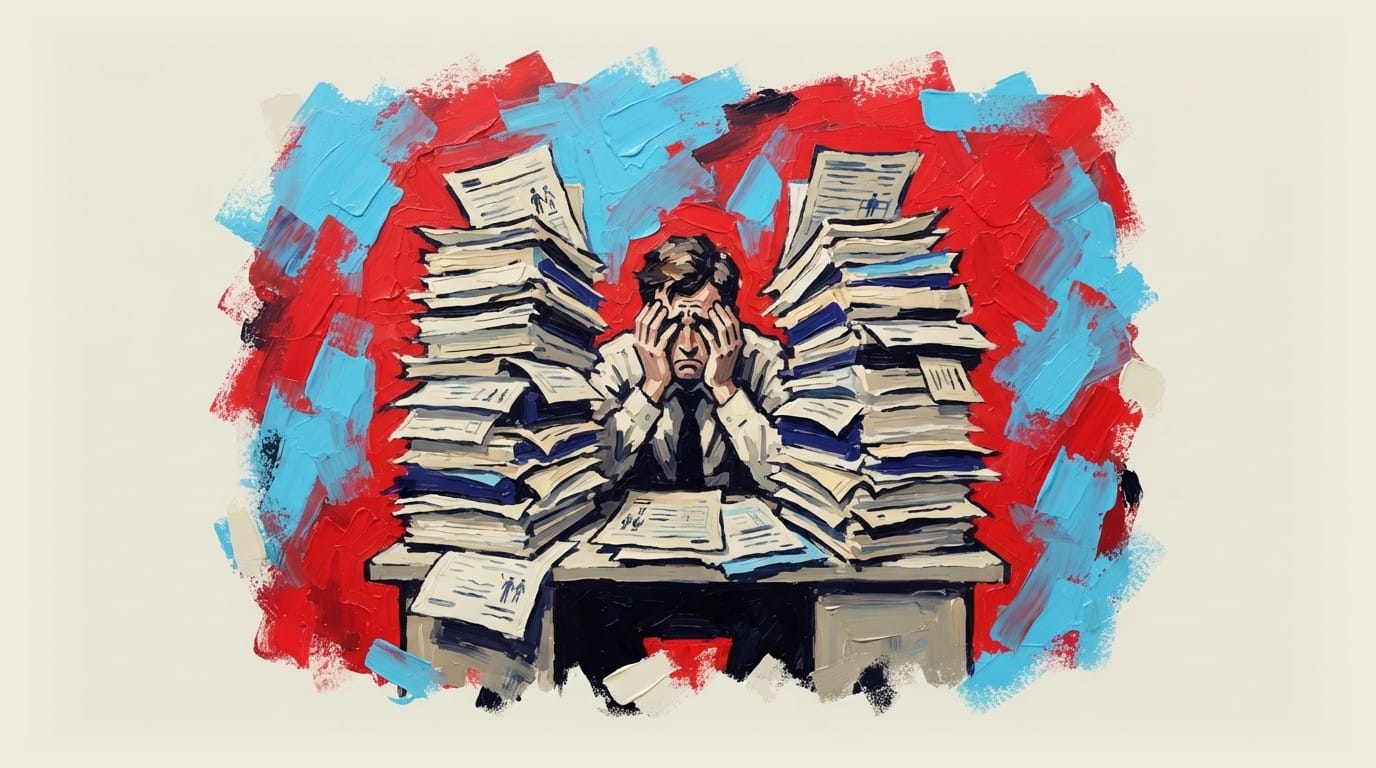
There is $35.9 billion in small business tax debt sitting on the ATO's books right now, undisputed and collectible, and the agency tasked with recovering it has admitted, in its own internal assessment, that the situation is out of tolerance. That is not a bureaucratic euphemism. It is a tax authority telling an auditor that it has lost control of a core function.
A decade of defensible decisions that added up to a crisis
The Auditor-General's report, published on 30 June 2026, is a careful document. It does not accuse the ATO of incompetence or bad faith. What it finds is more structural than that. Small business collectable debt has grown by $19.4 billion since 2018-19. The proportion of debt collection interactions that involved firm enforcement action, garnishee orders, director penalty notices, formal directions to pay, fell from 1.2 per cent in 2018-19 to just 0.5 per cent in 2024-25. The ATO removed small business tax performance as a focus area from its corporate plan in 2024-25, even as the debt pile grew. There are no internal benchmarks for reducing small business debt volumes. The audit made eight recommendations. The ATO agreed to all of them.
That last detail is instructive. An agency that agrees to every finding, including the finding that it lacks basic performance targets for a core function, is not fighting the diagnosis. It knows the problem. The question is why the problem persists.
Part of the answer is external. The ATO did reduce its enforcement activity during the pandemic, and reasonably so. Chasing tax debts from businesses fighting for survival during COVID lockdowns would have accelerated insolvencies and produced worse outcomes for everyone, including the revenue. Then came natural disasters, then economic shocks, and now, in April 2026, a fresh pause on some compliance actions in response to the fuel price impact of Middle East conflict. Each of those decisions, taken individually, is defensible. Taken together, they add up to a decade of softened enforcement and a debt book that has roughly trebled.
The compliance burden punishes the businesses that try
But the other part of the answer has nothing to do with external shocks. It has to do with the system itself. GST and Pay As You Go Withholding make up the largest share of the collectable debt. These are not complex avoidance schemes. They are obligations that small businesses understand in principle but struggle to meet in practice, partly because managing cash flow, payroll, BAS statements, and income tax simultaneously is a serious administrative load for a business with two or three employees and no in-house accountant. The compliance burden does not cause businesses to decide not to pay. It causes them to fall behind, lose track, dispute figures, and eventually accumulate debts that compound.
The non-compliant business can price lower, invest more, or simply survive longer. The compliant business bears the full cost of following the rules.
This is the structural problem that a performance audit cannot fix. The Coalition's recent small business tax proposals centre on expanded instant asset write-offs, useful at the margin, but they do not address the underlying architecture. Australia's tax system has been layered over decades, with each successive government adding provisions, exemptions, thresholds, and conditions without revisiting what was already there. The result is not a system that small businesses find difficult to game. It is a system that small businesses find difficult to comply with even when they are trying.
Non-compliance is a competitive advantage the tax system creates
The fairness argument in the audit is the one that should concentrate minds. When some businesses fall behind on tax and face limited enforcement, they gain a financial advantage over competitors who pay on time. The non-compliant business can price lower, invest more, or simply survive longer. The compliant business bears the full cost of following the rules. That is not a victimless outcome. It is a distortion that the tax system itself creates by being too complex to enforce evenly.
A Productivity Commission-style review of the tax system has been recommended, deferred, and quietly shelved so many times it has become a political joke. But the joke has a real cost. It is sitting on the ATO's balance sheet: $35.9 billion from 1.3 million small businesses, averaging $26,797 each, with an enforcement rate that would embarrass a council parking inspector. Until the system is simple enough to comply with and enforce consistently, audits like this one will keep arriving, the ATO will keep agreeing with the findings, and the number will keep growing.
Sources
Australian National Audit Office — ATO Management of Small Business Collectable Debt
Frequently Asked Questions
How much does the average small business owe the ATO?
The ATO is currently carrying $35.9 billion in collectable small business debt across roughly 1.3 million businesses, which works out to an average of $26,797 per business. This debt is undisputed — meaning it is not under appeal — and legally recoverable.
Why is the ATO not collecting small business tax debt more aggressively?
Enforcement actions have fallen sharply, from 1.2 per cent of debt interactions in 2018-19 to just 0.5 per cent in 2024-25, partly because the ATO repeatedly paused compliance during COVID, natural disasters, and other economic shocks. The ATO also removed small business tax performance as a focus area from its corporate plan and has no internal targets for reducing the debt.
What types of tax make up most of the small business debt?
GST and Pay As You Go Withholding account for the largest share of collectable small business debt. These are not avoidance schemes — they are routine obligations that businesses understand but struggle to meet because managing cash flow, payroll, and BAS statements simultaneously is a heavy administrative burden for firms without in-house accountants.
Does unpaid small business tax hurt other businesses?
Yes. When enforcement is weak, businesses that fall behind on tax gain a financial advantage over competitors who pay on time — they can price lower, invest more, or sustain losses longer. This is a market distortion created by the tax system's own complexity, not a victimless outcome.
What did the ANAO recommend and did the ATO accept the findings?
The June 2026 audit made eight recommendations covering enforcement targets, performance benchmarks, and compliance strategy. The ATO agreed to all eight — an unusual level of concession that signals the agency recognises the problem but has not yet resolved why it persists.