Audit finds government aren’t good at building homes.
Australia's flagship $10 billion social housing program is three years in — and 96 per cent short of its target. The ANAO has now put that on the record.

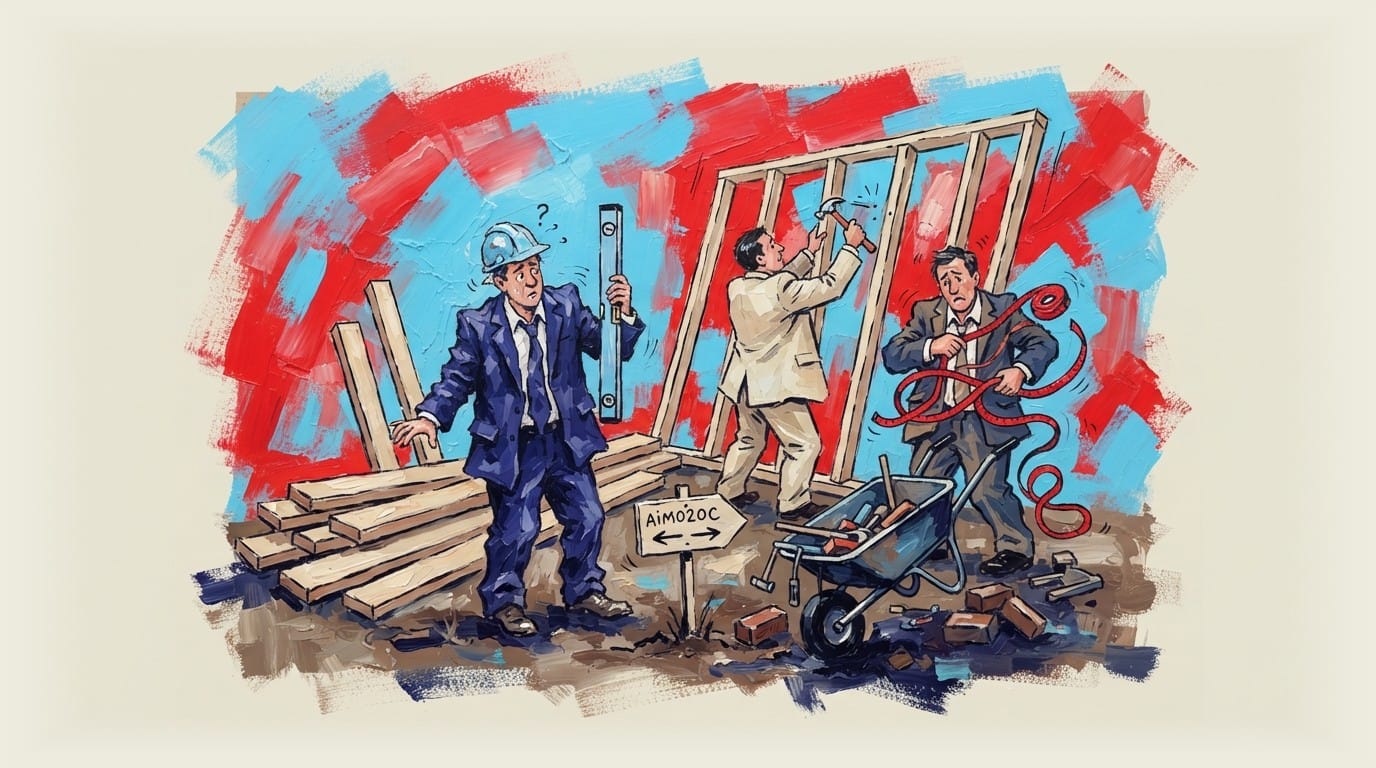
The government set out in 2022 to build 40,000 new social and affordable homes by mid-2029. As of May this year, 1,432 are done. That is 3.6 per cent of the target, with three years left on the clock.
The audit's verdict: the paperwork was fine, the program is struggling
The Australian National Audit Office released its performance audit of the Housing Australia Future Fund (HAFF) and the National Housing Accord Facility (NHAF) last week. The audit's summary verdict is politely devastating: Treasury's design was "largely effective," but its delivery arrangements are only "partly effective." In Canberra audit language, that is not a compliment. It means the paperwork was mostly fine and the actual program is struggling.
The numbers do the heavy lifting. The government forecast in April 2026 that 20,000 homes, half the total target, will be completed by 30 June 2028. The full 40,000 were supposed to arrive by 30 June 2029. Halving the completion rate over most of the program's life, and still needing the remaining 20,000 homes built in a single final year, is a schedule that deserves scrutiny it has not yet received in public debate.
Halving the completion rate over most of the program's life, and still needing the remaining 20,000 homes built in a single final year, is a schedule that deserves scrutiny it has not yet received in public debate.
The cost picture is equally pointed. Treasury estimates the average government support for a single dwelling under the HAFF and NHAF, measured across the 25-year subsidy period in nominal terms, is $770,387. That is the price of solving the problem through a government program rather than through a functioning housing market, and it assumes the homes actually get built on time, which the current trajectory does not support.
Five failures, five agreed recommendations, and the question of whether any of it is fast enough
The ANAO made five recommendations addressing how Treasury ran the program. Governance, risk management, and assurance arrangements were all established late. Monitoring and reporting systems are still maturing and do not yet provide, in the audit's words, "a clear, transparent picture of performance and impact." All five of the ANAO's recommendations were agreed by Treasury, which is standard practice and tells you nothing about whether they will be acted on quickly enough to matter.
What the audit describes is a familiar Australian public administration pattern. A politically significant announcement lands before the delivery architecture is properly in place. Implementation proceeds while governance frameworks are still being constructed around it. By the time the oversight systems are mature enough to produce useful data, the program is already behind schedule and the opportunity to intervene early has passed. This is not unique to housing. The Bearing has covered the same pattern at Treasury in a different context, where the ANAO found a similar absence of risk management plans and performance monitoring.
The deeper problem: the government is competing with the crisis it is trying to fix
There is a structural difficulty here that sits beneath the administration problems. The private housing construction sector is the thing the government is trying to fix. Labour shortages, materials costs, planning bottlenecks, and financing constraints have suppressed supply across the country for years. Government-funded social and affordable housing programs draw on the same constrained construction sector. They do not bypass it. So a program designed to address housing undersupply runs directly into the same capacity limits that caused the undersupply. The question of whether government provision is the right tool for a private-sector supply problem is worth asking plainly, as this piece on the structural economics of housing affordability explores.
None of this means the HAFF and NHAF were the wrong policy response to a genuine need. Social and affordable housing serves people the private market will not house profitably, and that is a real problem that requires a real response. The audit does not say the programs are failing beyond rescue. It says they are underperforming and that Treasury needs to get its oversight mechanisms in order. That is a correctable finding, and Treasury has agreed to correct it.
But 1,432 homes completed out of 40,000 promised, three years into a five-year program, is not a trajectory that self-corrects through better governance frameworks alone. The delivery problem is real, and the audit has now made it a matter of public record. Agreeing to recommendations is the easy part. The harder part is building the houses.
Frequently Asked Questions
How many homes has the Australian government built under the Housing Australia Future Fund?
As of May 2026, 1,432 homes have been completed under the HAFF and National Housing Accord Facility combined, against a target of 40,000 by mid-2029. That is 3.6 per cent of the promised total, with three years remaining.
What did the ANAO audit find about the Housing Australia Future Fund?
The Australian National Audit Office found that Treasury's design of the program was largely effective but its delivery arrangements were only partly effective — a significant distinction in audit language. Governance, risk management, and monitoring systems were all established late, and reporting still does not provide a clear picture of the program's real-world impact.
Why is the government behind on its social housing targets?
Two problems compound each other. Treasury established its governance and oversight systems too late to catch and correct early delivery failures. Underneath that, the government's program draws on the same construction sector — constrained by labour shortages, materials costs, and planning bottlenecks — that caused the housing undersupply in the first place.
How much does it cost the government to build one social or affordable home under the HAFF?
Treasury estimates average government support per dwelling at $770,387, measured across the 25-year subsidy period in nominal terms. That figure assumes homes are delivered on the program's current schedule, which the audit's findings put in doubt.
Will the government reach its 40,000 home target by 2029?
Based on the government's own revised forecast from April 2026, only half the target — 20,000 homes — will be completed by mid-2028, one year before the full program was due to finish. Reaching the remaining 20,000 in the final year alone would require a dramatic acceleration that the current build rate does not support.