Australia’s productivity will be boosted by AI, somehow…
The Treasurer says AI will fix Australia's productivity problem. But from the boardroom to the budget, nobody can yet say exactly how.

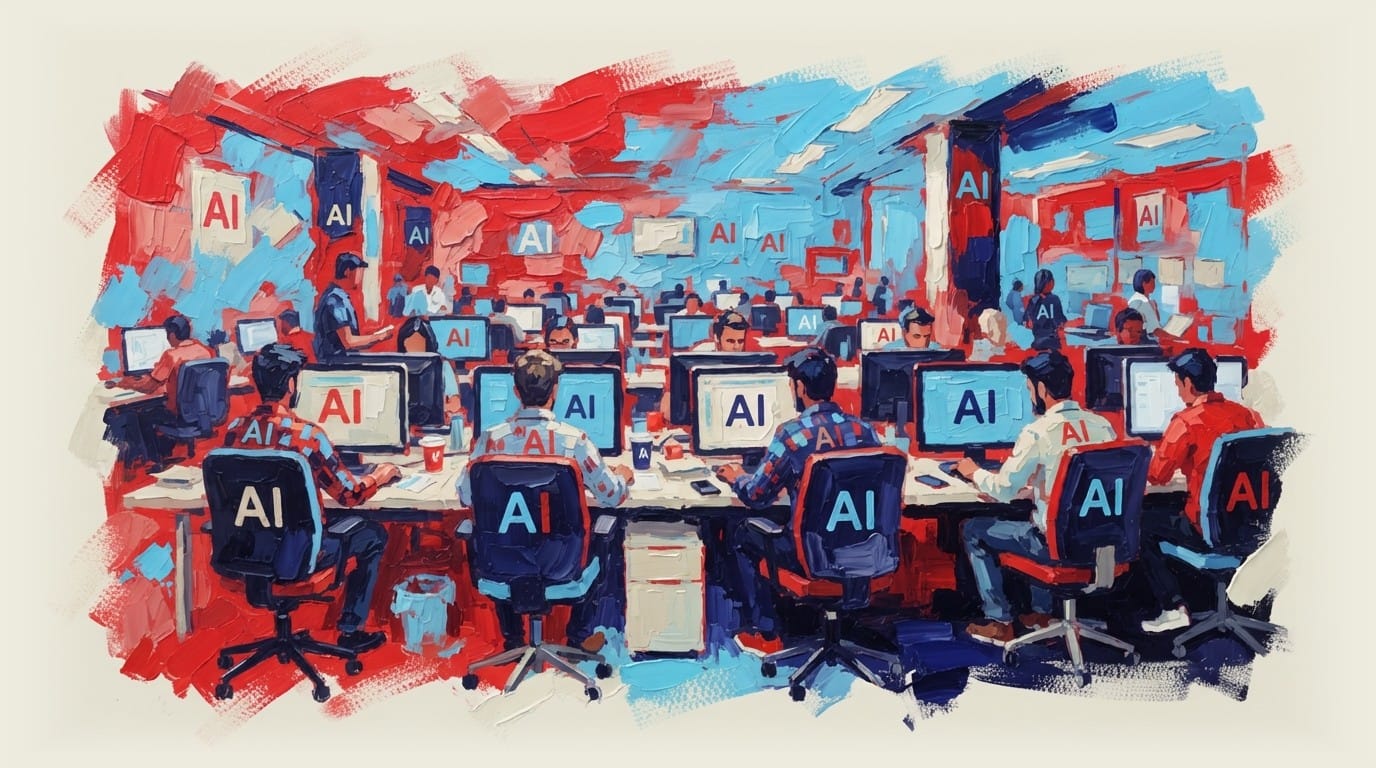
Australia's productivity will be boosted by AI, somehow…
There is a version of the AI-and-productivity story that makes complete sense. You take a workforce spending a large share of its time on tasks that are, fundamentally, information processing — drafting, summarising, searching, classifying, answering routine questions — and you give it a tool that does those tasks faster and better. Output per hour worked rises. That is productivity growth, by definition. The mechanism is clear, the precedent is historical, and the logic is sound.
The problem is not with the premise. The problem is that almost nobody, from the Treasurer down to the average business owner, can yet say with confidence how that mechanism runs in their specific context. And "AI will boost productivity" without the connecting tissue is not a plan. It is a prior.
Treasurer Jim Chalmers has been speaking publicly about AI as the centrepiece of the government's productivity ambitions, pointing to the recently announced AI framework, a forthcoming intergenerational report, and his April meeting with Anthropic's chief executive Dario Amodei. He is not wrong to focus here. Australia's productivity performance has been genuinely poor. OECD data shows the country has leaned on high migration, rising house prices, and favourable terms of trade to maintain corporate profitability rather than actually producing more per hour worked. The RBA's own data shows the productivity trend has been declining for thirty years and has now nearly flattened entirely. That is a real structural problem and it deserves a serious response.
But listen closely to what Chalmers actually says and the argument moves in circles. AI has "the capacity to make our economy more dynamic and therefore more productive." He intends to "get it right." He does not "intend to get it wrong." These are not policies. They are aspirations dressed in the grammar of analysis.
Every boardroom knows AI is supposed to matter; almost none can show where the gains are landing
To be fair to the Treasurer, this is not uniquely his problem. Walk into almost any Australian business right now and you will find the same dynamic. Executives know AI is supposed to matter. They have read the consultancy reports. They have been to the conferences. They have, in many cases, bought the subscriptions. What they mostly cannot yet tell you is which workflows have measurably changed, what the output numbers look like, or where the productivity gains are actually landing. There is enormous activity and relatively little confirmed result, at least in aggregate.
A factory that bolted an electric motor onto a layout designed for a central steam engine did not get the gains. A factory redesigned from scratch around distributed electric power did.
This is not unusual for general purpose technologies in their early deployment phase. Economists who have studied previous waves — electrification, computing, the internet — consistently find a lag between when a technology arrives and when it shows up in productivity statistics. The reasons are structural: firms have to reorganise work around the new capability, not just add the tool to the existing process. A factory that bolted an electric motor onto a layout designed for a central steam engine did not get the gains. A factory redesigned from scratch around distributed electric power did. The same logic almost certainly applies to AI, which means the productivity dividend, if it arrives, requires genuine workplace reorganisation rather than a ChatGPT licence and a press release.
The government's announced measures are infrastructure, not a plan for how work actually changes
What the government has announced so far, a centralised regulatory framework, data centre investment incentives, and copyright protections for creators, is mostly about the infrastructure layer. That matters, and the instinct to make Australia an attractive destination for frontier AI investment is not obviously wrong. A $21 billion Anthropic investment would be real economic activity. Data centres are real assets. But none of that is the same as a plan for how Australian businesses, in healthcare, in construction, in education, in the services sector that dominates the economy, actually reorganise their work to produce more per hour.
The government's most concrete productivity claim in the recent budget was the $10 billion reduction in compliance costs, forecast to lift GDP by $13 billion. Chalmers called it the biggest productivity boost in three decades. That may well be true. It is also telling: the most legible productivity win available right now was removing friction from existing processes, not adding AI to them.
That is roughly where Australia sits. The technology is real, the potential is real, and the gap between potential and plan is also real. The government is not unique in that position. Almost every boardroom in the country is in exactly the same place, talking confidently about AI's transformative potential while quietly wondering when the spreadsheets are going to start proving it.
Sources
Frequently Asked Questions
Why hasn't AI shown up in Australia's productivity statistics yet?
General purpose technologies consistently show a lag between adoption and measurable productivity gains. Firms need to reorganise work around the new capability — not just add the tool to existing processes — before output per hour actually rises.
What has the Australian government actually announced on AI and productivity?
The government has announced a centralised regulatory framework, data centre investment incentives, and copyright protections for creators. These address the infrastructure layer but do not specify how businesses in healthcare, construction, or education are expected to reorganise their work.
How bad is Australia's productivity problem?
Australia has leaned on high migration, rising house prices, and favourable terms of trade to maintain corporate profitability rather than increasing output per hour worked. RBA data shows the productivity trend has been declining for thirty years and has now nearly flattened entirely.
What is the difference between AI adoption and AI-driven productivity growth?
Buying AI subscriptions and attending conferences counts as adoption. Productivity growth requires businesses to redesign workflows around the new capability — the same way electrification only delivered gains when factories were rebuilt around distributed power, not when motors were bolted onto steam-era layouts.
What was the biggest productivity measure in Australia's most recent budget?
A $10 billion reduction in compliance costs, forecast to lift GDP by $13 billion — which Chalmers called the biggest productivity boost in three decades. It came from removing friction from existing processes, not from deploying AI.