Big tobacco could save the day for the government budget.
Australia's tobacco tax is so high it has built a billion-dollar black market — and the fix might be the last policy anyone in Canberra wants to touch.

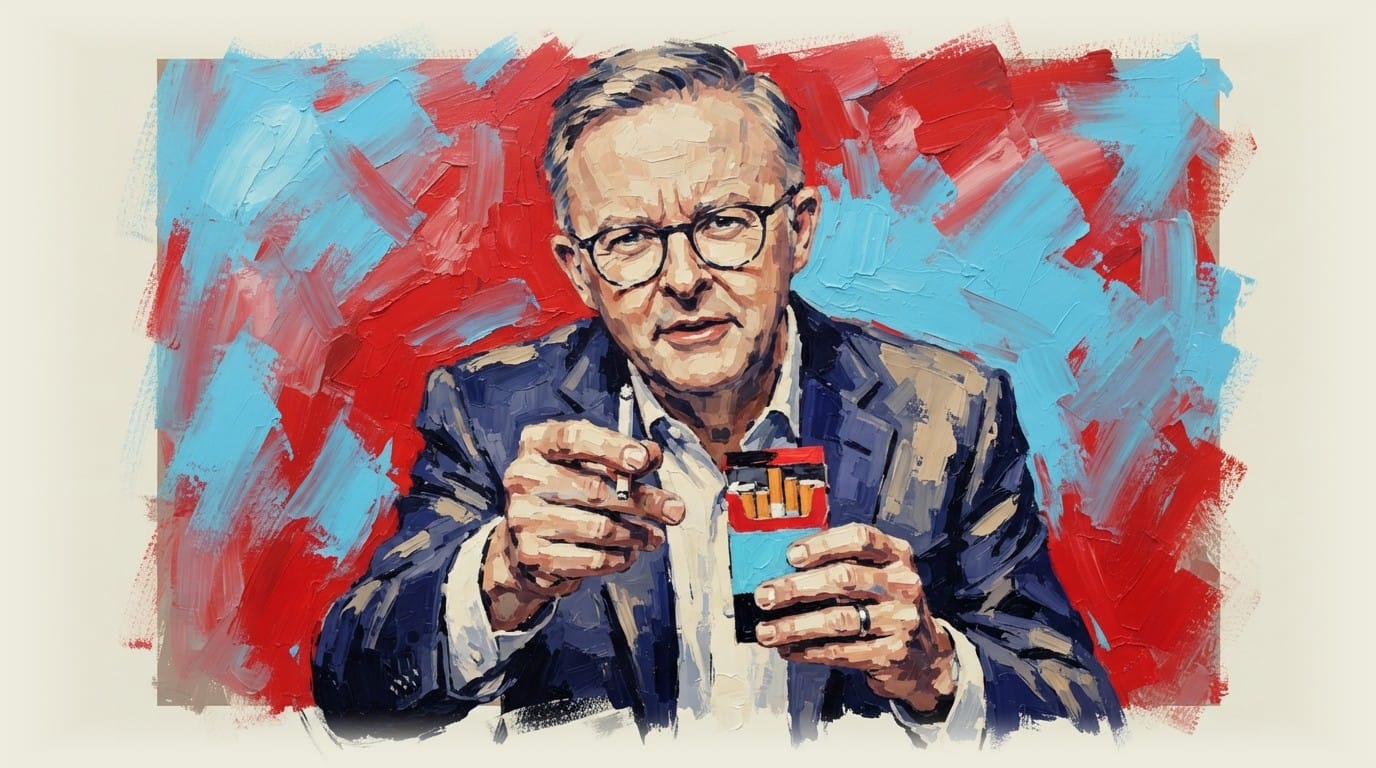
Headline: Big tobacco could save the day for the government budget.
Source: One Nation — Policy News (Google)
Australia taxes cigarettes harder than almost any other country on earth. A pack of 25 now costs around $55 at the counter, and the government collects most of that. The logic was simple: make smoking expensive enough and people will stop. The problem is they haven't stopped. They've just stopped buying from the newsagent.
Australia has already crossed the Laffer curve on tobacco
The black market in illicit tobacco is no longer a fringe problem. The Australian Tax Office and Australian Border Force have documented organised crime operating at industrial scale, with billions of dollars in untaxed product moving through networks that have proven, so far, largely resistant to enforcement. Teenagers who cannot afford a $50 pack are vaping instead, a substitution that might trade one set of health risks for another. And the tax revenue that was supposed to flow from making cigarettes expensive has, in substantial part, simply evaporated, redirected into criminal supply chains rather than consolidated revenue.
This is the textbook result of pushing an excise too high. The theory of the Laffer curve usually comes up in debates about income tax, but it applies equally here: at some point, raising the rate reduces the revenue, because it changes what people do. Australia appears to have crossed that point with tobacco some years ago.
The black market's only advantage is price. The excise cut eliminates it
The One Nation proposal inverts the logic. Cut the price of legal cigarettes sharply, and the black market product loses most of its competitive advantage. Criminal distributors are not selling on quality or service; they are selling on price. Remove the price differential and the business model largely collapses. What remains is a legal, taxed market that the government can actually measure, regulate, and collect from.
The key variable is pass-through. A tax cut only moves the street price if the companies actually lower what they charge at retail. There is a reasonable concern that the major tobacco companies could simply absorb the excise reduction as margin, leaving retail prices near where they are and pocketing the difference. If that happens, the black market survives and the government has handed a gift to shareholders.
The tobacco companies have a problem that governments have been too distracted to notice: organised crime is stealing their customers.
But here is where the incentive structure becomes interesting. The tobacco companies have a problem that governments have been too distracted to notice: organised crime is stealing their customers. Every pack sold through an illicit network is a pack not sold by Philip Morris or British American Tobacco. The majors have every commercial reason to want legal cigarettes cheap enough that the black market cannot compete. Their interest in a genuine price reduction is not philanthropic; it is existential. A well-designed excise cut, structured around retail price floors or pass-through requirements, could align the government's revenue interest with the tobacco industry's competitive interest in a way that is genuinely unusual in public policy.
The health case for cheaper cigarettes is uncomfortable but honest
The health dimension is real and should not be waved away. Cheaper cigarettes will keep some smokers smoking who might otherwise have quit, and may draw in some new ones. That cost needs to sit honestly in the ledger. But the current approach is not actually preventing consumption; it is redirecting it. Smokers who buy illicit product are still smoking, and they are funding criminal enterprises rather than consolidated revenue. A policy that produces the same health outcome while eliminating a multi-billion-dollar black market and restoring tax revenue is, on balance, a better policy, even if it makes health advocates uncomfortable.
The politics are the real obstacle, not the economics
The politics are where it gets complicated. The government is unlikely to be seen adopting a One Nation tobacco proposal, regardless of its merits. That is the reality of how Australian politics works in 2026, and it is a genuine cost to good policy-making. Ideas do not travel easily across certain tribal lines, and Pauline Hanson's name on a proposal is, for many in Canberra, sufficient reason to stop reading.
That would be a mistake. The structure of the argument here is sound: a tax set too high has produced a black market that defeats both the revenue and the health objectives it was designed to serve. Reducing that tax, carefully and with conditions on pass-through, could restore both. The government faces genuine budget pressure and a tobacco enforcement problem it has not been able to solve. Sometimes the answer to a policy failure is not more of the same policy.
The tobacco companies would like nothing more than to have their black-market competitors legislated out of existence by a well-placed excise cut. Whether the government is willing to give it to them, and take the credit for the fiscal dividend that would follow, is a different question entirely.
Sources
University of Queensland — Tobacco taxation and illicit trade research
Australian Tax Office — Illicit tobacco
Australian Border Force — Tobacco enforcement
Nine.com.au — 'All for it': Why non-smokers are backing Pauline Hanson's push for $22 cigarettes
Frequently Asked Questions
Why does cutting tobacco tax reduce the black market?
Illicit tobacco dealers compete almost entirely on price. When legal cigarettes cost $50 a pack and untaxed black market product costs a fraction of that, the criminal business model is viable. Cut the legal price to $22 and the price gap largely disappears, removing the black market's only competitive advantage.
What is the Laffer curve and how does it apply to cigarette tax in Australia?
The Laffer curve describes the point at which raising a tax rate actually reduces total revenue, because it changes behaviour enough to shrink the taxable base. Australia appears to have passed that point with tobacco: excise increases have pushed so many smokers toward illicit suppliers that the government is collecting less revenue than a lower rate would generate from a fully legal, taxable market.
Would tobacco companies just pocket the excise cut instead of lowering prices?
That is the central risk. If companies absorb the reduction as margin rather than passing it to consumers, retail prices stay high, the black market survives, and the government has handed a windfall to shareholders for nothing. The policy only works if it is structured with pass-through requirements or a mandated retail price reduction.
Does cheaper tobacco mean more people will start smoking?
Possibly, at the margin. Lower prices could retain some smokers who might otherwise have quit, and may attract some new ones. The counter-argument is that Australia's current high-price regime is not actually suppressing consumption — it is redirecting it to an illicit market — so the net health impact of the cut depends heavily on how large that illicit market already is.
Why won't the Australian government adopt the One Nation tobacco proposal?
Australian political dynamics make it very unlikely that a Labor or Coalition government would be seen publicly adopting a Pauline Hanson policy, regardless of its analytical merits. The tribal cost of association outweighs, in political calculation, the potential fiscal and enforcement benefits.
- How $40-a-Pack Cigarettes Pushed Australians to the Black Market - The New York Times
- One Nation's radical new tobacco policy revealed | Nine.com.au
- 10.3 Tobacco companies operating in Australia - Tobacco in Australia
- Australia's tobacco tax is among the highest in the world – and it's about to get higher | The Guardian