Driving and EV is just better
One in five new cars sold in Australia is now electric — but whether the shift is as liberating as owners claim depends entirely on where you live.

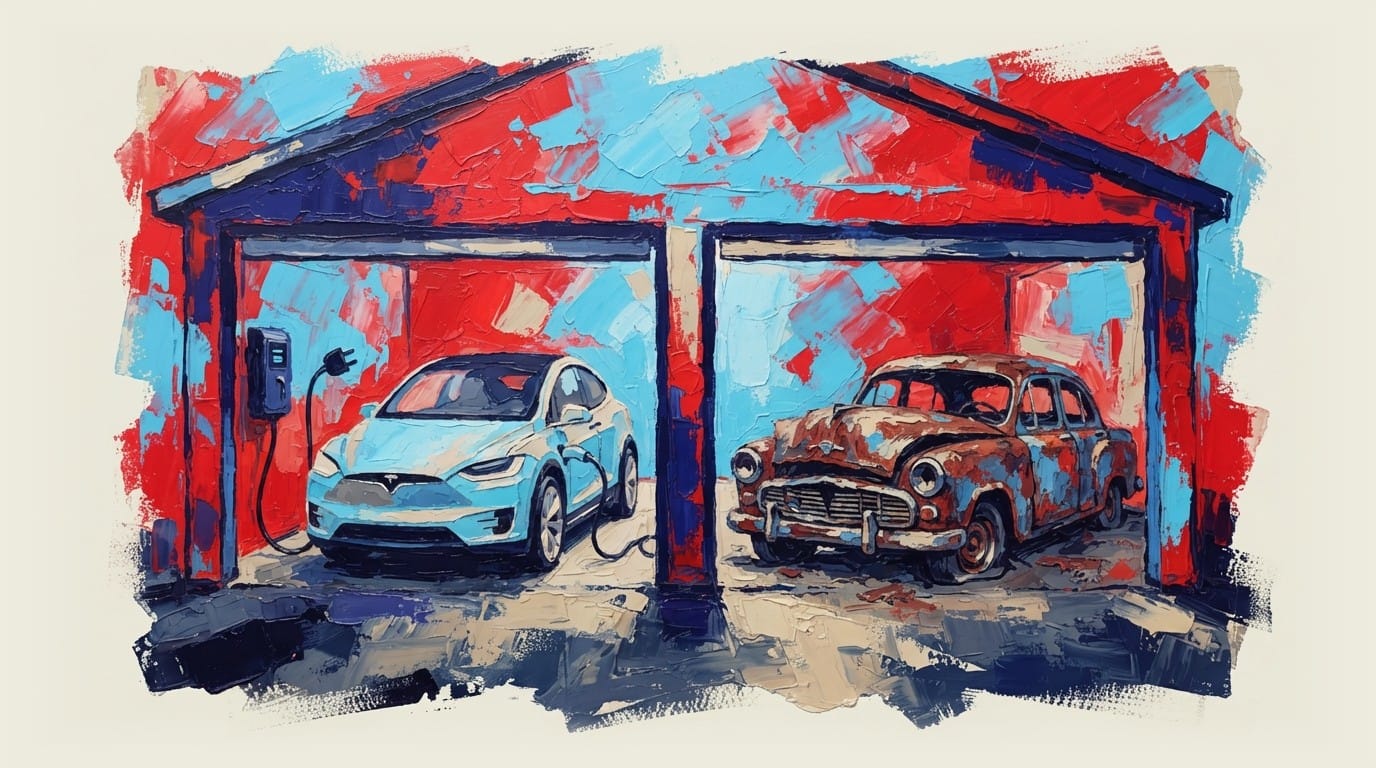
There is a version of the electric vehicle story that is about sacrifice, about range anxiety and charging queues and the grim duty of saving the planet one kilowatt-hour at a time. That story is increasingly wrong. The better version, the one that actually explains why one in five new cars sold in Australia is now electric, is simpler: driving an EV is genuinely, measurably better than driving a petrol car, and owning one, if you have a garage, is less hassle than the alternative.
The driving experience has already lapped the product it's replacing
Start with the driving experience, because it tends to surprise people who have not tried it. The defining characteristic of an electric motor is that it delivers maximum torque from a standing start, with no lag, no gear hunting, no hesitation. You pull out of a side street and the car responds instantly. At freeway speeds, the same linearity holds. There is no engine noise, no vibration, just speed. Manufacturers have used the freed-up architecture, no transmission tunnel, no combustion engine dictating the cabin layout, to pack in screens, speakers, storage and software that updates over the air. These are not novelty features. After a few weeks, going back to a petrol car feels like borrowing someone's laptop from 2014.
Owning an EV at home means setting your own fuel price
Then there is the ownership equation, which is where the argument really lands. A petrol car owner fills up at a servo, at whatever price the global oil market and Australian excise happen to have landed on that week. An EV owner who charges at home sets their own fuel price, essentially, by choosing when to charge. With time-of-use electricity tariffs, that typically means overnight, off-peak, at a fraction of the per-kilometre cost of petrol. For homeowners with rooftop solar, the economics shift further still. Margaret Killen, a Tasmanian EV owner cited in the ABC's latest reporting, has a home charger and solar panels and now runs her car on what amounts to near-zero marginal cost during free power hours. The car sits in the garage, charges while she sleeps, and is full every morning without a single detour to a servo.
The people who have made the switch are not reporting buyer's remorse. They are reporting something closer to the feeling of having solved a problem they did not fully realise they had.
The fuel crisis sparked by the Iran conflict has sharpened this calculus considerably. With petrol firming above two dollars a litre and diesel higher still, the reliability calculus that once favoured combustion engines has quietly inverted. As social researcher Rebecca Huntley describes it, people who had never seriously considered an EV suddenly found themselves worrying whether they could fill a tank on a weekend away. That is not a small shift. That is the psychological foundation of the old objections cracking.
The July sales figures mark a mature market, not a spike
July's sales figures tell the story plainly: 23,510 battery electric vehicles sold, 21.7 per cent of all new vehicle sales, the third consecutive month above 20 per cent. BYD, the Chinese manufacturer, sold more than 60,000 cars in the month overall and is closing on Toyota for the top spot. The University of Sydney's Andrea Pellegrini describes this as the market entering a mature phase, where early adopters have been joined by mainstream buyers who have done the maths and like what they see. Support for EVs in the Clean Energy Solutions Index rose six points in 2026, the standout result in the entire survey.
The convenience case breaks down entirely if you rent
The honest caveat is that this story does not yet belong to everyone equally. If you rent, or live in an apartment, the convenience argument dissolves. You cannot install a home charger in a rented property without your landlord's cooperation, and more than 30 per cent of Australians rent. For them, the EV ownership experience depends entirely on public infrastructure that remains, as we have covered previously, fragmented and unreliable in ways that erode the convenience case. The Federal Chamber of Automotive Industries is right that charging infrastructure needs to keep pace with sales. It currently does not, and that gap falls hardest on the Australians with the least flexibility.
But for the majority of new car buyers, those with a garage, a power point, and a charger they can install for a few hundred dollars, the trade-off has already resolved. The old objections — range anxiety, technology immaturity, lack of capable SUV and towing options — are fading as the vehicle range matures and real-world experience accumulates. The people who have made the switch are not reporting buyer's remorse. They are reporting something closer to the feeling of having solved a problem they did not fully realise they had.
The EV conversation in Australia spent years being conducted as a values debate. It is now a product debate, and on product grounds, the electric car is winning.
Sources
ABC News — EV enthusiasm continues as research detects lasting consumer shift
The Bearing — Nobody owns the EV charger problem — and Australia's paying for it
Frequently Asked Questions
What percentage of new cars sold in Australia are electric?
As of July 2026, electric vehicles account for 21.7 per cent of new car sales in Australia — the third consecutive month above 20 per cent. That figure marks a shift from early-adopter curiosity to mainstream purchase behaviour.
How much does it cost to charge an EV at home in Australia?
The per-kilometre cost of charging an EV at home on an off-peak tariff is substantially lower than the equivalent cost of petrol. For homeowners with rooftop solar, the marginal cost during generation hours can approach zero.
What is stopping renters from buying electric vehicles in Australia?
Renters cannot install a home charger without their landlord's agreement, which means they depend entirely on public charging infrastructure. That infrastructure remains fragmented and unreliable, and more than 30 per cent of Australians rent.
Why are EV sales growing so fast in Australia right now?
A combination of factors is driving the acceleration: a wider range of capable vehicles, falling purchase prices, high petrol costs amplified by the Iran conflict fuel crisis, and growing word-of-mouth from existing owners. Social research shows support for EVs rose six points in 2026 alone.
Is range anxiety still a real problem for EV owners in Australia?
For homeowners who charge overnight, range anxiety has largely dissolved — the car begins every day full. The anxiety that remains is concentrated among renters and rural drivers who rely on public fast-charging networks, which are still not keeping pace with vehicle sales.