Farms are the new billionaire flex
When a billionaire buys 1.3 million hectares of sheep country, is it a smart diversification play — or the beginning of something more structural for Australian agriculture?

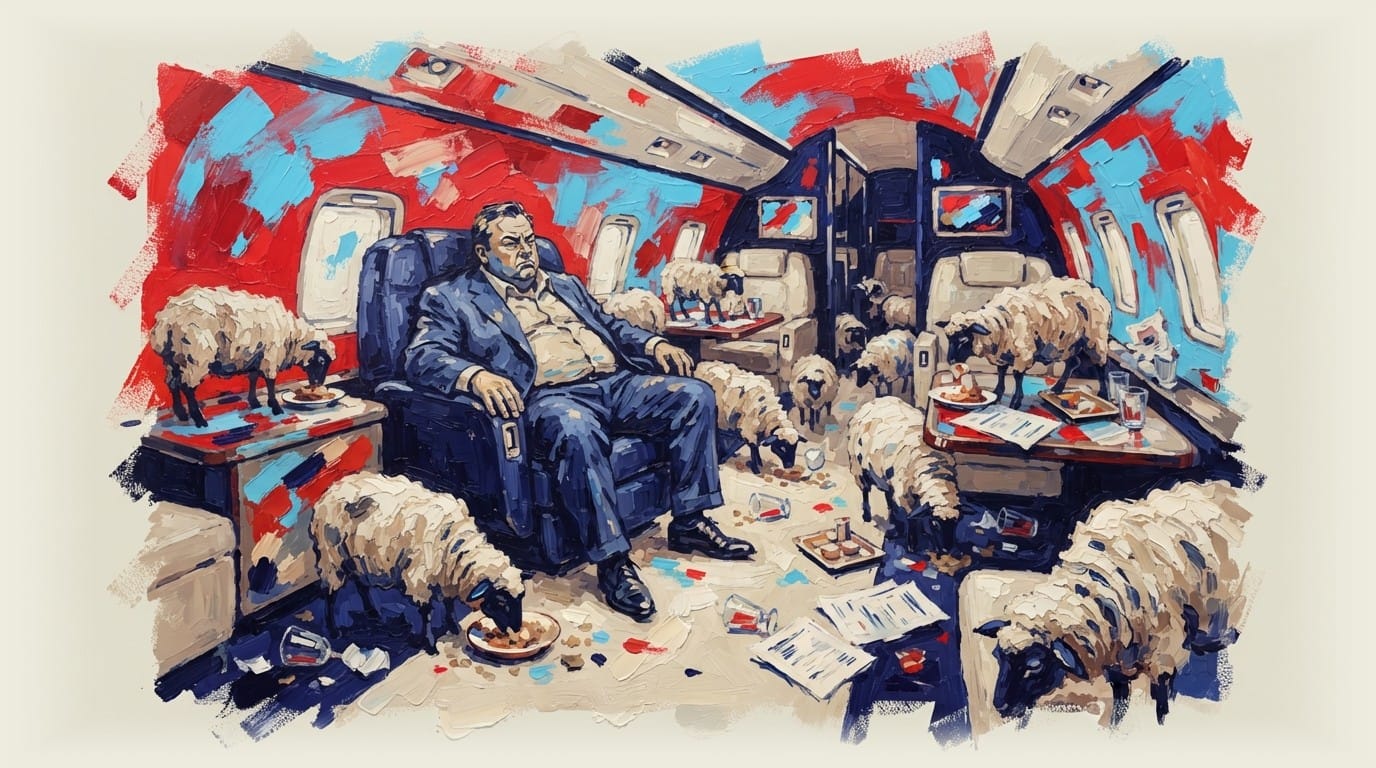
There was a time when the ultra-wealthy announced their arrival with a football club or an airline. Now they're buying sheep stations. Charlie Shahin, whose family built and sold the OTR petrol station chain for $1.2 billion in 2023, has just acquired three outback South Australian sheep stations totalling nearly 1.3 million hectares. The properties, sold by the 140-year-old MacLachlan family dynasty under the name Jumbuck Pastoral, include Commonwealth Hill, Mobella, and Bulgunnia, and represent one of the largest sheep production assets ever offered to the Australian market. Shahin already owns a 408,000-hectare cattle station in the Northern Territory. He is not alone in this instinct.
The motive is not one thing — and that matters
Bill Gates, now one of the largest private farmland owners in the United States with holdings across more than a dozen states, is the most cited example of the phenomenon. He has framed it as a bet on agricultural innovation and food security. Jeff Bezos, Thomas Paquette, and a constellation of sovereign wealth funds have made similar moves. In Australia, the pattern has been building quietly for years, with foreign and domestic corporate capital steadily absorbing pastoral aggregations that once passed between farming families.
So what is driving it? The honest answer is probably several things at once, and they don't all reduce to the same motive.
The first is straightforward asset logic. Land is finite. Farmland, particularly at scale, does not get built; it either exists or it doesn't. In an era where financial markets have oscillated wildly and cash returns have been eroded by inflation, productive land offers something different: a real asset with a yield, a hedge against currency debasement, and the kind of multi-generational time horizon that family offices tend to prefer. When you've just liquidated a $1.2 billion convenience store empire, parking a meaningful portion in land that can run 83,000 sheep is not an eccentric hobby. It is a diversification decision that any wealth manager would recognise.
The second driver is genuine conviction about commodity futures. Shahin's statement, delivered through Elders, says the quiet part plainly: global demand for high-quality natural fibre and premium protein is growing, and Australia is positioned to supply it. That is not a novel insight, but it is a correct one. Merino wool in particular commands a premium that synthetics have not displaced, and the long-term trajectory of global protein demand runs in one direction. Buying the supply chain at the production end, rather than trading futures or holding equity in an agribusiness company, gives you direct exposure to that thesis without intermediaries taking a cut.
Buying the supply chain at the production end, rather than trading futures or holding equity in an agribusiness company, gives you direct exposure to that thesis without intermediaries taking a cut.
The third driver is harder to quantify but probably real: land as legacy. Shahin's family vehicle for these purchases, ATAYF, is structured around him, his wife, and his daughters. The Jumbuck Pastoral vendor, the MacLachlan family, explicitly said they wanted an owner who understood the significance of what they were selling. There is something almost old-world about that language, and it connects to something genuine about why very wealthy people have always wanted land. It is not liquid. It cannot be shorted. It is, in the most literal sense, grounded.
A sale between families is not the same as a structural shift — until it is
None of this is necessarily sinister. Shahin studied agronomy and says he intends to keep running the stations as sheep properties, with the possible addition of dorper sheep to the merino mix. The existing 23 staff are, as far as the reporting indicates, continuing. The MacLachlans appear satisfied that the buyer understands what he's taken on. A sale between a family winding down its succession and a family building one up is a fairly ordinary transfer of productive assets, even when the dollar values attached are extraordinary.
The more considered question is structural. When pastoral land concentrates in the portfolios of billionaires, the operating logic changes in ways that are subtle but real. Family farming operations tend to optimise for continuity and local community relationships over decades. Large wealth vehicles optimise for the thesis that got them into the asset. Those two things often align, but they can also diverge, particularly if commodity markets move, tax treatment of land changes, or the investment case shifts. A family that has run sheep for 140 years is not selling the station in a bad wool year. A family office that bought it as a diversification play might think differently.
That is not an argument against Shahin's purchase, or against wealthy people owning farms. It is an observation about what changes when the ownership base of productive rural land narrows and shifts upmarket. The farms still run. The wool still grows. The question is who sets the agenda for the next generation of Australian agriculture, and whether the answer to that question is becoming, quietly, a much shorter list.
Sources
Frequently Asked Questions
Why are billionaires buying farmland in Australia?
Large-scale farmland offers a finite real asset with a yield, a hedge against inflation, and a long-term time horizon that suits family offices rotating out of volatile financial markets. For buyers like Charlie Shahin, it also provides direct exposure to growing global demand for premium protein and natural fibre without the intermediaries of equity or futures markets.
What happens to farm workers when a billionaire buys a station?
In the Jumbuck Pastoral case, the existing 23 staff are reported to be continuing under the new ownership. Whether that holds over time depends on whether the new owner's investment thesis remains aligned with running the property as an active sheep operation.
Is it a problem if wealthy investors own more Australian farmland?
The farms still operate and the wool still grows, but the operating logic shifts in ways that matter over time. Family farming operations tend to hold through bad commodity years; wealth vehicles optimise for the investment thesis that brought them to the asset, which can diverge from agricultural continuity if markets move or tax treatment changes.
How much Australian farmland do billionaires own?
The article does not provide a precise aggregate figure, but describes a pattern of foreign and domestic corporate capital steadily absorbing pastoral aggregations that once passed between farming families. The Shahin acquisition alone — across the three South Australian stations and his existing Northern Territory cattle station — totals more than 1.7 million hectares.
What is Merino wool worth on world markets and why does it matter for this deal?
Merino wool commands a sustained premium over synthetic fibres that has not been eroded by competition from cheaper materials. The long-term trajectory of global protein demand also runs upward, which means owning the production base directly — rather than holding equity in an agribusiness — gives a buyer like Shahin unmediated exposure to both commodity trends.