Food delivery workers get minimum hourly pay trade-offs
Australia just gave food delivery riders a pay floor — but who pays the price when the bottom rung gets harder to reach?

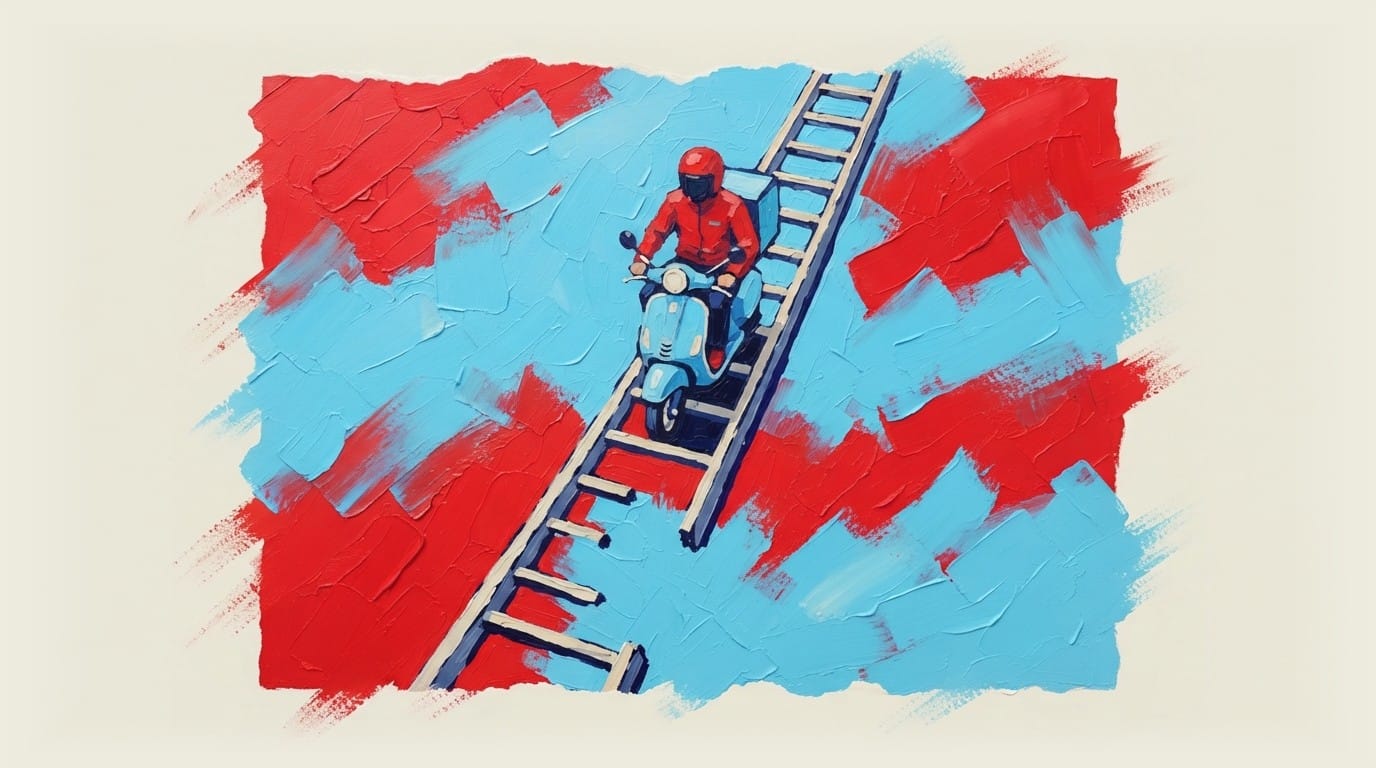
From Monday, food delivery workers in Australia will have a guaranteed minimum earnings floor for the first time. Under a new minimum standards order handed down by the Fair Work Commission, riders on e-bikes must earn at least $31.30 an hour for "engaged time," motorcycle riders $31.80, and car-based delivery workers $32. The order covers workers on platforms like Uber Eats and DoorDash, and is the first of its kind in the country. It is, by any honest accounting, a genuine improvement for a cohort of workers who have had almost no protections at all.
The deal is more credible because the platforms helped design it
The reform is the product of nearly two years of negotiation between the Transport Workers' Union, Uber Eats, and DoorDash, brokered through the Fair Work Commission. That matters for one practical reason: the catastrophist predictions made before the process began look far less credible for having been made by parties who then stayed at the table and signed the agreement. Uber once claimed the reforms could raise average meal delivery costs by up to 85 per cent. DoorDash suggested prices could more than triple. Neither company walked out. Some price increase is probable, but companies that helped design a deal are unlikely to then detonate it.
The design itself is more subtle than a flat minimum wage. Workers are not paid a floor for every hour they log into the app. They are paid for "engaged time," defined as the period between accepting a delivery and completing it. Waiting by your phone at home counts for nothing. Waiting at the restaurant after you have accepted an order does count. The platform calculates average earnings across a 21-day period, and tops up pay if the average falls short of the floor. It is a mechanism that rewards efficient workers and active platforms, while protecting against the genuinely exploitative practice of keeping workers logged in and idle without compensation.
So far, so defensible. Here is where the analysis gets harder.
Gig work is a bottom rung — and that is what makes it valuable
Gig work has always served a particular kind of worker: someone who cannot or does not want to enter the formal labour market on standard terms. A recent migrant building local language and professional networks. A student earning between lectures. A person with caring responsibilities who needs to work around a schedule, not inside one. A worker with a patchy employment history who needs a foothold before they can claim experience.
For these workers, gig delivery is not a career destination. It is a bottom rung. The platform does not require a resumé, references, or demonstrated reliability. You sign up, you deliver, you build a record. In that sense the platforms have been doing something the formal labour market does not do especially well: providing accessible entry-level work to people who struggle to access entry-level work. Australia's job mobility rate has already fallen to its lowest level on record, meaning fewer workers are climbing the ladder at all. Shrinking the pool of people who can get onto it is a problem in the opposite direction.
The workers who never get onto the rung because it has been raised beyond their reach will not appear in any headline.
The mechanics here are not complicated. A minimum floor raises the cost of each hour of engaged delivery. Platforms respond by routing deliveries more efficiently, reducing the number of active workers per shift, and being more selective about who they onboard. The workers already in the system, who have ratings, experience, and fast acceptance times, become more valuable. Workers at the margin, new entrants with no track record, become more expensive to carry. This is the consistent pattern with minimum wage interventions: the benefit flows to workers already in the job, while the cost lands on workers who were about to enter it.
Twenty-three deaths is a real number
Twenty-three gig worker fatalities since 2017, according to the Transport Workers' Union, is a number that reflects an industry with a genuine safety and protection problem. Workers who were earning below-subsistence amounts while assuming all their own costs, including vehicle insurance, were not in a sustainable or dignified situation. Those are real harms, and a policy that addresses them has real value.
The question is not whether the people currently on these platforms deserve better pay. They do, and the reform delivers it. The question is what happens to the people who would have joined the platforms next year, or the year after, looking for the same foothold that gig work currently provides. Higher floors are easier to set than they are to lower, and the workers who never get onto the rung because it has been raised beyond their reach will not appear in any headline. This worker is then deprived of climbing onto the next rung, and the next.
The government has made a trade that delivers visible gains to a visible group, at a cost that falls on a group that does not yet exist. That is a trade worth understanding clearly, even if you think it is the right one to make.
Frequently Asked Questions
How does Australia's new food delivery minimum pay actually work?
Workers are guaranteed a minimum of $31.30 to $32 an hour for 'engaged time' — the period between accepting a delivery and completing it. The platform averages earnings across a 21-day period and tops up pay if the average falls short of the floor. Time spent waiting for an order to be accepted does not count.
Will food delivery prices go up because of the new minimum pay?
Some price increase is probable, but the platforms' own pre-negotiation predictions — Uber claimed up to 85 per cent, DoorDash suggested prices could more than triple — are not credible guides. Both companies stayed at the table and helped design the final deal, which makes catastrophic outcomes unlikely.
Why might a minimum pay floor hurt some gig workers?
A higher cost per hour of engaged delivery gives platforms an incentive to route more efficiently, run fewer active workers per shift, and onboard only workers with established ratings and fast acceptance times. New entrants with no track record become more expensive to carry, which is the consistent pattern with minimum wage interventions.
Who actually does food delivery work in Australia?
Gig delivery has historically attracted workers who struggle to access standard employment: recent migrants building language and professional networks, students, people with caring responsibilities, and workers with patchy employment histories. For these workers the platforms provide accessible entry-level work that the formal labour market does not offer easily.
How dangerous is food delivery work in Australia?
The Transport Workers' Union recorded 23 gig worker fatalities since 2017, pointing to a genuine safety and protection problem in the industry. Workers have operated without standard employment protections while bearing all their own costs, including vehicle insurance.