Full-price fuel is back baby!
Treasury is warning of rising oil price risks — and the government just chose this week to end its fuel excise discount.

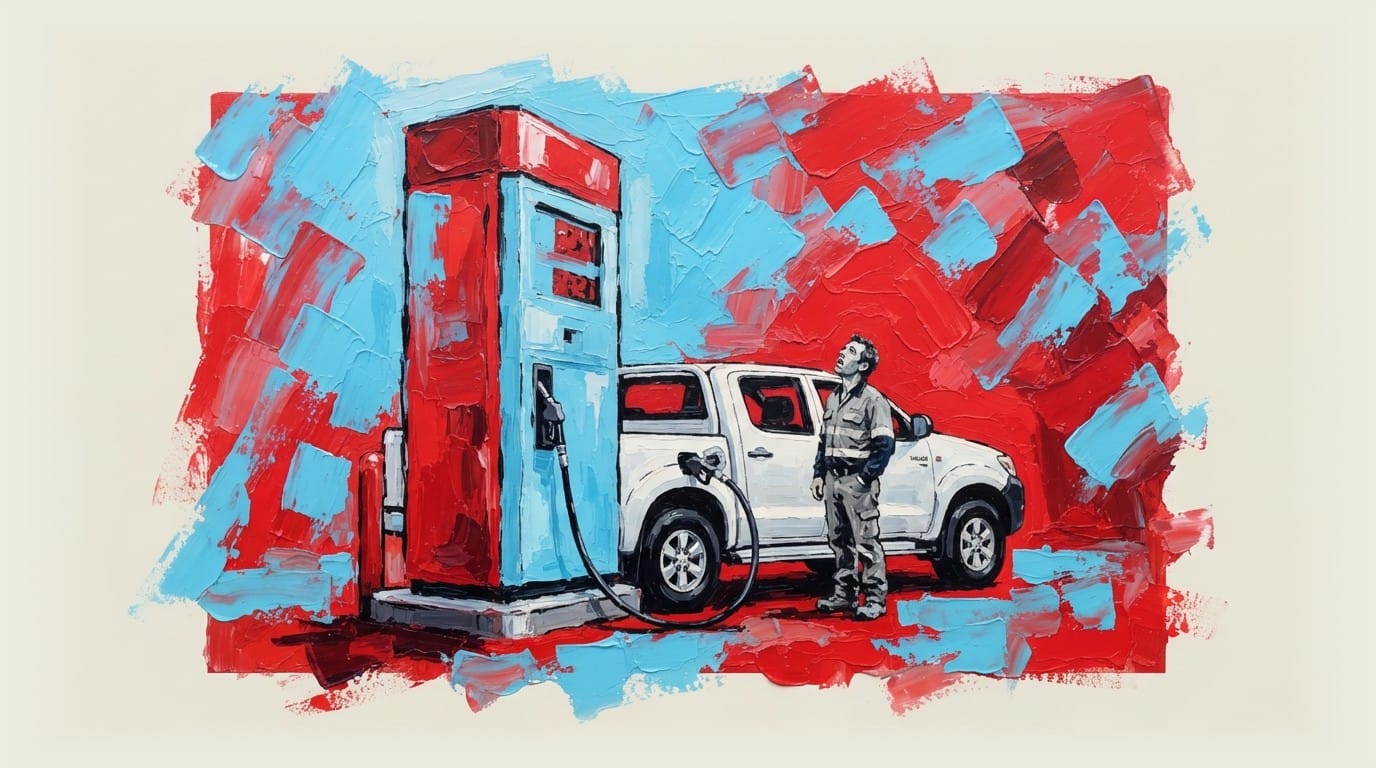
The fuel excise discount, which knocked as much as 32 cents off every litre of petrol at its peak, dies at midnight on Sunday. The government has confirmed the scheme will end as scheduled on 2 August, tapering down to 16 cents of relief through July before expiring entirely. Fill up over the weekend if you want one last look at the discounted price.
Ending a temporary measure is harder than it sounds
The timing is not accidental. Treasurer Jim Chalmers has been explicit that the scheme was always temporary, designed to take the edge off a sharp cost-of-living hit rather than permanently restructure the excise system. That is a coherent position. The fuel excise is a road-funding mechanism with a long institutional history, and treating it as a permanent cost-of-living lever would distort its original purpose while creating a political commitment that becomes almost impossible to unwind. As we have noted here before, monthly excise legislation was always more administrative theatre than structural relief, costing the budget hundreds of millions while doing nothing to address the supply-side vulnerabilities underneath.
The awkward detail is what Treasury said in the same week the government confirmed the end date. In a briefing note seen by the ABC, Treasury warned that global oil markets are now materially more exposed than they were when the conflict began. Red Sea shipping disruptions have removed the Strait of Hormuz alternative. Ukrainian drone strikes on Russian refineries have eroded another buffer. Oil inventories drawn down during the initial shock have not been replenished. Last week, crude briefly crept back above $US100 a barrel before settling around $US86. Treasury's view is that upside price risks will build if the status quo holds, and that pressures may intensify over coming months.
So the government is withdrawing relief at the precise moment its own advisers are flagging that the relief may soon be needed again.
Every dollar spent on excise relief was a dollar not spent on the supply resilience that would make such relief less necessary in the first place.
Treasury's warning changes the risk calculus
There is a reasonable case on the other side. Inflation figures have come in softer than expected, giving the government room to let the measure expire without triggering a fresh cost-of-living spiral. Oil at $US86 is elevated but not emergency territory. Energy Minister Chris Bowen noted that Australia holds 42 days of petrol, 38 days of diesel, and 32 days of jet fuel in stockpile, which provides some short-term cushion. The taper from 32 cents to 16 cents through July was designed precisely to smooth the adjustment rather than create a cliff.
And the fiscal arithmetic matters. At $400 million a month, the discount has already cost more than $3 billion. Extending it indefinitely into an uncertain geopolitical timeline is not a cost-free default, even if it feels like one at the bowser. The money has to come from somewhere, and a government that cannot credibly exit temporary measures eventually finds it has no temporary measures left, only permanent ones it has lost the nerve to name.
The deeper problem, as we have covered at length, is that the discount has done nothing to address Australia's actual structural exposure to oil price volatility. The country remains heavily import-dependent, with thin refining capacity and a strategic reserve that is adequate for short disruptions but not a sustained shock. Every dollar spent on excise relief was a dollar not spent on the supply resilience that would make such relief less necessary in the first place.
What drivers actually pay from Monday
For ordinary drivers, the practical effect from Monday is roughly 16 cents a litre back on the price, depending on where the underlying oil price settles. In a city like Sydney or Melbourne, where a single fill-up sits around 60 litres, that is about $9.60 per tank. Noticeable, not ruinous. For tradespeople and small operators running diesel vehicles daily, the cumulative impact is more meaningful, and the end of the Heavy Vehicle Road User Charge discount alongside the excise relief adds another layer of cost for the freight and logistics sector.
The government had a defensible off-ramp and it took it. Whether the exit proves well-timed or premature depends on what happens in the Strait of Hormuz over the next 90 days. Treasury, at least, does not appear to be betting heavily on calm.
Sources
ABC News — Motorists to lose fuel discount from Monday
Frequently Asked Questions
How much will petrol prices rise when the fuel excise discount ends?
Prices will rise by roughly 16 cents per litre from 2 August 2026, the remaining level of relief after the scheme tapered from its peak of 32 cents through July. For a typical 60-litre fill-up in Sydney or Melbourne, that is about $9.60 more per tank.
Why is the Australian government ending the fuel discount now?
The scheme was always designed as temporary relief rather than a permanent restructure of the excise system, and softer-than-expected inflation figures gave the government a defensible window to exit. At $400 million a month, extending it indefinitely into an uncertain geopolitical timeline carries a real fiscal cost that compounds with each passing month.
What did Treasury warn about oil prices when the discount ended?
In a briefing note seen by the ABC, Treasury warned that global oil markets are now more exposed to price shocks than when the conflict began, pointing to Red Sea shipping disruptions, Ukrainian drone strikes on Russian refineries, and oil inventories that have not been replenished. Treasury's view is that upside price risks will build over coming months.
Does Australia have enough fuel in reserve if oil prices spike again?
Australia currently holds 42 days of petrol, 38 days of diesel, and 32 days of jet fuel in stockpile, according to Energy Minister Chris Bowen. That provides a short-term cushion against disruption, but the country's import dependence and thin refining capacity mean the reserve is designed for brief shocks rather than sustained supply crises.
Why didn't the fuel excise discount fix Australia's oil price vulnerability?
The excise discount reduced the price drivers paid at the bowser but left untouched the structural problems underneath: heavy import dependence, limited domestic refining capacity, and a strategic reserve sized for short disruptions. Every dollar spent on the discount was a dollar not available for the supply-side investment that would reduce Australia's exposure to future shocks.