Government's punt on punting is a winning bet. But if gambling is a problem please call...
Australia's states collect $8 billion a year from gambling — and the way federation is funded means they have a structural reason never to stop.

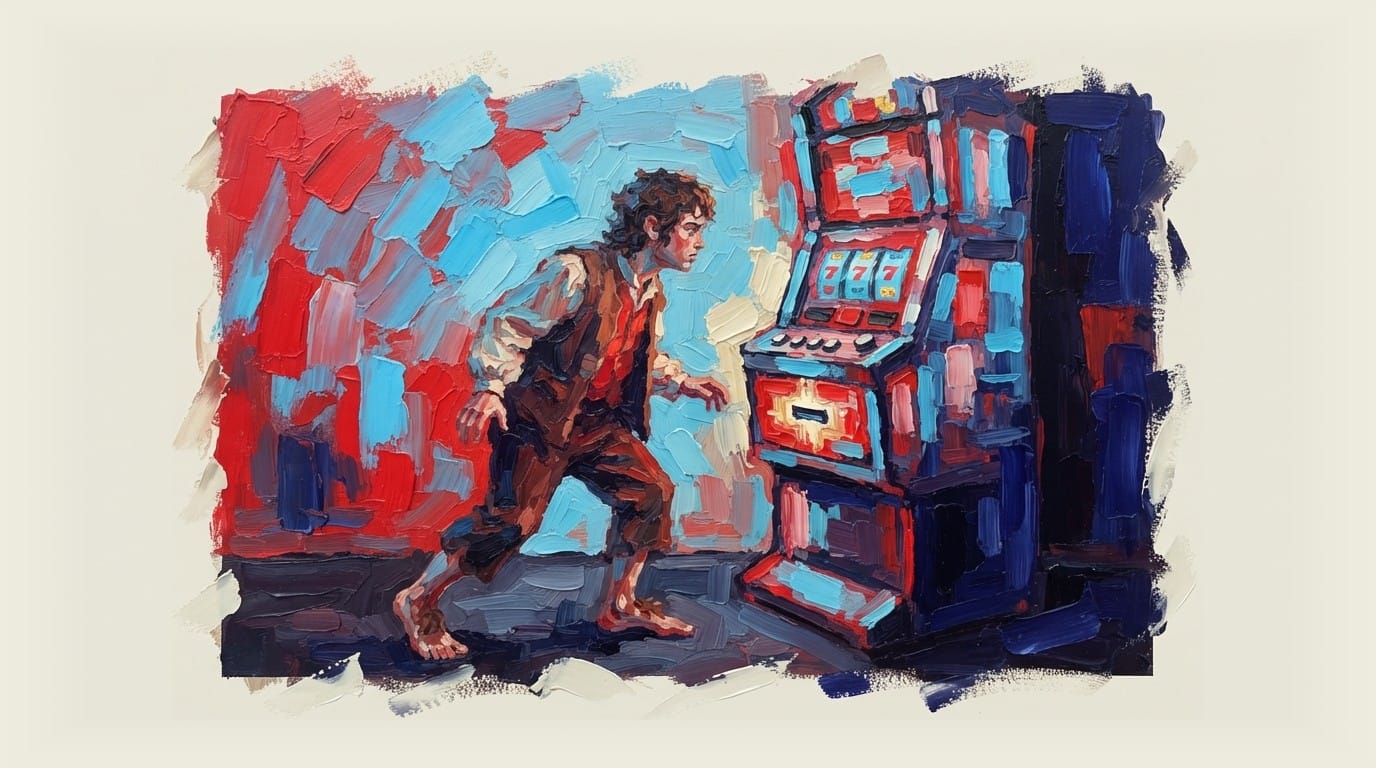
There is a scene in The Lord of the Rings that Tolkien fans know well: Frodo, alone on the banks of the Anduin, slips on the One Ring for a last time before sailing east. He knows what the Ring does. He knows what it costs. He puts it on anyway, because the pull of it is older and stronger than the part of him that knows better. Australian governments and gambling revenue work almost exactly like this.
The revenue is too large to be a rounding error
The numbers explain the reluctance better than any political theory. New South Wales alone collected $3.6 billion in gambling taxes in 2024-25, roughly 7% of total state tax revenue, with $4.7 billion forecast over the next four years. Queensland pulled in $1.9 billion in 2022-23. Victoria cleared $2.4 billion. Even Tasmania, with a population smaller than Adelaide, banked $120 million. These are not marginal line items. They are load-bearing pillars of state budgets that fund hospitals, schools, and roads.
The structural reason this happened, and keeps happening, sits in the constitutional plumbing. After the Second World War, the federal government consolidated control of income tax collection but left the responsibility for most public services with the states. The Commonwealth redistributes money back through grants, but the formula never quite fills the gap. States need revenue and they need it in forms that do not appear in the Commonwealth Grants Commission's calculations. Gambling taxes fit perfectly: every dollar raised through poker machines stays with the state that raised it, rather than being netted off future grant entitlements. The incentive to expand gambling, or at minimum to leave it untouched, is baked into the architecture of Australian federalism.
NSW premier Joseph Cahill understood this when he legalised poker machines for clubs in 1956, under budget pressure, despite earlier parliamentary consensus that gambling was a "material evil." The language of morality gave way to the language of necessity.
There are now almost 90,000 poker machines in New South Wales alone, roughly half the national total.
Federal reform died because the cure had a price tag no one would own
The federal government is not immune to the same logic. Weaning the states off gambling revenue would require Canberra to either top up state grants substantially or stand by while state services deteriorate. Neither is an attractive option, particularly when the national debt is already under political pressure. The Murphy report's recommendation for a national online gambling regulator and meaningful advertising restrictions died not because the government disagreed with the diagnosis, but because the cure involved a cost no one wanted to own.
What eventually emerged, three years after Murphy handed down her report and after her death, is legislation that restricts the timing and frequency of gambling advertisements and bans celebrities from appearing in them. The prime minister announced the cuts with energy: "We're cutting gambling ads on TV, radio, online and on the field." It is a real change. It is also, measured against what the inquiry recommended, a change calibrated to be as small as politically survivable.
The government’s internal contradictions are a symptom, not the disease
The cognitive dissonance inside the Labor Party is visible without much squinting. At its NSW state conference in May, Labor unanimously passed a motion to significantly reduce the number of poker machines in the state over the next decade. The parliamentary party is under no obligation to act on it. At the national conference last week, the party described the tobacco industry as coercive and pledged to avoid engagement with anyone financially linked to it. The gambling industry's financial links to the Labor Party, and to both sides of politics, are a matter of public record.
This is not primarily a story about hypocrisy. Hypocrisy implies a gap between stated values and private behaviour. What is happening here is more structural: a funding model that makes reform genuinely costly, combined with political donations that make it costlier still, producing policy outcomes that consistently fall short of what the evidence recommends. The researchers behind the new analysis of vertical fiscal imbalance make the point plainly: genuine reform of gambling regulation requires genuine reform of how states are funded. Without that, the states will keep finding the ring and slipping it on.
Frodo, of course, chose not to throw the Ring into the fire. It was Gollum who settled the matter, accidentally, by falling in. It is not obvious who plays Gollum in this story. Problem gamblers, perhaps, who generate the harm that eventually makes the political cost of inaction high enough to force the issue. That is not a satisfying answer. But it may be an honest one.
If gambling is causing you problems, contact the National Gambling Helpline on 1800 858 858. And lobby your federal member.
Sources
Frequently Asked Questions
Why don't Australian state governments reform gambling laws?
State governments collect more than $8 billion a year in gambling taxes, and the structure of Australian federalism means those dollars stay with the state rather than being clawed back through Commonwealth grant calculations. Cutting gambling revenue would require either replacing it with something equally reliable or watching public services contract — neither is politically attractive.
What did the Murphy inquiry recommend on gambling advertising?
The Murphy parliamentary inquiry made 31 recommendations, including the creation of a national online gambling regulator and meaningful restrictions on advertising. The legislation that eventually passed three years later — after Murphy's death — restricts the timing and frequency of ads and bans celebrity endorsements, but leaves most of the inquiry's structural recommendations unimplemented.
How much does NSW make from poker machines and gambling taxes?
New South Wales collected $3.6 billion in gambling taxes in 2024-25, representing roughly 7% of total state tax revenue. The state has forecast $4.7 billion over the next four years, and is home to almost 90,000 poker machines — around half the national total.
What is vertical fiscal imbalance and how does it affect gambling policy?
Vertical fiscal imbalance is the gap between what the federal government collects in tax and what the states need to fund the services they are constitutionally responsible for. Because gambling taxes fall outside the Commonwealth Grants Commission's redistribution formula, every dollar a state raises through poker machines is money it keeps entirely — creating a structural incentive to protect gambling revenue rather than reform it.
Does the Labor Party take donations from the gambling industry?
The article notes that the gambling industry's financial links to the Labor Party, and to both sides of politics, are a matter of public record. This sits alongside Labor's national conference pledge to avoid engagement with anyone financially linked to the tobacco industry — a distinction the party has not publicly explained.