Setting fuel price in a crisis is risky business
Brisbane's petrol price cycle is back — and the debate over capping daily price rises just got a lot more complicated.

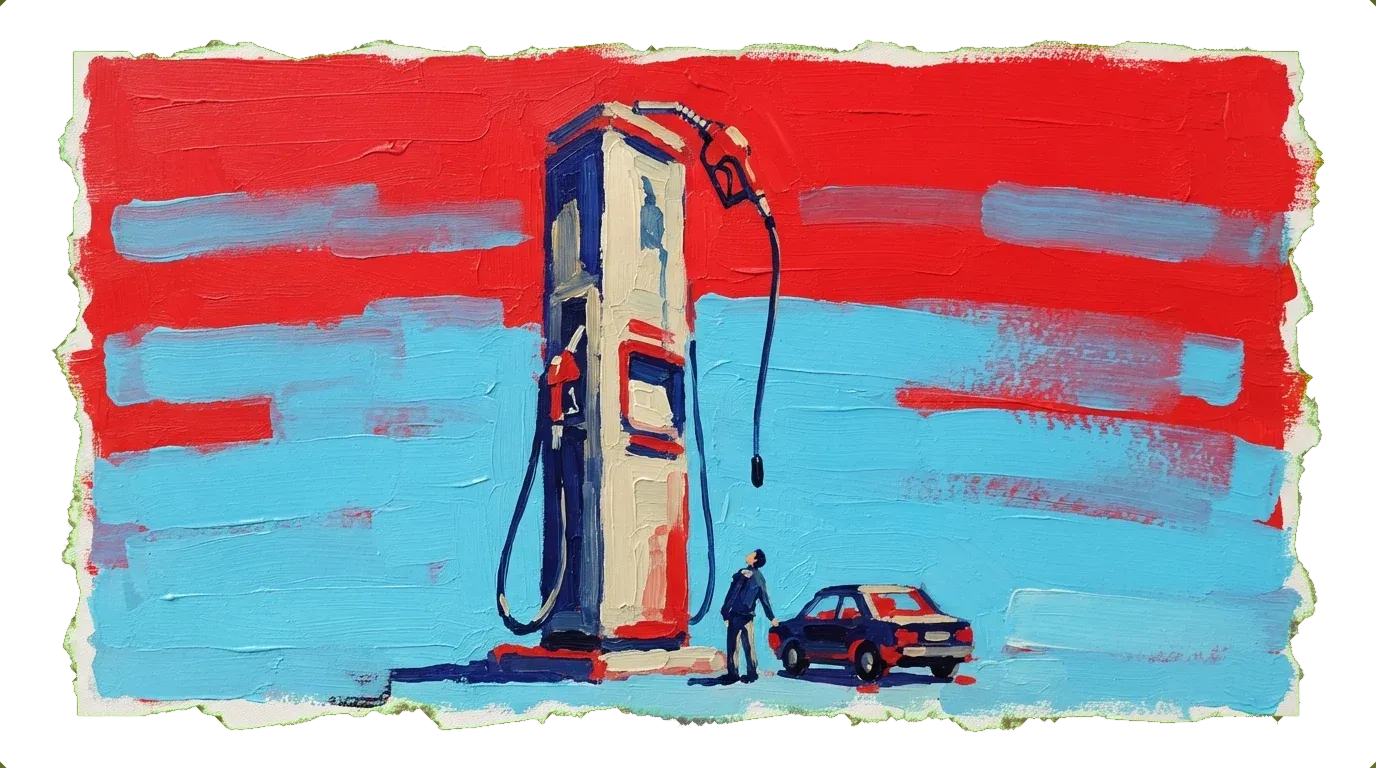
When the Strait of Hormuz closed earlier this year, fuel prices in south-east Queensland did something unusual: they flattened out. The notorious Brisbane price cycle, that six-to-eight week roller-coaster of sudden 50-cent hikes followed by slow discounting, went quiet. Retail margins fell to their lowest level since 2019. Motorists, for a few months, paid something closer to what the fuel actually cost.
Now the cycle appears to be coming back. The RACQ reports that about ten per cent of stations in south-east Queensland have jumped to just under $2 a litre, some 30 cents above the metro average of 172.1 cents. The organisation's economic specialist, Ian Jeffreys, reads this as a deliberate probe, a few retailers hiking prices to see whether the rest of the market follows. If they don't, the high-price stations come back down. If they do, the cycle re-establishes itself and everyone rides it.
The Australasian Convenience and Petroleum Marketers Association takes a different view. Its CEO, Rowan Lee, argues the cycle is simply competition expressing itself: leaders push up, others follow up, leaders push down, others follow down. With fuel price apps now ubiquitous, he says, any station that lifts prices by 30 cents "won't be doing much business." Consumers, in other words, are the discipline mechanism.
Both of these things can be true at the same time. The cycle does reflect competition, in the same way a cartel reflects negotiation. The outcome is not necessarily benign just because the mechanism is market-based.
A 5-cent cap solves the cycle but not the crisis
But the policy cure is where the analysis gets harder. Jeffreys points to the former Labor government's pre-election pledge to cap daily petrol price rises at five cents per litre. The RACQ's own modelling suggests such a cap would either break the cycle or compress it to a weekly rhythm, which Jeffreys says delivers more genuine competition. That sounds appealing. The cycle is genuinely unfair to motorists who fill up on the wrong day, and anyone who has watched their bowser tick past $120 on a Tuesday could be forgiven for thinking the market needs a referee.
The problem is what the Hormuz crisis already demonstrated in practice. Rowan Lee's point about the fuel crisis is not spin; it is a description of a real economic constraint. When the input cost of fuel rises sharply and suddenly, a cap on retail price movements means retailers may be selling below cost. The rational response is to close or to stop ordering stock. Lee put it plainly: "Why would you open your shop if you're going to lose 15 cents a day on every litre?"
The design of a price control that works in normal conditions can be exactly the wrong instrument in the conditions that most justify intervention.
This is not a hypothetical. It is the same mechanism that destroyed rental supply in cities with hard rent controls. Cap the price of something below its cost of supply, and the supply goes away. In the case of housing, that means a waiting list. In the case of fuel during a crisis, it means queues and dry bowsers, which is a significantly more acute problem when people are trying to evacuate or emergency services need to move.
The timing matters too. A 5-cent daily cap on price rises looks manageable when you are thinking about the ordinary price cycle. It looks very different when the wholesale price has moved 30 cents overnight because a shipping lane closed. The design of a price control that works in normal conditions can be exactly the wrong instrument in the conditions that most justify intervention.
Transparency may do the work a cap cannot
None of this means the current situation is acceptable. Brisbane having the longest average fuel price cycle of any major Australian city is not a market triumph. It is evidence that the "competition" on display is not working in consumers' interest in any meaningful way. The question is whether the cure is a price cap, or whether better transparency, mandatory real-time price reporting, and stronger ACCC monitoring would do the work without creating the supply-side risk.
Jeffreys and Lee are both describing the same market. They disagree about whether the cycle is predatory or competitive. What neither disputes is that when margins compressed during the crisis, the cycle collapsed. That is not an argument for engineering another crisis. It is a reminder that the most effective price control in the Hormuz episode was not a regulation at all. It was reality, arriving at speed from the Persian Gulf.
Sources
ABC News — South-east Queensland's 'unfair' fuel price cycle returning, RACQ warns
Frequently Asked Questions
Why does Brisbane's petrol price cycle keep coming back?
The Brisbane cycle — six-to-eight weeks of sharp price hikes followed by slow discounting — reflects coordinated pricing behaviour among retailers testing whether competitors will follow a price rise. When a critical mass of stations lifts prices, the cycle re-establishes itself. Consumer price apps create some discipline, but have not been enough to break the pattern.
What would a 5-cent daily cap on petrol price rises actually do?
RACQ modelling suggests a 5-cent daily cap would either break the Brisbane price cycle entirely or compress it to a weekly rhythm, delivering more consistent pricing for motorists. The risk is that during supply shocks — when wholesale prices move sharply overnight — retailers selling below cost may simply close or stop ordering stock.
What happened to petrol prices in Brisbane when the Strait of Hormuz closed?
When the Strait of Hormuz closed earlier in 2026, wholesale fuel costs rose sharply and retail margins fell to their lowest level since 2019. The price cycle collapsed because retailers had no room to impose discretionary price hikes when their own input costs had already moved.
Why do price caps sometimes make fuel shortages worse?
If a cap holds retail prices below the cost of supply during a crisis, retailers lose money on every litre sold and have a rational incentive to close or reduce orders. This is the same mechanism that reduced rental housing supply in cities with hard rent controls — capping the price removes the incentive to supply.
Is there an alternative to a petrol price cap that would still protect consumers?
Mandatory real-time price reporting, better transparency mechanisms, and stronger ACCC monitoring are all proposed as alternatives that could compress the price cycle without creating supply-side risks. These approaches work by making pricing behaviour more visible to consumers and regulators rather than directly constraining what retailers can charge.