Terrorists don’t respect gun laws
The Bondi buyback targets licensed gun owners who follow the law. The question no one in government is answering is how the attackers got their weapons.

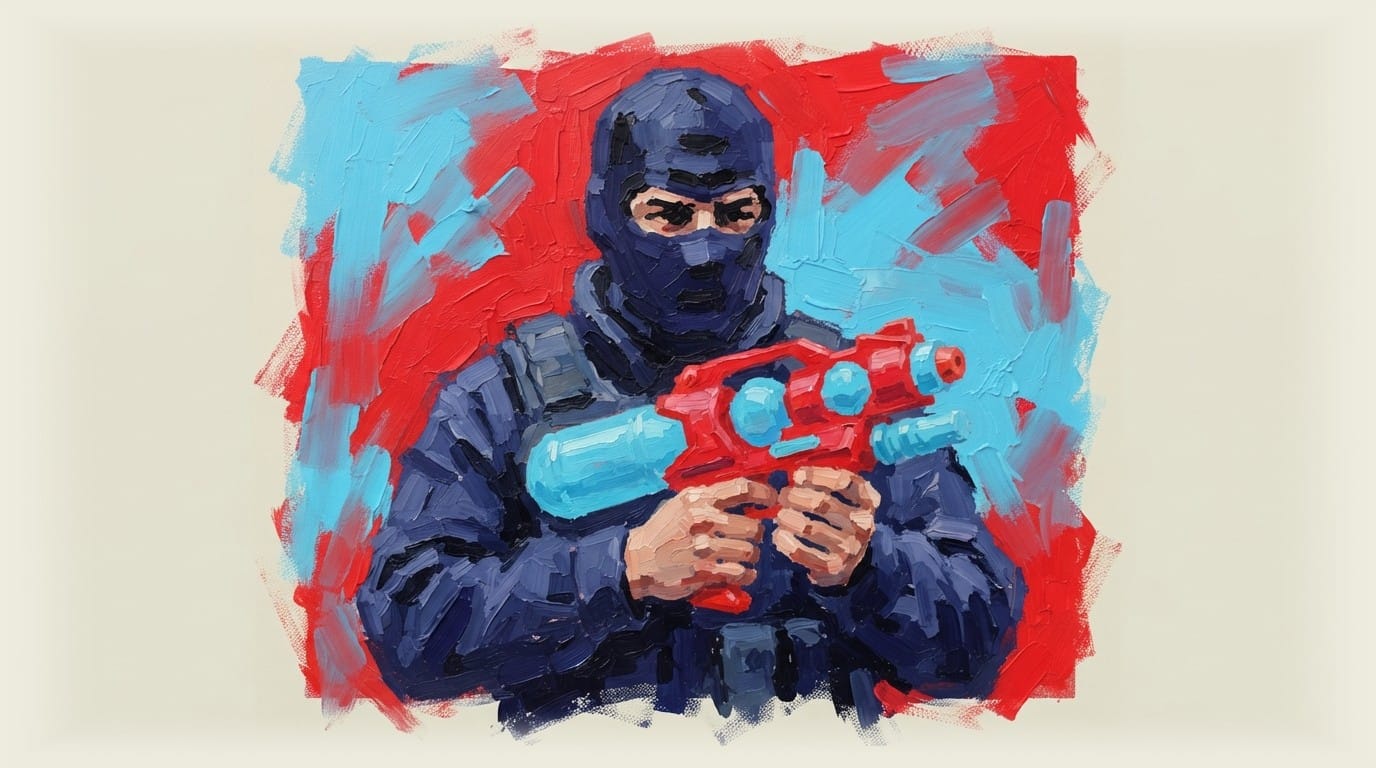
Terrorists don't respect gun laws
The Bondi Beach attack left at least sixteen people dead and a nation rattled. It also left a political opportunity, and Australian governments rarely let one of those go to waste. New South Wales has announced what is being billed as the country's biggest gun buyback in thirty years, jointly funded with the federal government, explicitly framed as a response to the attack. The Prime Minister has said plainly that one of the terrorists held a firearm licence and had access to six guns and that someone in suburban Sydney has no need for that many. It is a clean line. It is also, on the available evidence, a near-complete non-sequitur.
A buyback can only transact with the legal market
The policy logic here deserves to be taken seriously before it is tested, because the stated case is not nothing. Reducing the total stock of firearms in circulation does, at the margins, make illicit acquisition harder. If there are fewer guns in sheds and cabinets, there are fewer guns that can be stolen and diverted into criminal or extremist hands. That is a real mechanism. The question is whether it is the mechanism that matters most in the context of a politically motivated terror attack, and whether a voluntary buyback is the instrument that meaningfully activates it.
The Bondi attackers were not farmers who owned a few registered rifles. They were people who had acquired weapons outside the legal channels that a buyback scheme touches. A buyback, by definition, is a transaction with the legal market. You surrender a gun you legally own, in exchange for compensation. The guns that come in are the guns that were already on the books: registered, traceable, held by people who comply with licensing requirements. Those are, almost by definition, not the guns that end up in a terrorist's hands.
The signal and the effect are being sold as the same thing, and they are not.
This is the central problem, and it is not a partisan one. It is mechanical. The scheme is designed to interact with the regulated population of firearms and their owners. Terrorists and serious criminals are not members of that population. They source weapons through theft, through grey market transfers, through importation of unregistered firearms, or through modification of otherwise legal items. None of those channels are meaningfully closed by asking a duck hunter in Dubbo to hand over a semi-automatic in exchange for a cheque.
The 1996 comparison doesn't hold
Australia's 1996 buyback, which removed roughly 650,000 firearms from circulation, was a different beast. It was compulsory, it covered a specific class of newly prohibited weapons, and it ran alongside sweeping legislative reforms that fundamentally altered what could be legally owned. The question of its effect on mass shooting rates has been studied extensively and remains genuinely contested in the academic literature, with some researchers finding a meaningful reduction and others arguing the trend was already in motion. What is not contested is that the 1996 scheme operated at a scale and with a legislative architecture that this one does not.
The scheme targets the compliant, not the dangerous
What this one does, with confidence, is generate a political signal. The government can say it acted. The Premier can say New South Wales led. Advocacy organisations that have spent years pushing for tighter gun laws can claim momentum. In the competitive attention economy of post-tragedy politics, that signal has value, and the people generating it are not fools. They understand exactly what they are doing. The trouble is that the signal and the effect are being sold as the same thing, and they are not.
The people who will be most affected by this scheme are the same people the Coalition and One Nation identified as its actual targets: licensed gun owners in regional and rural areas, who use their firearms for work, pest control, and recreation, who already comply with registration and licensing requirements, and who had nothing to do with the Bondi terrorist attack. The complaint that the scheme unfairly targets law-abiding gun owners is not simply a lobby talking point. It is an accurate description of who participates in a voluntary buyback, because law-abiding gun owners are the only ones who do.
The harder conversation the government isn't having
There is a version of a serious policy response to the Bondi attack. It would involve hard questions about how the terrorists acquired weapons, what gaps in the existing regulatory framework allowed that to happen, what intelligence failures preceded the event, and what targeted reforms might close specific vulnerabilities. That conversation is harder to have in a press conference. It does not produce a clean image of weapons being handed over a counter. It requires the government to examine its own agencies rather than its constituents' gun cabinets.
What the country got instead is a buyback with a press strategy. The guns it removes were never going to a terrorist. The ones a terrorist might use remain exactly where they were.
Sources
Guardian Australia — Does Australia have a gun problem? Full Story podcast
Frequently Asked Questions
Why won't a gun buyback stop terrorist attacks in Australia?
A buyback is a transaction with the legal firearms market — it only collects weapons from licensed owners who comply with registration requirements. Terrorists and serious criminals source weapons through theft, grey-market transfers, or unregistered imports, none of which a voluntary buyback reaches.
How does the new NSW gun buyback compare to the 1996 buyback?
The 1996 scheme was compulsory, removed roughly 650,000 firearms, and ran alongside sweeping legislative reforms that fundamentally changed what Australians could legally own. The current buyback is voluntary and lacks that legislative architecture, making it a significantly smaller intervention by any measure.
Who actually hands in guns during a voluntary buyback?
Licensed gun owners who already comply with registration and licensing laws — precisely the population that had no involvement in the Bondi attack. Criminals and politically motivated actors do not participate in voluntary government buyback schemes.
Did the 1996 gun buyback reduce Australia's mass shooting rate?
The question remains genuinely contested in the academic literature. Some researchers find a meaningful reduction in mass shootings following the 1996 reforms; others argue the downward trend was already established before Port Arthur. There is no settled consensus.
What policy response would actually address how terrorists get guns in Australia?
A serious response would require examining the specific acquisition pathway the Bondi attackers used, identifying gaps in the existing regulatory framework that permitted it, and investigating any preceding intelligence failures. Those questions are harder to answer in a press conference than announcing a buyback.