The best way to avoid decommissioning costs is to have viable energy projects
Two companies worth $9 million just left a $200 million cleanup bill in the Indian Ocean. The question isn't who pays — it's why the rules let this happen at all.

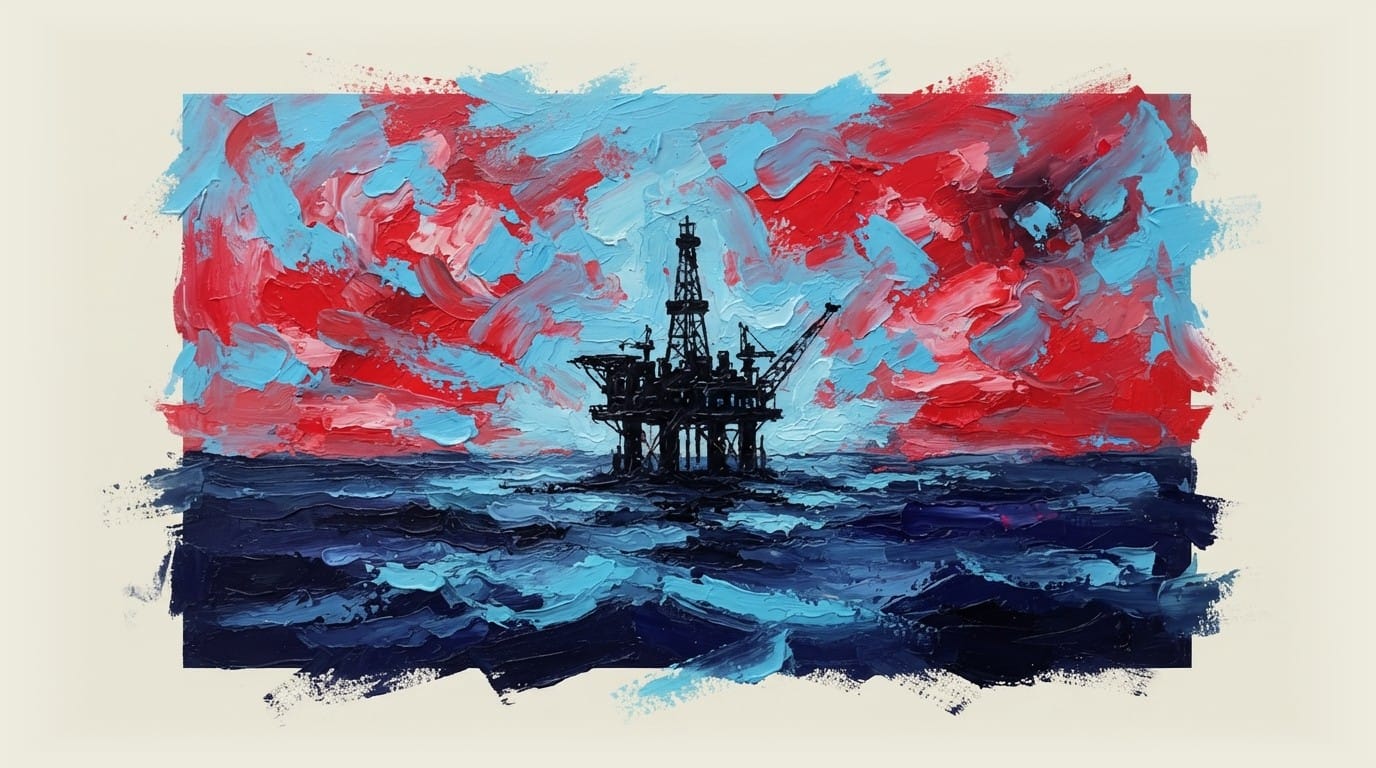
Eleven kilometres off the coast of Dongara, a rusting oil platform sits untended in the Indian Ocean. Its owners — Triangle Energy and Pilot Energy — went into voluntary administration this month with a combined market value of roughly $9 million and a decommissioning bill of roughly $200 million. Local cray fishers are worried about the pipework beneath the surface. Conservationists are worried about what this signals for $60 billion worth of offshore infrastructure up and down the WA coast. The federal government is promising taxpayers won't foot the bill. Everyone is talking about the cleanup. Fewer people are asking how we got here.
The arithmetic was broken long before administration
The arithmetic here is not complicated. Two companies worth a combined $9 million held an obligation worth $200 million. That is not a rounding error or a bad quarter — it is a structural mismatch that existed long before either company entered administration. The question is not just who cleans up the Cliff Head platform. The question is how that gap opened in the first place, and why existing regulation didn't close it.
Part of the answer lies in how Australia has historically treated decommissioning bonds and financial assurances for offshore petroleum titles. Titleholders are legally obligated to cover decommissioning costs, and the government has pointed to that obligation as the reason taxpayers are protected. But a legal obligation is only as useful as the balance sheet behind it. When a company with $9 million in combined assets holds a $200 million liability, the legal framework is not protecting anyone — it is describing a problem that has already happened.
The Conservation Council of WA's Matt Roberts put it plainly: there are $60 billion worth of infrastructure off the WA coast, and the financial assurance regime that was supposed to govern its end-of-life hasn't been legislated. The government has talked about introducing such a regime. It has not passed one. The Cliff Head situation is not a black swan — it is precisely the outcome you get when asset owners have more incentive to explore than to provision for what comes after.
The Cliff Head situation is not a black swan — it is precisely the outcome you get when asset owners have more incentive to explore than to provision for what comes after.
Smaller operators carry the risk the big names don't
This matters for a reason beyond Dongara's crayfishers, real as their concerns are. The offshore oil and gas sector is not a stable industry moving toward orderly wind-down. It is a sector under genuine financial pressure from the energy transition, navigating falling reserves, tightening capital markets, and the growing difficulty of raising equity for assets with contested futures. The companies most likely to hold marginal, aging infrastructure — exactly like Cliff Head — are smaller operators without the balance sheets of a Woodside or a Santos. They are also the operators least likely to have provisioned adequately for decommissioning. The risk profile for the next Cliff Head is not shrinking.
The backstop is becoming a blueprint
The government's response to date has been to reassure. Resources Minister Madeline King said the offshore safety regulator has taken steps to prevent immediate environmental harm, and that she would not hesitate to extend the Northern Endeavour levy if needed to cover costs. That levy — introduced after the Northern Endeavour vessel was abandoned by its owner in 2019 — is itself a measure that exists because the previous regulatory framework failed. It is now being cited as the backstop for the next failure. That is the kind of policy architecture that works once before it becomes normalised, and then stops working at all.
There is a version of this story where Australia gets ahead of it. A properly designed financial assurance regime — one that requires companies to hold bonds or make contributions proportional to their actual decommissioning liabilities, updated as assets age and companies' financial positions change — would reorder the incentives. It would make the cost of holding marginal infrastructure visible before administration, not after. It would push companies to either provision adequately or exit assets they cannot afford to close. It would not prevent companies from collapsing, but it would mean the liability didn't vanish with them.
As we've noted before in our coverage of the Woodside North West Shelf extension, the government's approach to offshore resource governance has tended toward process and assurance rather than structural reform. The pattern here is similar: respond to the immediate crisis, point to the legal framework, defer the harder design question. That approach has a cost, and the Cliff Head platform is sitting in the water wearing it.
The fishers of Dongara are right to be worried. They just might be worried about the wrong thing. The platform is a symptom. The question worth asking is what it will take to stop producing more of them.
Sources
ABC News — Gas companies go bust and leave oil rig sitting idle off WA coast
The Bearing — New heritage for old gas site
The Bearing — Government's dodgy loan to a dodgy manganese smelter
Frequently Asked Questions
Who pays when an oil company goes bust and can't afford to decommission its platform?
In Australia, the legal obligation to decommission stays with the titleholder — but when a company collapses with assets worth far less than its cleanup bill, that obligation is worthless in practice. The federal government has tools like the Northern Endeavour levy to cover costs, which means the burden ultimately falls on either industry or taxpayers.
Why doesn't Australia require oil companies to put money aside for decommissioning before they go bust?
Australia has been developing a mandatory financial assurance regime for offshore petroleum infrastructure, but it has not been legislated. Without that requirement, companies can legally operate assets with enormous end-of-life costs while carrying balance sheets far too small to cover them.
How big is Australia's offshore decommissioning liability?
The Conservation Council of WA estimates there is around $60 billion worth of offshore infrastructure along the WA coast alone that will eventually require decommissioning. The financial assurance regime that was supposed to govern how those costs get covered has not yet passed into law.
What is the Northern Endeavour levy and why does it matter for Cliff Head?
The Northern Endeavour levy was introduced after a separate offshore vessel was abandoned by its owner in 2019, leaving the government to cover cleanup costs. Resources Minister Madeline King has flagged extending the same levy to cover the Cliff Head situation — meaning a mechanism created for one regulatory failure is now being stretched to address another.
Are bigger oil companies like Woodside and Santos at risk of the same problem?
The immediate risk sits with smaller operators, not majors. Companies like Woodside and Santos have balance sheets large enough to cover decommissioning obligations; the danger lies with marginal, aging assets held by smaller firms that lack the capital to provision adequately — exactly the profile of Triangle Energy and Pilot Energy.