Upside-down parties and forgotten politics
Wayne Swan says Labor's historic majority is 'wide but shallow' — and the voters missing from it are the ones the party was built to represent.

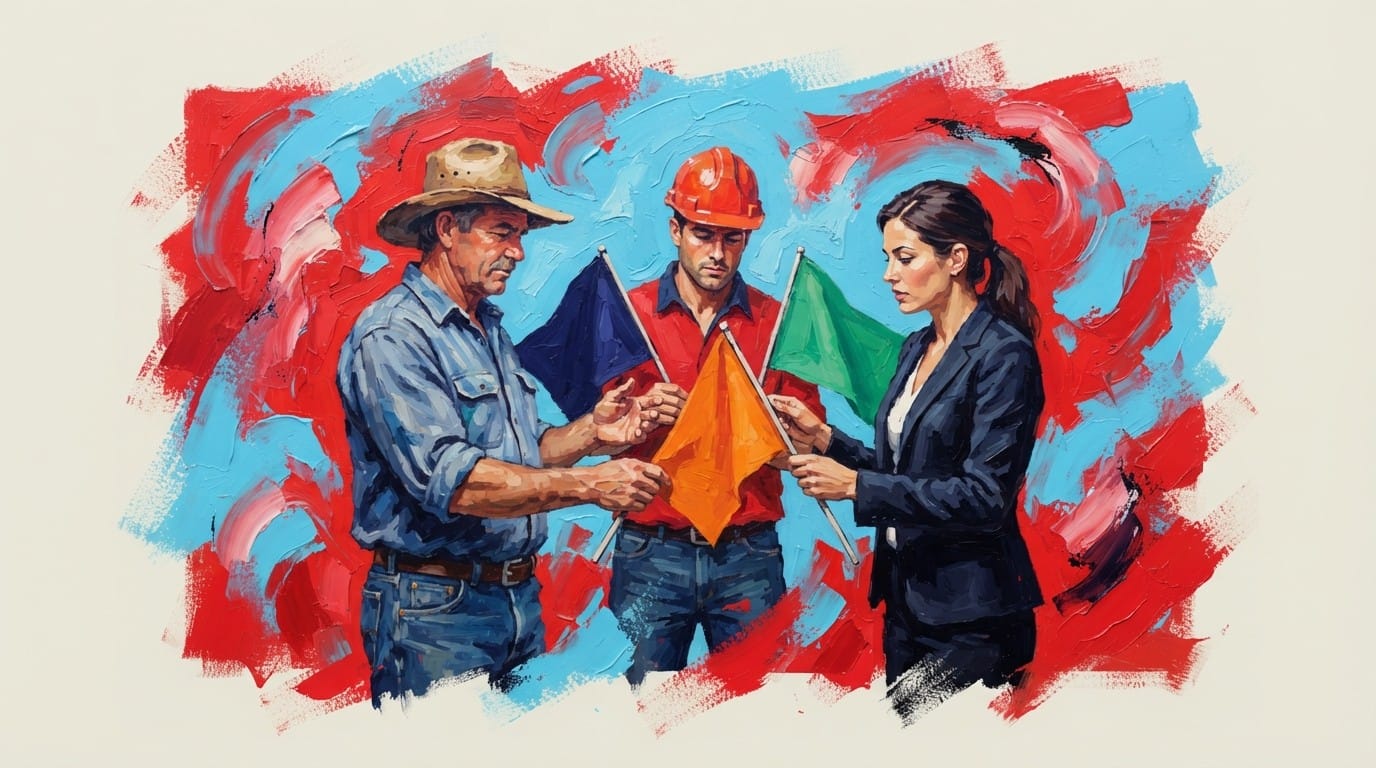
Something strange has happened to Australian politics. The party built on the labour movement is losing working-class voters. The conservative parties are chasing this week's poll numbers rather than any coherent governing philosophy. And the Greens, supposedly the custodians of environmental politics, spend more of their energy on housing and welfare than on the planet. The furniture has been rearranged, and nobody has quite acknowledged it yet.
Labor's record majority is built on a floor that isn't far down
The clearest statement of the problem came from inside Labor itself. Swan, treasurer through the global financial crisis, deputy prime minister, and outgoing party president after eight years, said plainly that despite last year's landslide, Labor "simply failed to secure strong support from lower-income, lower-educated Australians." These are not fringe voters. They are the constituency that gave the ALP its reason for existing. The party won its record seat count on a two-party preferred vote of around 53 to 54 per cent, which means the floor is not far below where they currently stand. Swan's arithmetic is blunt: it would not take much of a primary vote fall for those 94 seats to start evaporating.
The beneficiary, on current polling, is One Nation. Swan describes the contest now as "Labor on one hand and a clutch of right-wing parties, including One Nation, the Liberal Party, and the National Party, on the other." That framing might sound self-serving, but the structural point underneath it is real. One Nation has essentially absorbed the working-class conservative vote that the Liberals used to manage through cultural signalling and the Nationals through rural patronage. Neither party has shown any clear idea of what to do about it beyond anxiety.
When a party no longer has a governing philosophy, it becomes easy prey for a competitor willing to speak plainly to the anxious, even if that plain speech has no policy substance either.
The conservative collapse is philosophically interesting, not just tactically embarrassing
This is what makes the conservative collapse philosophically interesting, not just tactically embarrassing. The Liberals were once the party of economic liberalism, of lower taxes, smaller government, and individual enterprise. The Nationals were the party of agricultural communities and decentralisation. Both of those missions had genuine content. What has replaced them, largely, is reactive positioning: whatever the next poll suggests voters want to hear, delivered without a theory of government behind it. When a party no longer has a governing philosophy, it becomes easy prey for a competitor willing to speak plainly to the anxious, even if that plain speech has no policy substance either.
The Greens have drifted from the environmental flank they were built to hold
The Greens present a different kind of drift. They remain genuinely committed on climate, but the political energy inside the party, and much of its public profile, has shifted toward tenants' rights, social housing, and wealth redistribution. These are legitimate policy concerns, but they are not what the Greens were built around, and the shift has created a party that can credibly appeal to inner-city renters while struggling to hold the environmental flank against a Labor party that has found it useful to occupy that ground when expedient.
What connects all three is voter volatility. Swan describes living in "a time of anxiety, of dramatic insecurity, both in terms of economic outlooks and the security outlook." He is right that this is not uniquely Australian. Across comparable democracies, the major parties that managed stable two-party systems for decades are losing primary vote share to new entrants, regional movements, and single-issue parties. The Australian version of this is relatively orderly, but it is the same phenomenon.
A correct diagnosis presented as its own solution
The question for Labor is whether it can rebuild a genuine working-class constituency or whether it has permanently become the party of the professional middle, the inner suburbs, and the public sector. These are not incompatible groups, but serving them simultaneously requires a coherent economic offer, not just cost-of-living rhetoric. Swan's answer, at this week's national conference, is that Labor needs to demonstrate it is delivering "real change" on financial pressure. That is a correct diagnosis presented as its own solution.
Australian politics has not broken. But it has rearranged itself around anxieties that none of the established parties were designed to address, with constituencies that do not map neatly onto the old dividing lines. The party that figures out how to build a durable majority from this landscape will probably look quite different from the ones we have now. The ones that keep rearranging the furniture without noticing the floor plan has changed will keep losing ground to parties they do not take seriously until it is too late.
Sources
The Conversation — Wayne Swan on a 'dramatically different' political contest
Frequently Asked Questions
Why is Labor losing working-class voters despite winning a record majority?
Labor's 94-seat majority was built on a two-party preferred vote of around 53 to 54 per cent — strong enough to win seats but not deep enough to reflect genuine working-class support. The party's primary vote is 'wide but shallow,' relying on a coalition of professional, inner-suburban, and public-sector voters rather than the lower-income Australians it was founded to represent.
What is One Nation's role in the current Australian political landscape?
One Nation has effectively absorbed the working-class conservative vote that the Liberal and National parties used to hold through cultural signalling and rural patronage. On current polling, it is the primary beneficiary of voter dissatisfaction among lower-income Australians who have drifted away from both major parties.
Have the Greens abandoned environmental policy?
The Greens remain committed to climate policy, but the party's political energy and public profile have shifted substantially toward housing, tenants' rights, and wealth redistribution. This has allowed the Greens to build support among inner-city renters while making it harder to hold the environmental flank against a Labor party that occupies that ground when it is convenient.
Why don't the Liberal and National parties have a clear policy direction?
Both parties once had coherent governing philosophies — economic liberalism for the Liberals, agricultural community and decentralisation for the Nationals — but these have largely been replaced by reactive positioning driven by polling rather than any theory of government. Without a unifying philosophy, neither party has a clear response to the voter migration toward One Nation.
Is Australia's political fragmentation unusual compared to other countries?
The pattern is common across comparable democracies, where major parties that managed stable two-party systems for decades are losing primary vote share to new entrants, regional movements, and single-issue parties. Australia's version of this fragmentation is considered relatively orderly, though the piece does not explain why.