We all saw what we saw. If the PM can’t see it, then we see a fool
A week of genuine legislative wins — gun buybacks, gambling reform, childcare wages — and almost none of it cut through. Here's why that was entirely avoidable.

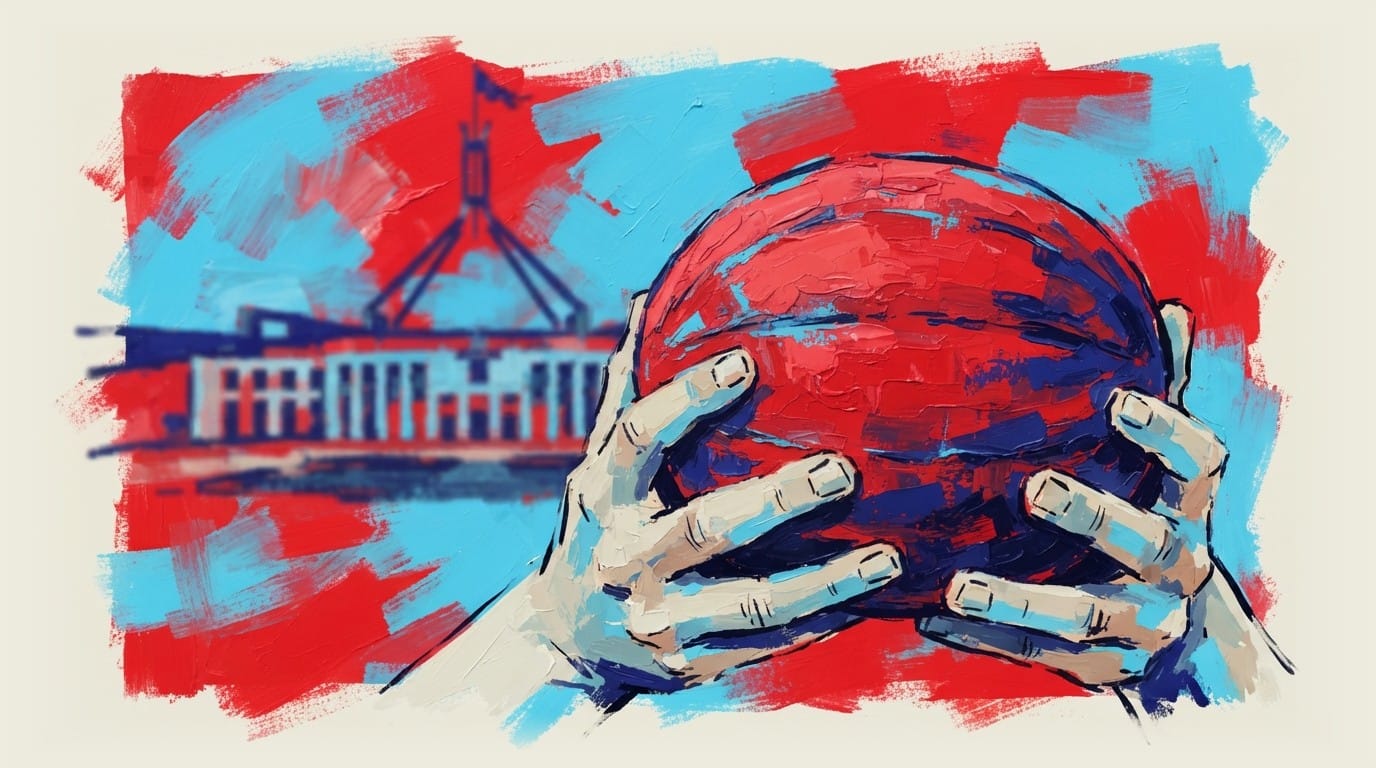
There is a version of last week that belongs entirely to the government: a gun buyback finalised with New South Wales, gambling advertising reforms strengthened and headed for a Senate vote, a news bargaining incentive locked in, a childcare wage bill introduced, and a bail-out of the Tomago aluminium plant. It is a substantial week's work by any honest measure. Almost none of it cut through, because Anthony Albanese spent the week refusing to acknowledge a melon joke.
Stonewalling is not a neutral choice — it is a daily tax on your own airtime
Political controversies of this kind have a natural lifespan. Left alone, they die. Fed oxygen, they feed back. The fuel here was not the original incident; it was the government's response to it, which managed to be both defensive and opaque. Every day the PM declined to name the thing and move on was another day the press gallery had no new angle to chase except the non-apology itself.
This is a mechanics problem, not a morality problem. Whether the original remarks were offensive or merely awkward is beside the point. The calculus is simple: the political cost of a genuine apology is low and one-off. The political cost of stonewalling is daily and cumulative, paid in airtime that belongs to your opponents, eaten out of the space where your policy wins should be landing. A leader who has genuinely won the week on substance and then loses it on process has not had a good week. They have had a very avoidable bad one.
That story was available. The government did not tell it. Instead it left a vacuum, and a melon joke filled it.
What makes it stranger is that the government clearly understood it was sitting on real legislative progress. Josh Butler's account in the Guardian makes plain that Albanese and Angus Taylor were meeting repeatedly across the week to stitch up deals on gambling, the NDIS, and the news bargaining incentive. These are not trivial outcomes. They represent the kind of methodical, cross-aisle legislating that the government's own pitch to voters — orderly, safe, get-things-done — is supposed to embody. The Coalition dealing itself into the room rather than standing outside waving a placard is, on the government's own terms, exactly what a functioning parliament is supposed to look like.
That story was available. The government did not tell it. Instead it left a vacuum, and a melon joke filled it.
The "no concessions" logic breaks down when the categories are unconnected
There is a harder truth underneath this. The refusal to apologise or neutralise a small controversy is often not a communications failure in isolation. It usually reflects a belief inside the leadership that capitulation on any front sets a dangerous precedent, that giving ground on the trivial invites pressure on the substantial. That logic is understandable and occasionally correct. Here it is wrong, because the two categories were never connected. Nobody was going to leverage a concession on the podcast remarks into a demand for concessions on NDIS savings or gambling regulations. They are not the same audience, not the same mechanism, not the same.
The government's position now is that the legislation will speak for itself, that voters will eventually see the gambling reforms and the childcare wages and the aluminium plant and draw the obvious conclusion. Maybe. But voters tend to see what they are shown, and what they were shown last week was a prime minister unwilling to say something obvious. The reforms are real. The self-inflicted distraction was also real. Both of those things can be true.
A brief, plain acknowledgement, offered on the first day, would have cost the government nothing it was not already paying. The story would have ended. The week of legislative wins would have had room to breathe.
That acknowledgement never came, and the week it was supposed to be belongs to a juvenile fruit joke instead.
Sources
Frequently Asked Questions
What is melon-gate and why did it become such a big deal in Australian politics?
Melon-gate refers to remarks Anthony Albanese made on a podcast that were widely circulated and considered offensive or awkward. It became politically damaging not because of the remarks themselves but because the Prime Minister spent an entire week declining to acknowledge or apologise for them, keeping the story alive and crowding out news of genuine legislative wins.
What did the Albanese government actually achieve in parliament the week of melon-gate?
The government finalised a gun buyback with New South Wales, strengthened gambling advertising reforms and moved them toward a Senate vote, locked in a news bargaining incentive, introduced a childcare wage bill, and secured a bail-out of the Tomago aluminium smelter. By most measures it was a productive parliamentary week — one that received almost no coverage.
Why didn't Albanese just apologise and move on?
The most likely internal reasoning is that prime ministerial offices often treat any concession as a precedent — giving ground on a small matter is seen as inviting pressure on larger ones. That logic does not hold here because a podcast controversy and NDIS or gambling negotiations involve entirely different audiences, mechanisms, and political pressure points.
What is Angus Taylor's strategy in parliament and why is it controversial inside the Coalition?
Taylor's office has largely declined to engage with government legislation this term, allowing the crossbench to extract progressive amendments and then campaigning against the outcomes. Coalition MPs have criticised this as surrendering the reform agenda to the Greens and independents, leaving the opposition with no policy ground of its own. This week's constructive dealings with the government marked a potential shift in that approach.
How does a government manage a media controversy without letting it dominate the week?
The core principle is that small controversies have a natural lifespan — they die if deprived of oxygen. The fastest way to deprive them of oxygen is a single, direct acknowledgement on the first day, which removes the press gallery's only remaining angle. Stonewalling instead converts a one-off cost into a daily one, paid in airtime that would otherwise belong to the government's own narrative.