What Australians really think about falling house prices
Australians are split on falling house prices — but the two sides of that debate are not carrying equal political weight.

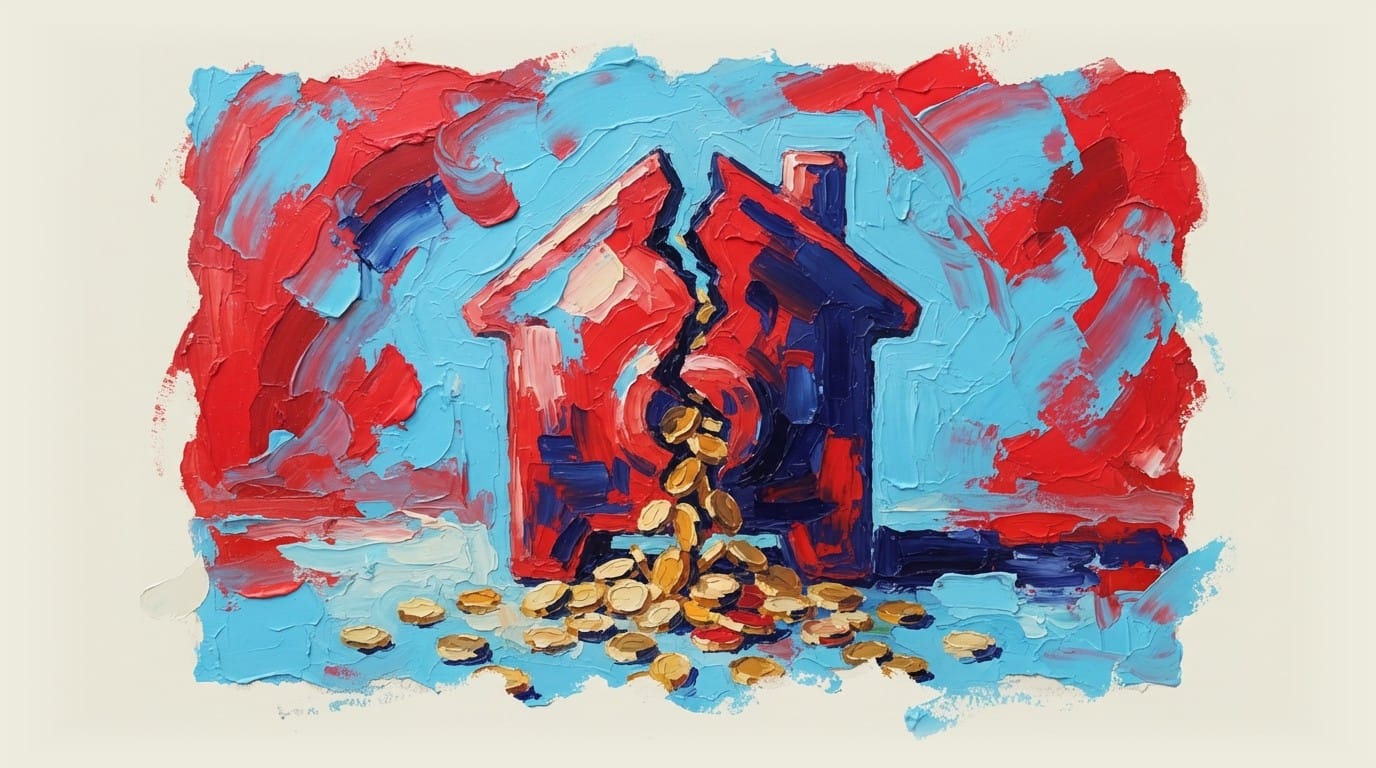
Ask ten Australians how they feel about falling house prices and you will get, broadly, two different conversations happening past each other. The first is from people who do not yet own a home, who hear "prices are down" the way a parched traveller hears "rain is coming." The second is from people who do own, who have watched their net worth climb for a decade and are now experiencing something between mild unease and genuine alarm. The polling that purports to capture this divide is interesting, but it needs to be handled with care.
The sentiment split tracks self-interest, not settled conviction
The split in sentiment is real and it is not surprising. Owner-occupiers hold the bulk of their household wealth in residential property. For many, particularly older Australians who bought in the 1990s or early 2000s, that asset has multiplied in value several times over. A price correction is not abstract to them. It shows up in their borrowing capacity, in their retirement calculations, in the number they mentally attach to their own security. A ten per cent fall on a $1.2 million home is $120,000 gone, at least on paper, and people feel paper losses keenly even when they have no plans to sell.
For renters and prospective buyers, particularly younger Australians who have been priced out of ownership for years, the emotional arithmetic runs in the opposite direction. Every percentage point down is a percentage point closer to something that had begun to feel permanently out of reach. The frustration in this cohort runs deep enough that even modest falls feel like vindication of a long wait, even when the numbers still make ownership extraordinarily difficult on a median wage.
A market that rose forty per cent and then fell eight per cent has not returned to affordability. It has become slightly less unaffordable, which is a different thing.
A few per cent down from a forty per cent peak is not an affordability fix
What the polling cannot easily capture is whether any of this actually constitutes a meaningful shift. Australian house prices, despite some correction from their 2022 peaks, remain at levels that are historically extreme relative to incomes. CoreLogic data has shown that even after the sharpest recent falls, prices in Sydney and Melbourne sat well above their pre-pandemic levels. A market that rose forty per cent and then fell eight per cent has not returned to affordability. It has become slightly less unaffordable, which is a different thing.
There is also a timing problem with sentiment polling. Attitudes toward falling prices tend to track recency: ask someone the week after a headline says "property market cools" and you get a different answer than you get three months later when the Reserve Bank has moved rates and the news cycle has shifted again. Snap readings of a feeling this context-dependent carry less weight than they appear to.
People hold contradictory positions when their own balance sheet is involved
The methodological issue cuts both ways. Polling on economic sentiment often captures anxiety or relief in the moment rather than settled conviction about what is good policy or good for the country. A homeowner who says they are "concerned" about falling prices may also, asked a different question, agree that housing is too expensive for young people. People hold contradictory positions, particularly on assets where their personal financial interest is directly engaged. That is not hypocrisy. It is the ordinary complexity of someone being both a parent watching their children rent forever and a homeowner watching their balance sheet.
Falling prices are not a vote-winner in a country where two thirds of households own their home
What is clear, politically, is that falling house prices are not the vote-winner they might once have seemed in a country where nearly two thirds of households own their home either outright or with a mortgage. Governments of both stripes have historically been cautious about anything that structurally deflates property values, and the sentiment data helps explain why. The ownership rate means that the political coalition with a direct interest in prices staying high is considerably larger than the one cheering for falls.
That does not mean affordability reform is impossible. It means the politics of it are genuinely difficult, and that polling showing some Australians welcome falling prices understates the institutional and electoral weight behind keeping them elevated. The two sides of the conversation are not equally matched, and how that shapes policy is the more important question than how people feel this week about a market that has moved a few per cent in either direction.
The real affordability test is not sentiment. It is whether, over a sustained period and at a scale that actually matters, the ratio of house prices to median incomes comes down. That has not happened yet.
Sources
CoreLogic — Housing Market Update
Australian Bureau of Statistics — Housing Occupancy and Costs
Reserve Bank of Australia — Financial Stability Review: Housing
Australian Housing and Urban Research Institute — Housing Affordability
Frequently Asked Questions
Why do Australian homeowners worry about falling house prices even if they are not selling?
For most Australian homeowners, residential property is the single largest component of household wealth, so price falls affect borrowing capacity, retirement calculations, and financial security even on paper. People feel losses acutely regardless of whether they plan to sell, which is why sentiment turns negative quickly when prices dip.
Have Australian house prices actually become more affordable after recent falls?
Not in any durable sense. Australian prices rose sharply — around forty per cent — from pre-pandemic levels through the 2022 peak, and subsequent corrections have been modest by comparison. A market that falls eight per cent after rising forty per cent is slightly less unaffordable, but the price-to-income ratio remains historically extreme.
Why don't Australian governments push harder for lower house prices?
Nearly two thirds of Australian households own their home outright or with a mortgage, which means the political coalition with a direct interest in prices staying high substantially outnumbers those who would benefit from falls. Governments of both major parties have historically avoided policies that would structurally deflate property values for exactly this reason.
Can someone support housing affordability and still not want prices to fall?
Yes, and polling regularly captures this contradiction. A homeowner can simultaneously believe housing is too expensive for young people and feel genuine anxiety about their own balance sheet declining. These positions are not hypocritical — they reflect the ordinary tension of holding a major financial asset while also being a parent or community member.
What is the real measure of whether housing affordability has improved in Australia?
The meaningful test is whether the ratio of house prices to median incomes falls over a sustained period and at a scale that genuinely changes who can afford to buy. Short-term sentiment polling and modest price movements do not answer that question — and as of the most recent data, that ratio has not materially improved.