Woolworths tries the jingle cure for Darwin loitering, and annoys everyone else
A Darwin Woolworths is looping its own jingle outdoors to drive away loiterers — but who leaves first, the troublemakers or the paying customers?

Woolworths tries the jingle cure for Darwin loitering, and annoys everyone else
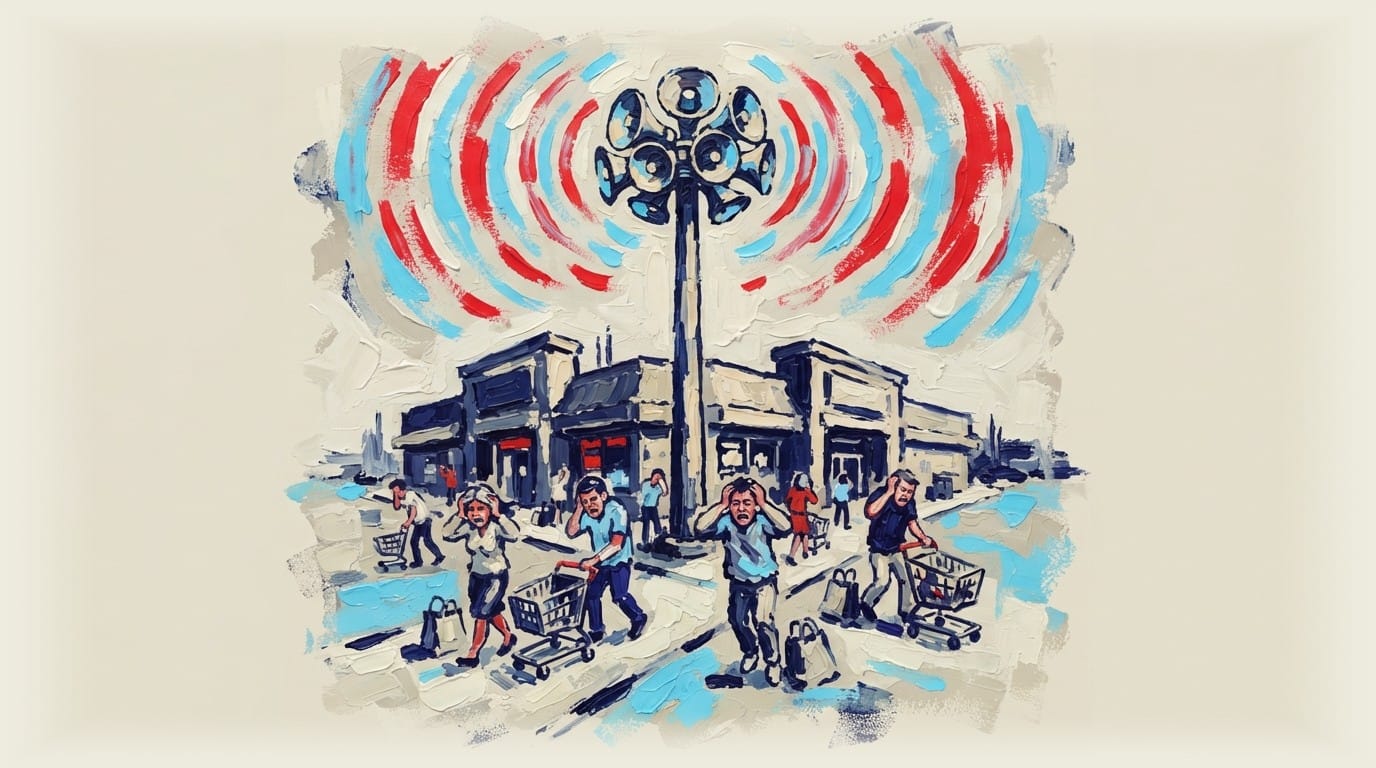
Woolworths has turned its Darwin city store into an open-air concert nobody asked for, looping the Fresh Food People jingle through outdoor speakers in an attempt to drive away loiterers. The 20-second tune, once a harmless advertising earworm, now spills across the footpath, the bus stop and the car park, audible from across the street and inside nearby apartments. Customers describe it as constant, irritating and enough to drive them nuts. The supermarket says it had no choice.
The store sits in a high-traffic slice of Darwin's CBD, opposite a university campus and beside a popular bus stop. Woolworths says community complaints and staff concerns about safety prompted the move. Aggressive behaviour directed at workers and customers had become frequent enough to justify action. Rather than hire more security or redesign the space, the company chose audio aversion therapy. This is not standard practice. No other Woolworths in Australia plays the jingle outdoors on loop.
Bunbury, Prahran, Darwin: the same blunt instrument, the same result
Similar experiments have already shown the pattern. In 2023 Bunbury council in Western Australia played The Wiggles' Hot Potato on repeat to discourage rough sleeping at a public bandstand, only to face ridicule and complaints that the tactic targeted vulnerable people without addressing why they gathered there. A Coles in Melbourne's Prahran tried opera to deter crime, generating more headlines about annoyance than evidence of safer streets. Each case reveals the same blunt mechanism: flood the area with sound most people find unpleasant and hope the target group leaves first.
Mark Olweny, an associate professor of architecture at Charles Darwin University, calls it defensive or hostile architecture. The approach does not solve the underlying demand for the space. People wait at the bus stop because buses arrive on a schedule. Others seek shade in a tropical climate because it is hot. Some have nowhere better to be. The jingle cannot distinguish between a customer popping in for bread and someone killing time until the next bus. It simply makes the entire area less comfortable for all of them.
The jingle cannot distinguish between a customer popping in for bread and someone killing time until the next bus.
The jingle taxes its own customers
That indiscriminate effect is where the policy's structure diverges from its stated goal. Woolworths wants to protect its staff and maintain a safe environment that encourages spending. Yet by raising the cost of visiting the store in the form of auditory discomfort, it risks lowering the reward. Shoppers who find the music grating may shorten their trip, buy less, or switch to another supermarket. Those sensitive to noise, including families with young children or older customers, may avoid the location altogether. The result is a self-inflicted tax on its own clientele.
The City of Darwin has correctly pointed out that the speakers sit on private land, limiting its direct authority. Police continue regular patrols and say most interactions in the CBD are managed through early intervention rather than escalation. This leaves the supermarket attempting to privatise the management of a public thoroughfare problem. The jingle is an admission that broader coordination between retailers, local government and social services has not delivered a more nuanced fix.
The balance sheet will end this before any policy review does
Markets usually correct these missteps faster than bureaucracies do. Woolworths answers to its sales figures and shareholder returns. If the data shows the jingle is keeping troublemakers at bay but also thinning the ranks of paying customers, the speakers will come down. The company will not issue a philosophical defence of defensive architecture. It will simply note that the intervention failed a commercial test. That is the quiet strength of the feedback mechanism: bad music that reduces profit tends not to last.
Yet the episode still exposes a gap. Loitering in this spot is not random. The bus interchange funnels people through a confined area with limited seating, shade or amenities. University students, residents from nearby apartments and those relying on public transport all share the same footpaths. Playing a jingle on loop treats the symptom as if it were the disease. A more durable response would examine why the space generates friction and whether small design changes, better lighting, additional seating or coordinated support services could reduce it without punishing every ear in range.
For now the jingle plays on, a tinny monument to frustration. Shoppers pull their hats lower, hurry their trolleys and mutter about the noise. Some will tolerate it. Others will vote with their feet. Woolworths has bet that the deterrent effect outweighs the collateral irritation. The balance sheet will deliver the verdict, probably sooner than the loiterers learn to ignore the tune. When it does, the speakers will fall silent and Darwin's CBD will be left exactly as noisy as commerce and city life naturally make it, minus one artificial irritant.
The episode carries a small lesson in proportion. Private businesses can and should protect their premises and people. They are not, however, equipped to redesign the social ecology of a bus interchange with children's advertising music. When the chosen tool grates on the customers who pay the wages, the correction is already built in. Sales will dip, the experiment will end, and the jingle will return to its proper place: thirty seconds at the end of a television ad, easily ignored.
Sources
ABC News — Darwin Woolworths blasts jingle outside store to stop 'loitering'
Frequently Asked Questions
Why is Woolworths playing music outside its Darwin store?
Woolworths is looping its Fresh Food People jingle through outdoor speakers to deter loitering and aggressive behaviour at its Darwin CBD store, which sits beside a busy bus interchange. The company reported 24 incidents of aggression this year before taking the step.
Does playing music on repeat actually stop loitering?
The evidence from comparable cases is weak. Both a Bunbury council bandstand and a Melbourne Coles used similar tactics and generated more complaints than measurable safety improvements. People with nowhere else to go tend to habituate to repeated sound, which means the deterrent effect fades while the nuisance for everyone else remains.
Can the City of Darwin stop Woolworths from playing the jingle?
No. The speakers are on Woolworths' private land, which limits the council's direct authority to intervene. The practical check on the experiment is commercial rather than regulatory: if sales fall, Woolworths will remove the speakers itself.
Who else is being affected by the music besides loiterers?
Residents in nearby apartments, bus commuters, university students and regular shoppers are all exposed to the looping jingle. People sensitive to noise — including families with young children and older customers — may avoid the store entirely, creating a self-inflicted cost for Woolworths.
What would actually fix the loitering problem at the Darwin Woolworths?
The bus interchange funnels large numbers of people through a confined area with limited seating, shade and amenities in a tropical climate. Targeted design changes — additional seating, better lighting, coordinated outreach services — address the conditions that generate the friction rather than displacing people who have few alternatives.