Earnings up $300 a week, but the asterisks matter
Australia's wages are up $300 a week — but how much of that is real, and how much is just inflation wearing a pay rise costume?

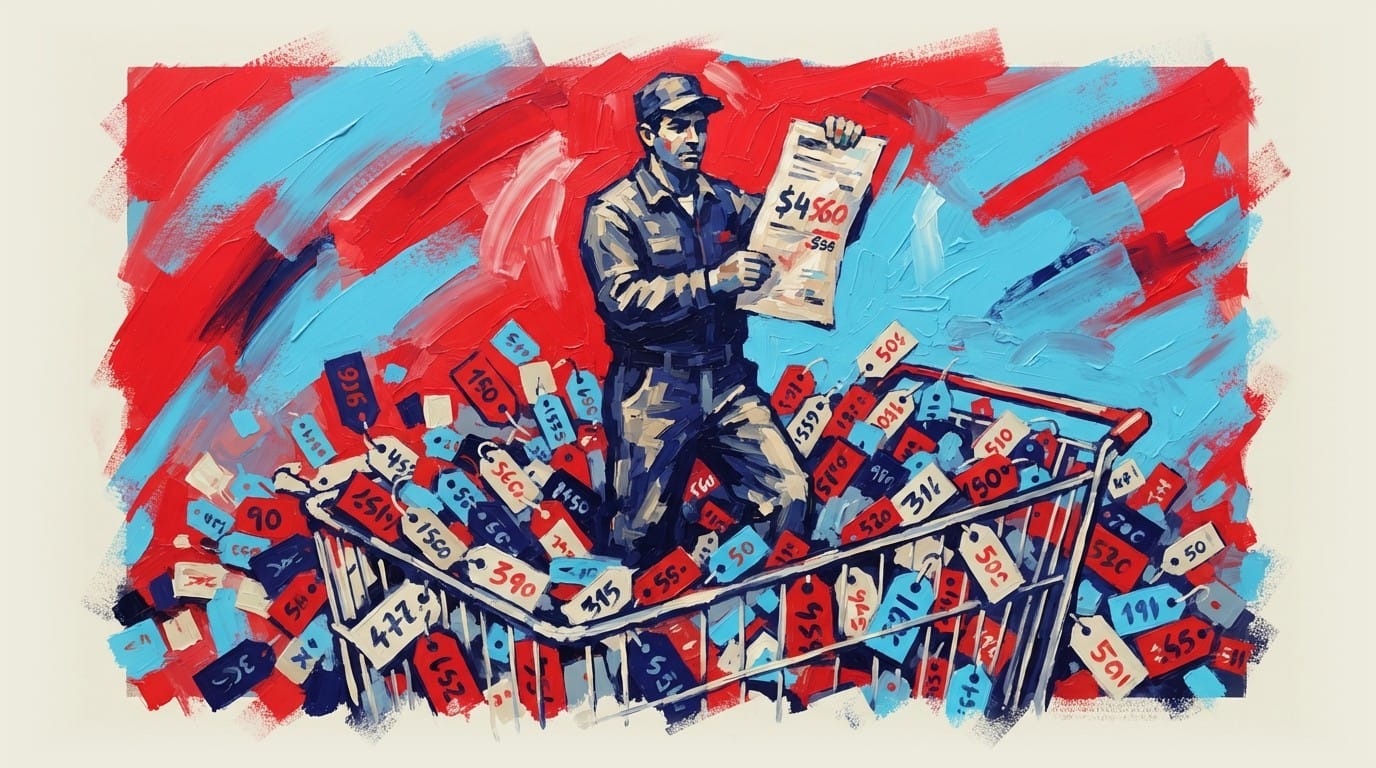
The government announced this week that average weekly full-time earnings have risen by more than $300 since 2022, and that annualised wage growth under Labor has run at 4.2 per cent, compared to 2.5 per cent under the previous government. Both numbers are real. Neither number means what the press release wants you to think it means.
Comparing 4.2% wage growth to 2.5% ignores what inflation was doing each time
Start with the comparison itself. The previous government presided over wages growing at 2.5 per cent annually. That era also had inflation running below 3 per cent for most of its duration. The current government has recorded 4.2 per cent wage growth, but inherited and then extended a period in which inflation peaked at around 4.8 per cent and has remained elevated enough that the Reserve Bank spent the better part of two years in hiking mode. Comparing nominal wage growth rates across periods with structurally different inflation is like comparing fuel efficiency between a city and a highway run. The numbers are not measuring the same thing.
The real wages question is the one the press release sidesteps. Average weekly ordinary full-time earnings now sit at $2,084 per week. That is $108,352 annualised. What that buys relative to what it bought in May 2022 depends entirely on what has happened to prices in the intervening period, and prices have done a lot. The ABS Consumer Price Index rose roughly 16 per cent between mid-2022 and early 2025. Earnings rose over the same period, but the race was closer than the government's framing suggests, and for much of that stretch real wages were running backwards. The government acknowledges inflation "remains too high" in its own release, which is a curious admission to fold into a wages success story.
The government cannot simultaneously take credit for wage growth driven partly by a hot economy and disclaim responsibility for the inflation the same heat produced.
Tight labour markets do the work governments claim credit for
There is also a structural question about attribution. Wage growth in Australia since 2022 has several drivers, and not all of them are policy levers. Global labour markets tightened sharply after the pandemic. Australia's own unemployment rate dropped to multi-decade lows, which mechanically pushes wages up regardless of who is in office. When the labour market is that tight, employers bid for workers. That is not a government program, it is a cycle. Some of the wage growth the government is claiming credit for would have arrived under any government that happened to be in office during this period.
This is not to say policy played no role. The Fair Work Commission granted above-average increases to the minimum wage across multiple annual reviews. Sector-specific pay rises, particularly in aged care, were the direct result of government submissions and funding decisions. The wage justice legislation for care workers is a real policy with real effects on a class of workers who were genuinely underpaid. The problem is presenting the cyclical and the structural together as though they were all delivered by deliberate design.
The gender pay gap result is the one number that earns its headline
The gender pay gap figure deserves separate credit. A fall from 14.1 per cent to 11.3 per cent over a government's tenure is meaningful, and the stagnation under the previous government is a fair contrast to draw. Pay equity is not a cyclical phenomenon in the same way aggregate wages are. When the gap closes at that pace, something more targeted than a tight labour market is usually at work.
But the broader cost-of-living frame in the release is where the logic strains hardest. The government argues that "one of the best ways to help people with the cost of living is to boost wages." That is true in a world where wages are rising faster than prices. It is considerably less true when wages are chasing a price level that the same government's fiscal settings helped inflate. As we have noted before, the interaction between government spending, inflation, and interest rates is where cost-of-living stories get complicated. The government cannot simultaneously take credit for wage growth driven partly by a hot economy and disclaim responsibility for the inflation the same heat produced.
The $300-a-week figure is not a lie. It is a fact stripped of context and presented as a verdict. The context is that Australians have spent four years in an economy where prices moved fast and wages chased them, with real purchasing power the genuine measure of living standards, not a nominal number that looks larger partly because everything else costs more too. When the asterisks are as large as the headline, the headline is doing most of the work.
Sources
Treasury — Full time earnings increase again under Labor
The Bearing — Care worker's wage 'justice' could put other workers in wage 'jail'
Frequently Asked Questions
Are Australian wages actually up $300 a week since 2022?
The nominal figure is accurate — average weekly full-time earnings have risen by more than $300 since the 2022 election. But nominal wages measure dollars, not purchasing power, and the ABS CPI rose roughly 16 per cent over the same period, meaning much of that dollar gain was absorbed by higher prices.
Why does higher wage growth under Labor not mean workers are better off?
Wage growth of 4.2 per cent sounds stronger than the previous government's 2.5 per cent, but inflation peaked above 7 per cent during the Labor period and remained elevated for years — meaning wages were chasing prices, not outrunning them. Real wages, which adjust for inflation, are the correct measure of whether living standards improved.
How much of Australia's wage growth since 2022 is actually due to government policy?
A meaningful portion is cyclical rather than policy-driven. Unemployment fell to multi-decade lows after the pandemic, which mechanically forces employers to bid up wages regardless of who governs. The government's genuine policy contributions — Fair Work Commission minimum wage decisions and the aged care pay settlement — are real but account for only part of the overall growth.
What is the difference between nominal and real wage growth?
Nominal wage growth measures the change in dollar earnings without accounting for price changes. Real wage growth adjusts for inflation, showing whether workers can actually buy more with their pay. When inflation is high, nominal wages can rise significantly while real purchasing power falls.
Did Australia's gender pay gap actually close under the Labor government?
Yes — the gap fell from 14.1 per cent to 11.3 per cent, a decline of 2.8 percentage points. Unlike aggregate wage growth, pay equity outcomes are less susceptible to the nominal-versus-real critique, and the pace of change suggests targeted policy — including aged care sector pay rises — played a role beyond what a tight labour market alone would produce.