Labor's disciplined silence masks a deeper problem: a party with nothing to say
Labor's national conference ended with no major decisions and no real debates. Whether that reflects strength or something more worrying depends on what the silence is hiding.

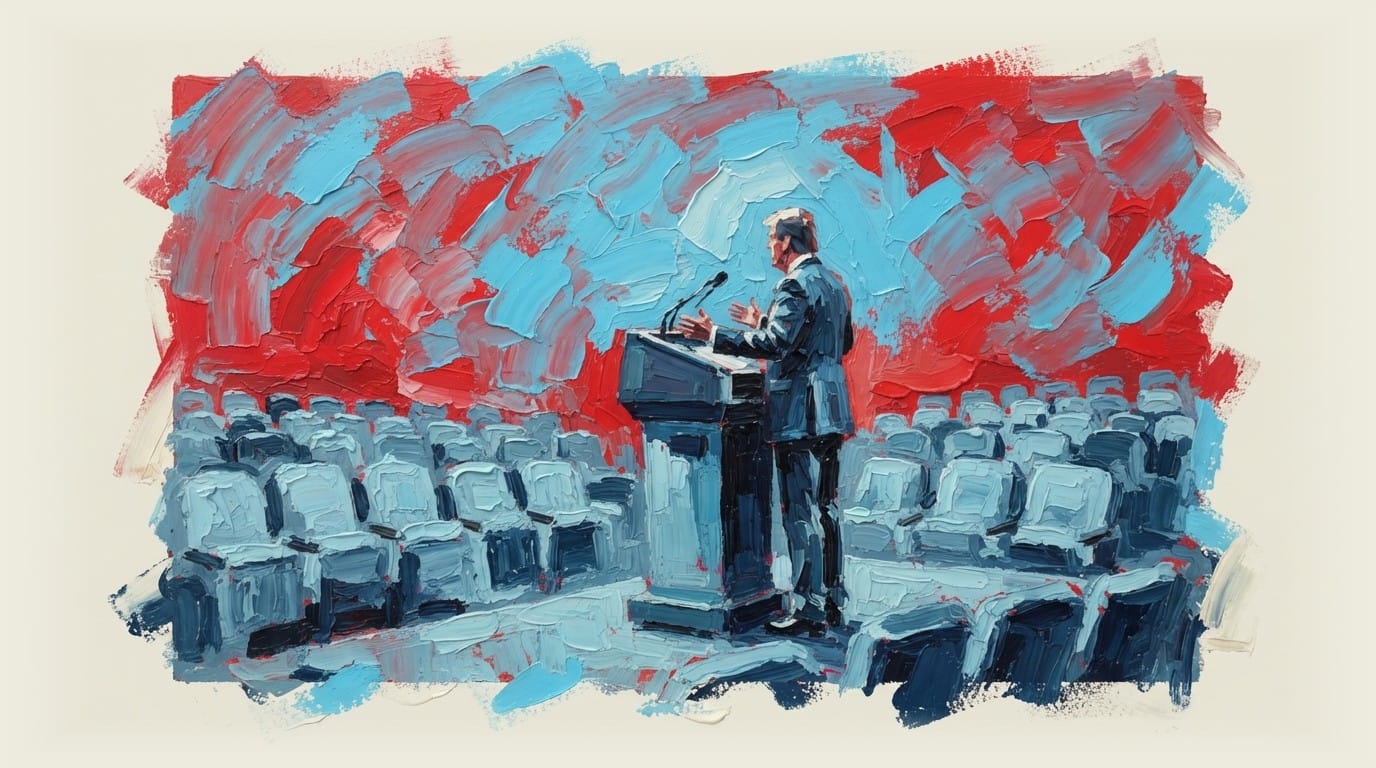
Labor held its national conference last week and produced almost nothing. No significant policy announcements, no contested debates, no decisions that will change any Australian's life. What observers called unity looked, from a distance, like a building with the lights left on and nobody inside.
The conference format was not the problem, exactly. Governing parties often use conferences as occasions for projection rather than deliberation. Dissent gets managed, factions get accommodated, and the platform that emerges is less a statement of conviction than a truce. That is normal enough. What is less normal is a conference that produces nothing at all — no truce, no projection, not even a convincing performance of purpose.
That absence matters more given what the numbers already show. Wayne Swan, departing as national president, described the government's record 94-seat majority as "wide but shallow" — a coalition held together by preference flows and a disorganised opposition rather than by any deep attachment to Labor itself. As this publication has examined in detail, that kind of majority is a different political object to a durable one. It can dissolve faster than it assembled, and it offers almost no early warning when it does.
The NDIS cuts reveal what happens when conviction goes undefended
The silence at conference would be less significant if the policy record were generating enthusiasm outside it. But the ground is harder than that. The government's proposed NDIS cuts, which would remove approximately 145,000 autistic people from scheme eligibility, two-thirds of them children, has unsettled the exact constituency Labor has historically relied on to distinguish itself from its opponents. It may yet prove to be the right fiscal call. But it is the kind of decision that requires a clear account of what the government is trying to do and why, and no such account has been offered in any forum, including the one designed for exactly that purpose.
On housing, cost of living, wages and the general texture of economic anxiety, the policy responses have been incremental rather than structural, and the conference was not the place where anyone made the case for going further or explained why going further was too costly. Those arguments simply were not had.
The conference becomes a collection of rational individual silences that, added together, produce an institutional muteness no one person decided to create.
Discipline in service of a project is different to discipline as a substitute for one
There is a version of this where the discipline is a virtue. A government in its first term that avoids internal rupture and stays focused on delivery has historically done better than one consumed by ideological warfare. Labor's first-term record offers genuine substance: wages legislation, a more serious attempt at housing supply policy than its predecessors mounted, and a foreign policy posture that re-engaged regional relationships that had deteriorated. These are real things. A reading of the party that dismissed them entirely would be the wrong reading.
But discipline in service of a project is different to discipline as a substitute for one. The distinction is visible in what conferences are actually used for. A party with something it wants to do uses a conference to sharpen it, argue about implementation, and generate the internal commitment that sustains a second and third term. A party managing its position uses a conference to not lose ground. The 2025 conference was, by every available account, the second kind.
The political incentive behind that is legible. Any policy debate creates winners and losers inside the caucus. Any clear statement of intent creates a target. In an environment where the media cycle rewards conflict and the opposition is hunting for anything it can use, the rational individual choice for almost every delegate is to say nothing that matters. The conference becomes a collection of rational individual silences that, added together, produce an institutional muteness no one person decided to create.
The problem is that voters are not watching the conference looking for conflict. They are watching, if they are watching at all, for some indication that the party in government has a considered view of their circumstances and a direction it is heading. A disciplined silence tells them nothing except that the party is competent at avoiding embarrassment, which is a low bar and an insufficient reason to stay.
A majority built on shallow foundations does not deepen by declining to stress-test it. It deepens, if it deepens at all, when the party governing demonstrates that it knows why people came to it and has something to offer them next. That demonstration did not happen last week. The lights stayed on. The building stayed quiet.
Sources
The Bearing — Upside-down parties and forgotten politics
The Bearing — 145,000 autistic people may lose NDIS support under Labor cuts
Frequently Asked Questions
What actually happened at Labor's 2025 national conference?
Labor's 2025 national conference produced no significant policy announcements, no contested debates, and no decisions with material effect on Australians' lives. Governing parties often use conferences for projection rather than deliberation, but this one delivered neither.
What does 'wide but shallow' mean when describing Labor's majority?
Outgoing Labor national president Wayne Swan used the phrase to describe a 94-seat majority assembled through preference flows and a disorganised opposition, rather than deep voter attachment to Labor itself. A majority of that kind can dissolve faster than it assembled and gives almost no early warning when it does.
Why don't governing parties use their own conferences to debate policy?
The incentive structure works against it: any policy debate creates internal winners and losers, and any clear statement of intent creates a target for the opposition. The rational choice for almost every delegate is to say nothing consequential, which produces collective silence that no individual decided to create.
How do the proposed NDIS cuts relate to Labor's conference silence?
The government's proposed NDIS changes — which would remove approximately 145,000 autistic people from scheme eligibility, two-thirds of them children — affect a constituency Labor has historically relied on to distinguish itself from its opponents. A decision of that magnitude requires a clear public account of the government's reasoning, and the conference was the obvious forum for it. No such account was offered.
Is party discipline at conference actually a bad thing for a first-term government?
Not inherently — governments that avoid internal rupture in their first term have historically outperformed those consumed by ideological warfare. The problem is when discipline substitutes for a project rather than serving one: a party with a clear direction uses a conference to sharpen and argue about it, while a party managing its position uses a conference simply to not lose ground.