Trump's 'super intelligence' rebrand: How language shapes the AI race
When a government renames a technology, it's not just changing words — it's changing which questions are allowed to feel reasonable.

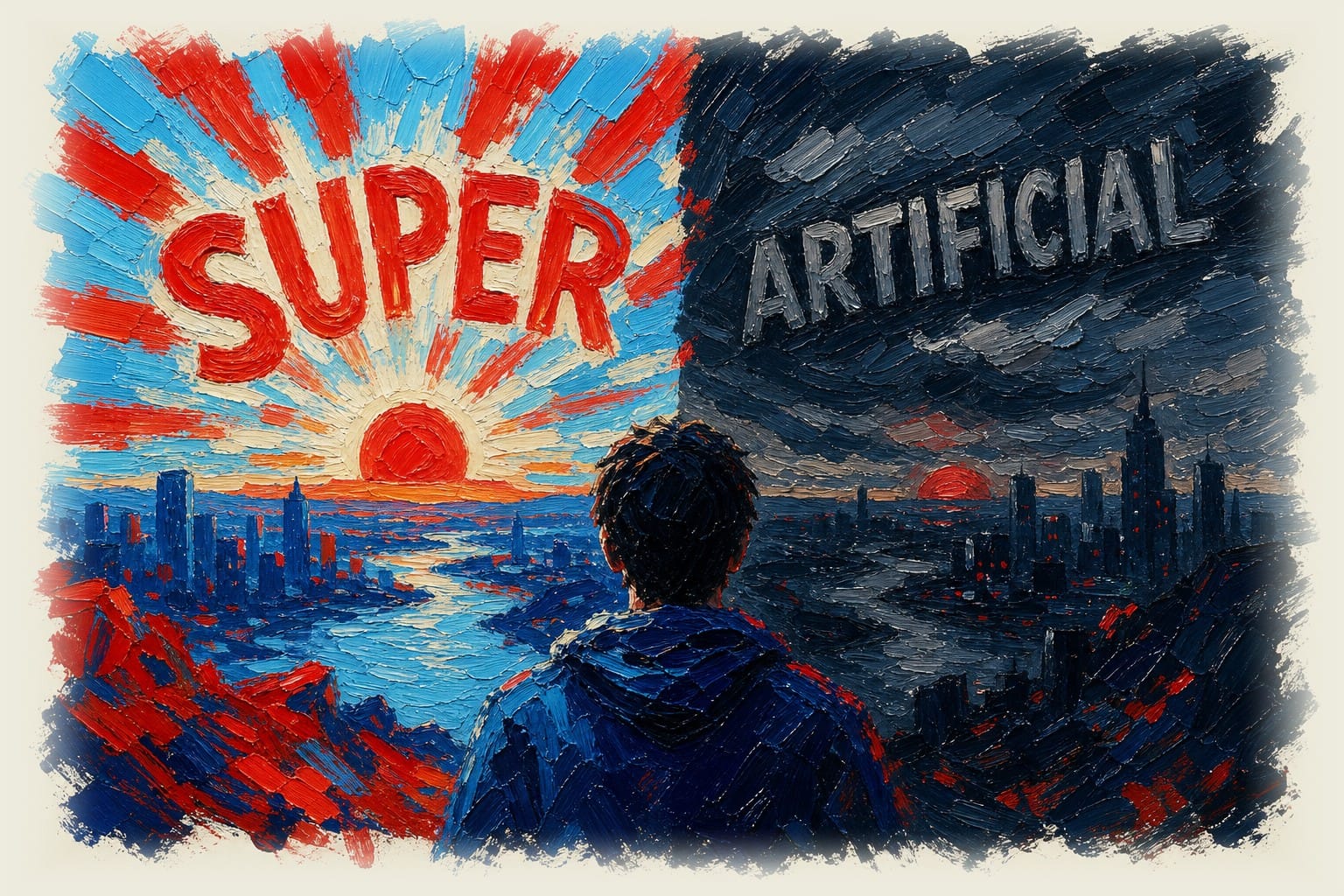
Words are policy before policy is policy. When the Trump administration reportedly moves to replace "artificial intelligence" with "super intelligence" in official government documents, the obvious reading is that it is mere marketing, the kind of rhetorical confection that politicians reach for when they want something to sound more impressive than it is. That reading is not entirely wrong. But it misses the mechanism. The terminology is doing something structural, and what it is doing matters beyond the United States.
"Super intelligence" doesn't just sound better — it forecloses questions
The etymology of "artificial" has always carried a subtle problem for technologists. It suggests imitation, something not quite real, a copy of the genuine article. "Super intelligence" inverts that completely. Where "artificial" implies limitation, "super" implies transcendence. The naming change is a frame, and frames determine which questions feel obvious and which feel paranoid. Ask whether we need to govern "artificial intelligence" and the answer seems clearly yes. Ask whether we need to slow down "super intelligence" and the question starts to sound like asking whether we should impede progress itself.
This is not incidental. The Trump administration has been explicit about its deregulatory intent on AI, preferring to keep oversight, if any comes at all, firmly within American hands and away from coordinated international frameworks. The previous administration created the US Artificial Intelligence Safety Institute, mandated reporting for high-risk systems, and pursued multilateral governance conversations. That architecture is being dismantled or sidelined. The rebrand is the public face of that policy direction, a signal to industry, to allies, and to rivals, that the United States is playing a different game now.
The governance gap is widening, not converging
The rival playing the most different game is the European Union, which has moved in the opposite direction with the AI Act, a risk-tiered regulatory framework that applies the precautionary logic of pharmaceutical or aviation safety to AI systems. The EU is setting regulatory pace while the US leads on implementation capacity and compute. That gap between governance ambition and deployment reality, what researchers have started calling the governance gap, is widening rather than closing across the G20. Terminology harmonisation has happened at the level of rhetoric; execution capacity remains deeply uneven.
China sits somewhere in the middle: heavy state investment and deployment paired with centralised oversight that serves a different master than democratic accountability. What the three-way divergence produces is a fragmented global landscape in which the rules governing AI depend heavily on where the system was built, who built it, and whose jurisdiction it falls under. That fragmentation is not temporary disorder on the way to a settled framework. It may be the settled framework.
Language that forecloses questions before they are asked is not neutral. It is a policy instrument, and like any policy instrument, its effects deserve scrutiny regardless of the intentions behind it.
Australia is caught between two incompatible models
For Australia, this matters more than it might seem. The government is actively integrating AI into public services, procurement, and industry programs. As we have covered previously, questions about what it actually takes to keep AI playing by the rules are not abstract, they sit inside live policy decisions being made now. Australia's regulatory instincts lean closer to the EU's risk-based caution than to Washington's deregulatory acceleration, but Australia's strategic and economic ties lean toward the United States. That tension does not resolve itself.
There is a legitimate case for the American approach, and it deserves to be stated plainly. Precautionary regulation that moves too slowly relative to the technology's development can foreclose options, entrench incumbents who can absorb compliance costs, and hand strategic advantage to rivals with no regulatory drag at all. If the EU's careful governance framework produces slow adoption while US and Chinese systems reshape global markets, the precaution will have been costly. The innovation-speed case is not a rationalisation for recklessness; it is a genuine trade-off.
But the rebrand is still doing something worth naming. "Super intelligence" is aspirational language that smuggles in a conclusion, that the technology is a net good, that its trajectory is upward, that slowing it down is the error rather than accelerating it. It pre-loads the political conversation in a way that "artificial intelligence," with all its clunky connotations, did not quite manage. Language that forecloses questions before they are asked is not neutral. It is a policy instrument, and like any policy instrument, its effects deserve scrutiny regardless of the intentions behind it.
Governments around the world are making decisions about AI governance under genuine uncertainty, with real stakes and no obvious right answer. What they call the technology while they do it is not a trivial matter. Names shape the questions people think to ask, the risks they see as normal, and the oversight they are willing to demand. The United States just chose a name that makes those questions harder to ask. That choice will echo well beyond Washington.
Sources
Mauritius News — Trump Wants to Rebrand AI as 'Super Intelligence'
AI Africa News — Trump's 'Super Intelligence' Vision: Reshaping AI Terminology in U.S. Governance
Frequently Asked Questions
Why does the Trump administration want to call AI 'super intelligence'?
The rebrand is a policy signal as much as a branding decision. By replacing 'artificial intelligence' — a term that implies limitation and invites questions about oversight — with 'super intelligence,' the administration frames the technology as inherently progressive, making calls to slow it down sound like opposition to progress itself. It is the public face of a broader deregulatory push.
What is the AI governance gap and why does it matter?
The governance gap refers to the widening distance between countries that set ambitious regulatory frameworks for AI and those that lead on actual deployment capacity. The EU is moving fastest on rules; the US and China are moving fastest on implementation. That divergence means the practical rules governing AI depend heavily on where a system was built and whose jurisdiction applies — and that fragmentation may be permanent, not transitional.
How does the US AI rebrand affect Australia?
Australia is in an awkward position: its regulatory instincts align more closely with the EU's cautious, risk-based approach, but its strategic and economic relationships anchor it to the United States. As Washington moves to shed international AI governance frameworks, Australia will face pressure to choose which model it follows — and that choice has consequences for how Australian AI systems are built, procured, and governed.
Is there a legitimate argument for the US approach to AI deregulation?
Yes. Precautionary regulation that lags behind the technology can entrench incumbents who can absorb compliance costs, foreclose options, and cede strategic ground to rivals operating without regulatory drag. If the EU's careful framework produces slower adoption while US and Chinese systems reshape global markets, the caution will have been costly. That is a genuine trade-off, not a rationalisation.
What happened to the Biden-era AI safety rules?
The Biden administration created the US Artificial Intelligence Safety Institute, mandated reporting requirements for high-risk AI systems, and pursued multilateral governance conversations. The Trump administration has moved to dismantle or sideline that architecture, pulling back from coordinated international frameworks in favour of keeping oversight — if any — within American hands.