When politicians are 'one the nose' there's not much they can do
Victoria's 2026 election is shaping up as a test of whether twelve years in power is simply too long — regardless of the policy record.

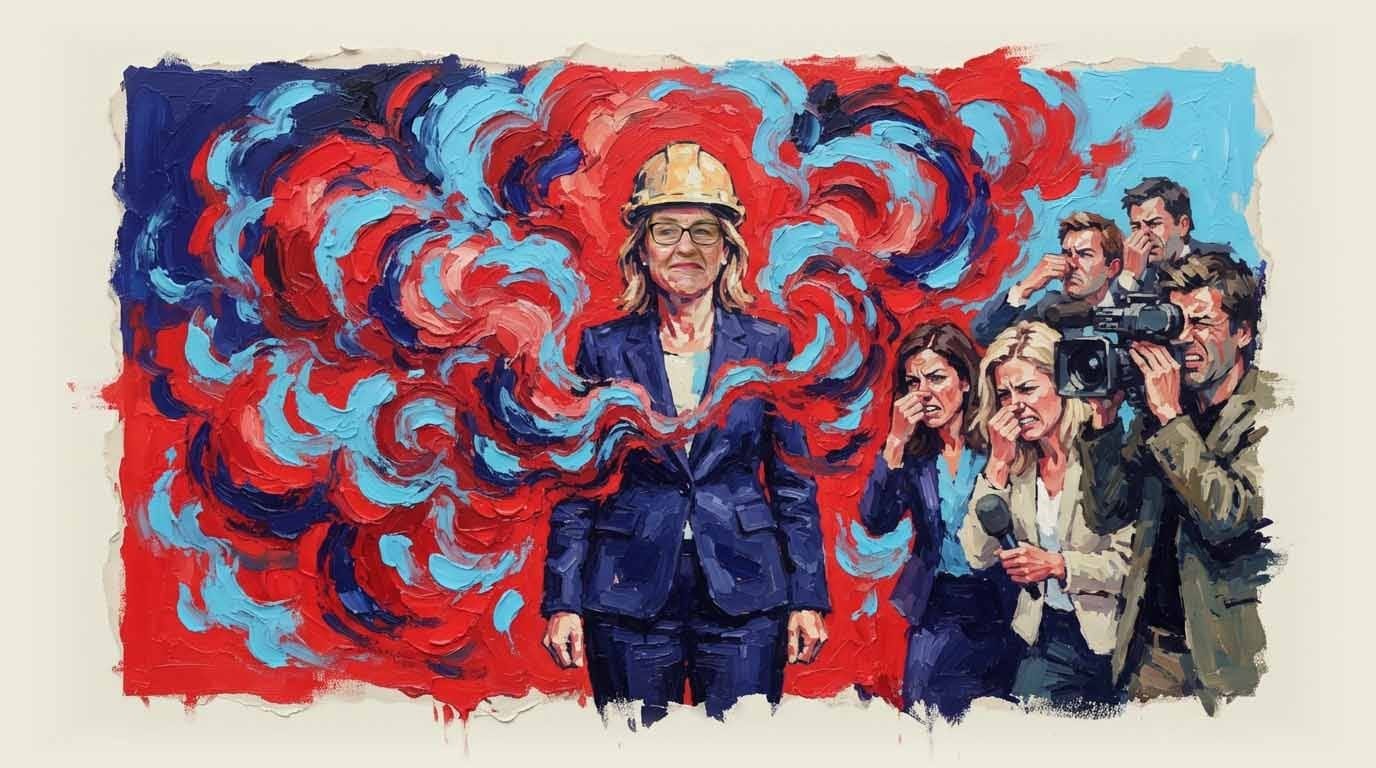
There is a particular kind of political gravity that sets in when a government has simply been around too long. Voters stop weighing up policies and start making a more elemental judgement: it is time for these people to go. When that feeling takes hold, it is almost impossible to dislodge. New policies do not fix it. Leadership changes rarely fix it. The smell is in the building.
Queensland shows how quickly a majority becomes worthless
Queensland offers two clean illustrations of how this works, which is why Victorian Labor's present predicament feels so familiar to anyone who watched those collapses unfold. Anna Palaszczuk governed competently for half a decade and then did not. Her party had simply become the furniture, and by the time she departed, the furniture needed replacing. Newman is the sharper case: an enormous parliamentary majority, and voters still showed him the door after a single term because the early decisions had poisoned the well beyond recovery. The majority was real, but it meant nothing once the electorate had made up its mind.
Victorian Labor has a substantial majority, currently holding 54 of 88 lower house seats. On paper, that looks like a buffer. In practice, it is a rounding error once voters are determined. The structural problem is not the size of the majority but its composition, what The Bearing has previously described as support that is wide but shallow: a coalition held together by habit rather than conviction, and therefore brittle when the mood turns.
The structural problem is not the size of the majority but its composition: a coalition held together by habit rather than conviction, and therefore brittle when the mood turns.
The issues are not individually fatal — combined, they are
The issues eroding that coalition are not marginal. State debt inherited from the Andrews era has given the Coalition a credible line of attack that does not require voters to like the opposition, only to feel anxious about their own finances. Corruption allegations around major infrastructure contracts have reinforced a sense that the government has been captured by its own machinery. Dumping the Commonwealth Games hosting commitment was probably the fiscally responsible call, but it read as a broken promise and cost goodwill that could not be recovered. Youth crime and knife violence, even if statistically complex, have become a simple symbol of a government that has lost its grip on basic order.
None of these individually would be fatal. Together, and accumulated over nearly twelve years in government, they compound into something the Victorian Liberals could not have manufactured on purpose: a ready-made permission structure for voters who want to switch but need a reason beyond boredom.
A leadership change is unlikely to shift enough
The question of whether a leadership change shifts anything is where history is ungenerous. Sometimes a new face buys a modest bump, enough to close a gap but not enough to reverse a tide. Ben Carroll is the most likely alternative, and he is competent enough, but his public profile is anchored to an education portfolio that just produced teacher strikes. That is not the launching pad for a narrative of renewal. And the politics of the November ballot are further complicated by One Nation, which has historically struggled to win seats in Victoria but now has enough oxygen to divert preference flows in ways that are genuinely difficult to model.
What Allan's government is experiencing is not really a failure of communication or a gap between results and perception. The policy record has genuine achievements. What it is experiencing is the slow withdrawal of credit that happens when a government has been in power long enough that voters have stopped comparing it to the alternative and started comparing it to their own expectations. At that point, the conversation is no longer about policy. It is about who deserves to be there.
The majority is real; the comfort it offers is not
The honest reading of November is that Labor enters the election with a majority it can afford to lose substantially and still form government, but with a primary vote soft enough that the margin is misleading. Governments do not usually get to feel the full comfort of that buffer because the polling collapse tends to be steeper than the notional arithmetic suggests it should be. Queensland under Bligh in 2012 was a 40-seat loss that nobody predicted at the scale it arrived.
Victorian Labor is not necessarily facing that. But it is facing something that no new policy suite and probably no new leader can fully neutralise. When you are on the nose, the voters have already decided. Everything after that is damage control.
Frequently Asked Questions
Why is it so hard for a long-serving government to recover once voters turn against it?
Once voters shift from evaluating policies to making a judgement that a government has simply been around too long, new announcements and leadership changes rarely move the dial. The decision becomes emotional and cumulative rather than rational and issue-by-issue, which means there is no single policy fix that reverses it.
Does Victorian Labor's big parliamentary majority protect it at the 2026 election?
On paper, holding 54 of 88 lower house seats gives Labor room to absorb significant losses and still govern. In practice, when a primary vote is soft and sentiment has turned, polling collapses tend to be steeper than the arithmetic suggests — Queensland Labor lost 44 seats in 2012 at a scale almost nobody had forecast.
Would replacing Jacinta Allan as Labor leader improve its election chances?
History is not generous on this question. A new leader can buy a modest polling bump, but it rarely reverses a tide driven by accumulated voter fatigue rather than a specific leader's unpopularity. The most likely alternative, Ben Carroll, carries his own political baggage from teacher strikes during his tenure as education minister.
What are the main issues hurting Victorian Labor heading into 2026?
State debt inherited from the Andrews era, corruption allegations around major infrastructure contracts, the abandoned Commonwealth Games commitment, and concerns about youth crime and knife violence have each individually been damaging. Their combined effect is to give voters a ready-made permission structure to switch — they do not need to like the Liberals, only to feel anxious enough to change.
How does the Campbell Newman example apply to Victorian Labor?
Newman won an enormous majority in Queensland in 2012 and was still thrown out after a single term because his government's early decisions turned voters against it decisively. The lesson is that the size of a parliamentary majority provides no insulation once the electorate has made up its mind — and Victorian Labor's majority, while substantial, offers the same false comfort.