When politicians chase the clicks. Please don’t.
Australian politicians are racing onto podcasts and TikTok to reach voters — and discovering the format doesn't hide what they have to say.

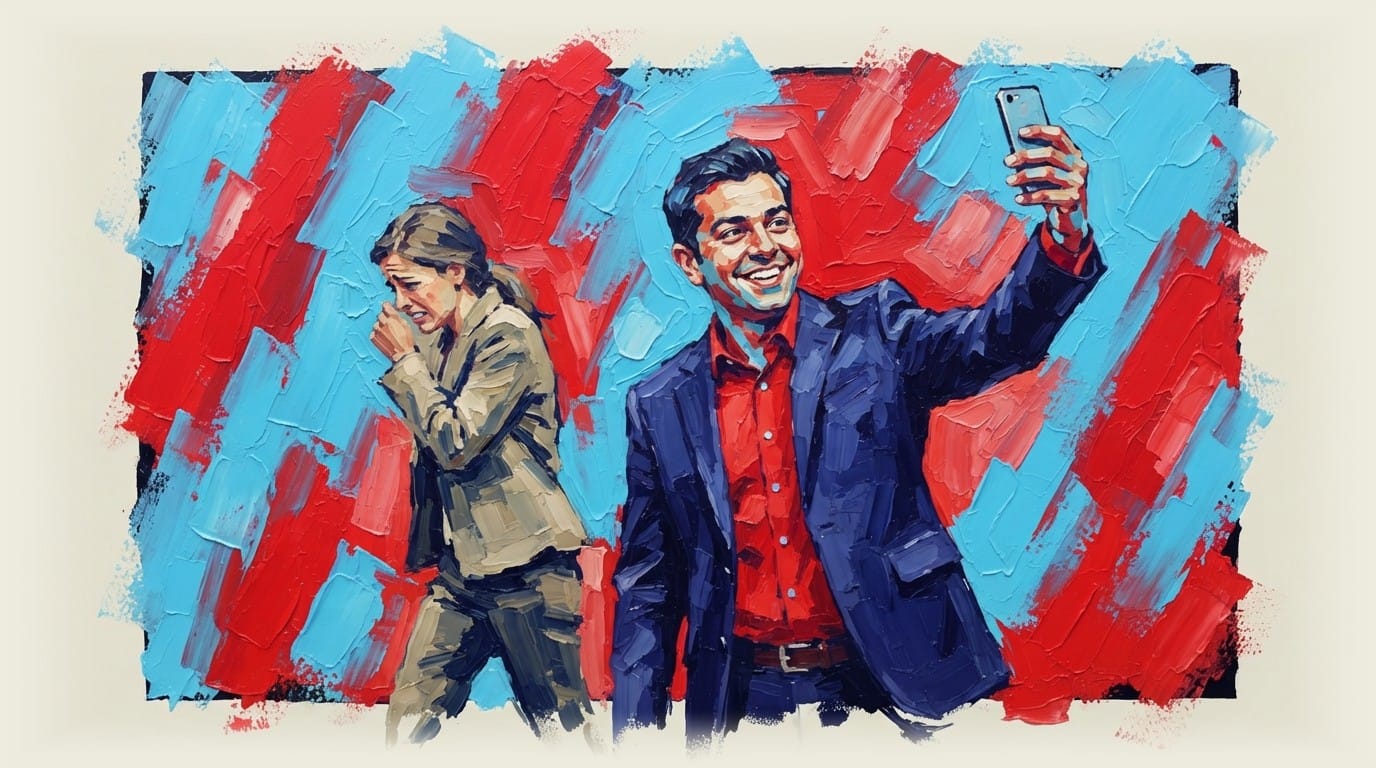
There is a version of a politician connecting with ordinary people that actually works. It is human, a little awkward, and earns trust by not trying too hard. What Australian politics has landed on instead is something closer to a content farm that happens to be run out of Parliament House.
The strategic logic is sound; the execution reveals the vacancy
The strategic logic is not unreasonable on its face. Audiences are fragmenting. The evening news reaches fewer people than it once did. Podcasters with 500,000 Instagram followers represent genuine reach into demographics that political advertising struggles to touch. If voters are spending their attention on TikTok and long-form audio, it is not irrational for politicians to follow them there.
But there is a difference between understanding where the audience is and understanding what the audience is actually doing there. People are not on TikTok waiting to have a minister's Medicare talking points delivered at them via bouncy video. They are there to be entertained by people who are genuinely entertaining. The format does not launder the content; it exposes it.
Donald Trump understood this in a way that his imitators have not. His media instinct, whatever else you think of it, was real. He was not performing authenticity; he was authentically himself, which happens to translate natively to a format that rewards personality over polish. When he sat with Joe Rogan for three hours, it worked because he was capable of filling three hours in a way that held attention. The lesson his admirers drew was "bypass the gatekeepers." The lesson they missed was "have something to offer when you do."
The lesson his admirers drew was "bypass the gatekeepers." The lesson they missed was "have something to offer when you do."
What Australian politicians are offering instead is a thin facsimile. Mark Butler bouncing around his office holding cost-of-living talking points. Backbenchers filming Netflix documentary parodies in the Parliament House courtyard. Every press conference now comes with the politician's own microphone and a staffer hovering with a camera, because the press conference is no longer for the press, it is content. The strategic intent is authenticity. The output is the opposite.
The Bush Deep episode is a case study in miscalculated risk
The prime minister's Bush Deep podcast appearance is the clearest illustration of where this leads. Appearing with comedian Nikki Osborne, a smart choice in principle given her audience reach, the prime minister played a game of "shag, marry, date" and made remarks about the Rabbitohs being an aphrodisiac and a gifted Japanese melon. These were not ambushes. Osborne asks the game of all her guests. The prime minister's office was aware of the format. They chose not to pre-clear the edit. The episode happened because someone calculated that the reach was worth the risk, and they miscalculated. The apology followed.
Bypassing gatekeepers means losing the protection they provided
The deeper problem is structural. Traditional media gatekeepers were annoying and often biased, but they performed a function: they asked hard questions, forced clarity, and created accountability. The whole point of a press conference is that a journalist can push back. A podcast hosted by a comedian does not have that function. It is an entertainment format, and entertainment formats reward things that political communication should not reward, looseness, performance, the unguarded remark. Politicians who want the audience without the accountability are not running from media scrutiny; they are walking towards a different kind of scrutiny, one they are much less practised at surviving.
This fits a pattern The Bearing has noted in other contexts. A wide but shallow coalition of support is inherently fragile, and the response to fragility tends to be more outreach rather than deeper substance. Content is outreach you can control, or think you can control, until the moment you can't. The government's 94-seat majority was built on borrowed attention. Borrowed attention requires constant renewal, which is how you end up with a health minister filming ASMR in a GP clinic.
None of this is to say politicians should be remote or inaccessible. The opposite. But accessibility earns trust when it is genuine and direct; it erodes trust when it is evidently a strategy. Australians are quite good at spotting the difference. The slightly embarrassed pedestrian walking past a politician filming a selfie video does not need to be a voter research subject. They are the verdict.
Politicians who want to reach people where they are would do better to have something worth saying when they get there. The format is not the problem. The vacancy is.
Sources
ABC News — When politics becomes content the risks multiply
Frequently Asked Questions
Why are Australian politicians doing ASMR videos and podcast appearances?
Traditional broadcast audiences are shrinking, and politicians are following attention to the platforms where younger voters actually spend time. The logic is not wrong — podcasters with large followings represent real reach — but showing up in an entertainment format is not the same as being able to perform in one.
What happened with the Australian prime minister's podcast appearance?
The prime minister appeared on comedian Nikki Osborne's Bush Deep podcast and played 'shag, marry, date', making remarks about the Rabbitohs and a gifted Japanese melon that required a subsequent apology. The format — and the risks it carried — was known in advance; the prime minister's office chose not to pre-clear the edit.
Why did Trump's media strategy work when Australian politicians copying it doesn't?
Trump's instinct for unscripted formats was genuine — he could hold attention for three hours on a podcast because his personality translated natively to a format that rewards presence over polish. Australian politicians have borrowed the tactic of bypassing media gatekeepers without the underlying capacity that made the tactic viable.
Do social media formats actually hold politicians accountable?
Entertainment formats like podcasts and TikTok create a different kind of scrutiny, not less scrutiny. Unlike a press conference where a journalist can push back on policy, entertainment formats reward looseness and the unguarded remark — a form of exposure politicians are far less practised at managing.
Is there anything wrong with politicians using social media to reach voters?
The format is not the problem. Reaching voters where they are is reasonable, and genuine accessibility can build trust. The issue is when content creation substitutes for substance — when the strategy is to perform authenticity rather than demonstrate it.