$200m power bill keeps Tassie Aluminum industry alive.
Two smelters, two government bailouts, one pattern — but is Australia building an industry policy or just writing larger cheques each time?

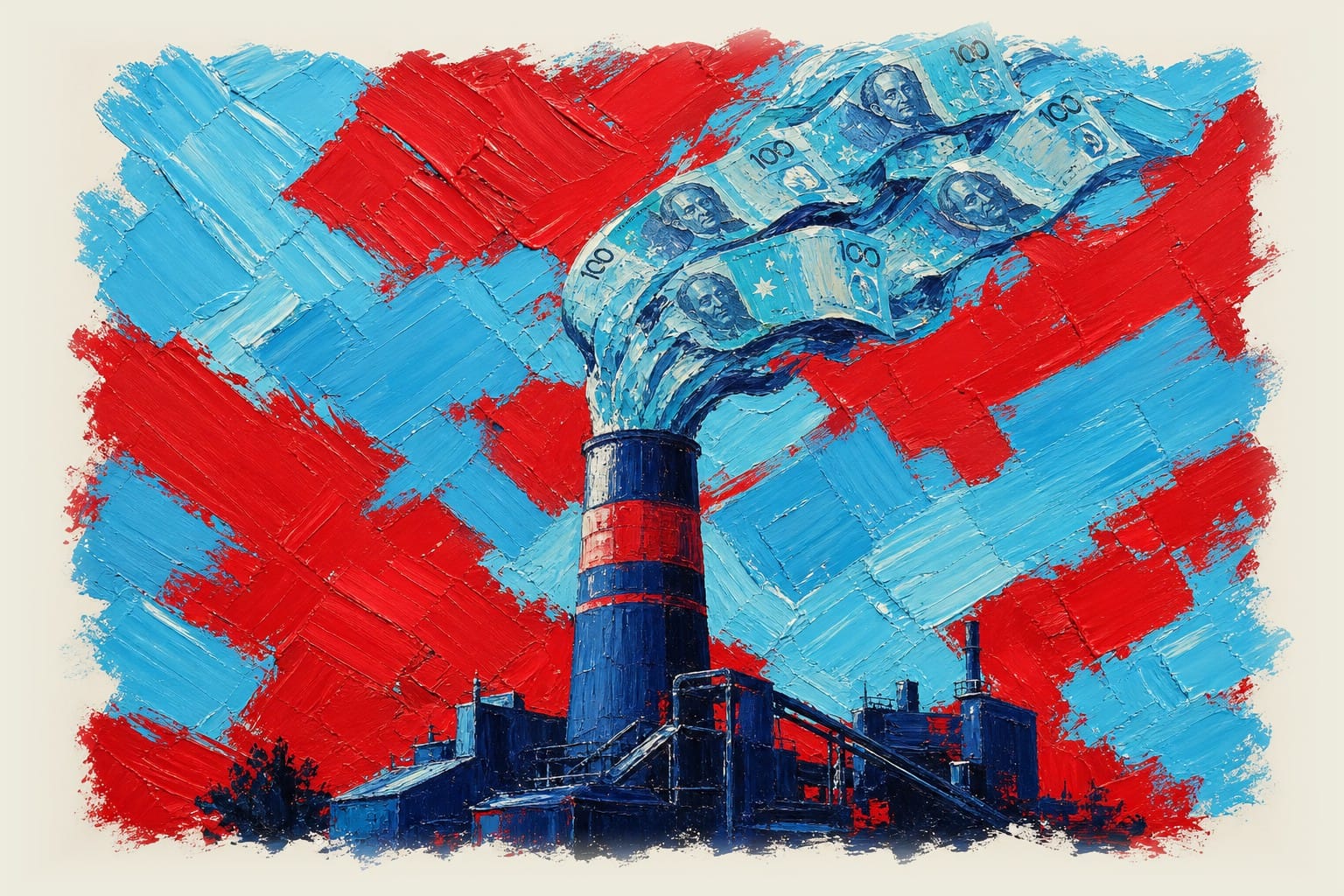
The federal and Tasmanian governments have committed $200 million to keep the Bell Bay Aluminium smelter operating through to the 2030s, with Rio Tinto receiving direct cash support to cover the gap between what it can afford to pay for power and what Hydro Tasmania charges. The announcement follows a near-identical intervention at Tomago Aluminium in New South Wales, where the federal and state governments put up $2.5 billion to solve the same problem. The pattern is becoming hard to ignore.
Aluminium smelting lives or dies on the price of electricity
Aluminium smelting is, at its core, an industrial process that converts electricity into metal. Power typically accounts for around 30 to 40 per cent of the total cost of producing a tonne of aluminium. When power is cheap, smelters are viable. When it is expensive, they are not. This is not a complexity unique to Australia, it is the reason most global smelting capacity is concentrated where electricity is cheapest: Iceland, Canada, parts of the Middle East. Australia, which once had genuinely cheap hydroelectric and coal-fired power, no longer does.
That matters because aluminium is not a discretionary industrial product. It goes into aircraft frames, naval vessels, military vehicles, construction, and the transmission cables that carry electricity across the grid. Australia's defence posture and its construction pipeline both depend, at some level, on access to domestic aluminium. Letting these facilities close is not without consequence. The Minister made that case with some force on ABC Hobart, and it is not an unreasonable one.
The subsidy is direct, and the government said so plainly
But the mechanism chosen to keep them open is telling. This is not a tariff, not a domestic procurement policy, not a long-term energy price reform. It is a cheque written to a multinational mining company to make up the difference between the market price of electricity and the price at which smelting becomes profitable. That is a subsidy in the most direct sense, and the government did not shy away from saying so. "Are you giving Rio money, cash money?" the interviewer asked. "Yeah," came the answer.
The honest description of what is happening here is that Australian power policy has produced electricity prices that make energy-intensive manufacturing uncompetitive, and the government is spending public money to paper over that outcome, facility by facility, deal by deal.
Minister Ayres pointed to Rio Tinto's contractual obligation to maintain and turn over every pot line as justification for the public investment. That is a reasonable protection to include. But the interview also revealed that the deal runs for five years, not the ten years that underpinned the Tomago and Boyne agreements. When pressed on why, the Minister noted that it rested on the company's own preference and the circumstances of this particular negotiation. A shorter term means the same political and industrial pressure will return before the decade is out.
The Liberty Bell Bay collapse shows what happens when the economics turn
There is also the question of what happened next door. Liberty Bell Bay, the manganese smelter on the same industrial precinct, collapsed earlier this year after a proposed sale fell through after years of under-investment, with the Tasmanian government having loaned $20 million to the facility three months after it was likely already insolvent. The Minister cited that failure as the reason robust investment obligations matter in the Bell Bay deal. The comparison is fair enough, but it also illustrates how quickly an industrial facility deteriorates once the economic logic goes against it, and how little governments can do once that process begins.
The honest description of what is happening here is that Australian power policy has produced electricity prices that make energy-intensive manufacturing uncompetitive, and the government is spending public money to paper over that outcome, facility by facility, deal by deal. The Tomago subsidy made the same admission at far greater cost. The question is not whether these individual interventions are defensible in isolation, they probably are, given what aluminium means to the supply chains that matter. The question is whether writing cheques every few years is a strategy or a symptom.
Future Made in Australia is missing the foundation that made postwar industry work
The government has framed Future Made in Australia as a re-industrialisation agenda, invoking the postwar reconstruction era as a precedent. That era did build lasting industrial capacity. It also had one thing the current policy suite lacks: cheap and abundant power as a foundation. The plants built in the 1950s and 1960s were viable because the economics supported them. Today's subsidies are filling in where the economics do not.
Bell Bay's workers have genuine cause for relief this week. Their jobs are real, their community's dependence on that facility is real, and the government's decision to act is not the cynical manoeuvre critics might reach for. But relief and good policy are not the same thing. Until wholesale power prices fall to a level where smelting is commercially self-sustaining, the only question is how large the next cheque will need to be.
Sources
Minister for Industry and Innovation — Interview with Leon Compton, ABC Hobart Tasmania Mornings
The Bearing — Government $2.5b power bill
The Bearing — Government's dodgy loan to a dodgy manganese smelter
Frequently Asked Questions
Why is the Australian government paying Rio Tinto's power bill?
Australian wholesale electricity prices have risen to a level where aluminium smelting is no longer commercially viable without support. The $200 million payment covers the gap between what Rio Tinto can afford to pay for power and what Hydro Tasmania charges, keeping Bell Bay competitive with smelters in countries where electricity is far cheaper.
How does the Bell Bay deal compare to the Tomago Aluminium subsidy?
The interventions follow the same logic — direct public payments to cover uncompetitive electricity costs — but differ significantly in scale and duration. Tomago attracted $2.5 billion across a ten-year agreement involving the federal and New South Wales governments; Bell Bay received $200 million over five years from Canberra and Hobart.
Why does Australia have such expensive electricity for industrial users?
Australia once had genuinely cheap hydroelectric and coal-fired power that made energy-intensive manufacturing viable. That price advantage has eroded as the energy mix has changed, leaving smelters that were built for a cheap-power environment paying prices that make them uncompetitive against rivals in Iceland, Canada, and parts of the Middle East.
What happens to Bell Bay Aluminium workers if the smelter closes?
The Bell Bay smelter is a significant employer in a regional Tasmanian community with limited alternative industrial employers. Closure would have material consequences for local employment and the broader northern Tasmanian economy, which is part of why both the federal and state governments treated continued operation as a priority.
Is the Future Made in Australia policy actually rebuilding Australian industry?
The government frames Future Made in Australia as a re-industrialisation agenda comparable to postwar reconstruction, but the postwar industrial base was built on genuinely cheap and abundant power. The current policy is paying subsidies to sustain facilities whose underlying economics are unfavourable — a meaningful structural difference from the era it invokes.