Pokie money can’t buy the love
Queensland hands out $60 million a year in pokies-funded grants — and calls it giving back. The incentives tell a different story.

Pokies money can't buy the love
The Queensland government opened applications this week for its latest round of Gambling Community Benefit Fund grants, offering not-for-profits up to $35,000 for everything from sporting equipment to shade sails. The money comes from levies on poker machines. Each year the fund hands out more than $60 million, Queensland's largest one-off community grants program. On the surface it looks like a neat circle: losses at the pokies become footpaths and first-aid courses. Look closer at the incentives and the pattern of harm, and the circle starts to resemble a trap.
The grants are real; what makes them possible is not mentioned at the ceremony
The announcement itself is unremarkable. Round 127 closes on 28 September. A new online portal promises clearer rules and easier tracking. Past recipients include the Goondiwindi Pony Club, which used $16,720 to build a footpath that cuts maintenance for volunteers and improves safety. Solar panels, event hosting, upgraded halls, these are useful things. No one disputes that community groups do valuable work. The question is whether funding them with a product engineered for addiction represents policy success or a sophisticated form of moral laundering.
Poker machines are not neutral entertainment. They are finely tuned to trigger repeated plays through near-misses, rapid spin rates, bright visuals and sounds calibrated to dopamine responses. Losses are anonymous and painless until they are not. The Productivity Commission's 2010 inquiry remains the most comprehensive Australian examination of the issue. It estimated that problem gamblers, roughly 15 per cent of regular players, contribute about 40 per cent of total spending on gaming machines. That is not a side effect. It is the business model. The commission also found widespread community concern: most people thought venue numbers should be reduced because of the social costs in bankruptcy, domestic violence, depression and children going without.
Problem gamblers, roughly 15 per cent of regular players, contribute about 40 per cent of total spending on gaming machines. That is not a side effect. It is the business model.
The state's financial interest runs in exactly the wrong direction
Governments have known this for years. They have also built budgets around it. Nationally, gambling taxes reached $9.4 billion annually. In Queensland the take is substantial enough that the $60 million returned through the community fund represents only a modest slice. The rest flows into general revenue, paying for hospitals, roads and schools. This creates a structural incentive that no amount of grant announcements can disguise. The more people lose, the more the state gains. Reducing the number of machines or tightening their settings would shrink the revenue base and the grants available for pony clubs and shade sails. Politicians rarely volunteer to cut their own funding stream.
An earlier Bearing analysis captured the dynamic precisely: governments' punt on punting is a winning bet for treasuries even as the social costs mount. The community-benefit fund acts as a pressure valve. It lets ministers stand at opening ceremonies and talk about "giving back" without confronting the prior act of taking. The language in the announcement is telling, local organisations are "at the heart of Queensland communities" and the grants will help them "continue their important work." All true. None of it touches the mechanism that makes the grants possible in the first place.
Tobacco and alcohol face tighter checks; pokies have a grants program instead
Compare the approach to other areas where governments try to manage harmful consumption. Tobacco taxes fund health campaigns, yet no one pretends the revenue justifies expanding smoking rates. Alcohol taxes support road safety programs, but licensing regimes still limit outlet density in high-risk areas. With poker machines the regulatory reflex is weaker. Clubs and hotels that rely on gambling revenue for viability form a powerful constituency. The result is a patchwork of harm-minimisation measures, pre-commitment trials, self-exclusion lists, that rarely disturb the overall volume of losses.
The new online grants portal may make administration cleaner. It does not alter the underlying transfer. Money leaves struggling households through the machine and arrives, after a bureaucratic skim, at sporting clubs and community halls. The recipients are genuine. The pony club footpath will be used. But the ledger does not balance. Problem gambling correlates with measurable increases in emergency-department presentations, police call-outs and welfare dependency. Those costs are diffuse and hard to itemise in a budget paper. The grants are visible, photogenic and politically useful.
Public opinion has been consistent since the 2010 commission report. Surveys regularly show discomfort with the density of machines in lower-income suburbs and a belief that the social harm outweighs the entertainment value for most users. Yet policy settings have moved only at the margins. The federal Interactive Gambling Amendment bill, for example, stopped short of the comprehensive advertising restrictions many experts recommended. State governments, which control venue-based gambling, face the same revenue temptation.
The trade-off is real; the fund just makes it easier to avoid saying so
There is no simple off switch. Clubs employ people. Some gamblers play responsibly. Banning machines outright would create black markets and hurt venues that have come to depend on the income. The honest position is to recognise the trade-off and stop pretending the community-benefit fund resolves it. At best the fund mitigates symptoms. It cannot restore the marriages fractured by hidden debts, the small businesses bankrupted by chasing losses, or the children who learn early that the flashing lights matter more to a parent than bedtime.
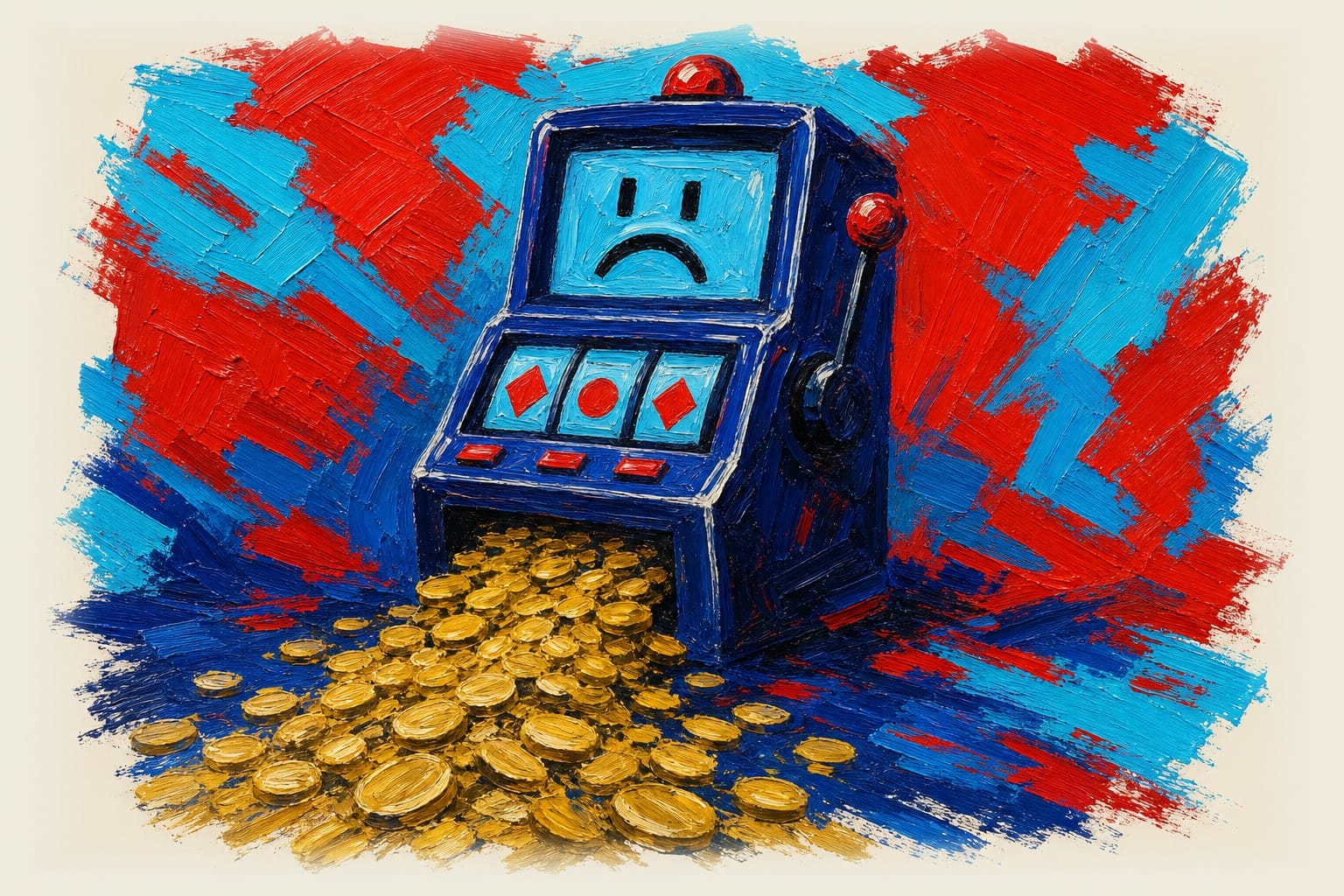
Pokies money cannot buy the love it helps destroy. The grants buy equipment and facilities, useful goods that improve local amenities. They do not rebuild the quiet confidence of a community that no longer needs to fund its footpaths with other people's desperation. Until governments treat gambling revenue as a problem to be minimised rather than a resource to be maximised, the sad face on the machine will keep feeding the river of coins, and the annual announcement of another successful round will remain an exercise in selective accounting.
Sources
Queensland Government — New Gambling Community Benefit Fund round opens
Productivity Commission — Inquiry Report: Gambling (2010)
The Bearing — Government's punt on punting is a winning bet. But if gambling is a problem please call...
The Bearing — The real winner from gambling reform
Frequently Asked Questions
Where does the Queensland Gambling Community Benefit Fund money come from?
The fund is financed by levies on poker machines operating in Queensland venues. It distributes more than $60 million each year, making it Queensland's largest one-off community grants program. The levy represents only a fraction of the total gambling tax revenue the state collects.
What share of pokies revenue comes from problem gamblers?
The Productivity Commission's 2010 inquiry estimated that problem gamblers — roughly 15 per cent of regular players — account for approximately 40 per cent of total spending on gaming machines. This means the industry's financial model depends heavily on addicted or at-risk players, not casual entertainment spending.
Why don't Australian governments just reduce the number of poker machines?
Gambling taxes exceed $10 billion nationally each year, and state governments have built budgets around that revenue. Reducing machine numbers or tightening settings would directly shrink government income, creating a structural incentive to maintain rather than restrict the industry. Clubs and hotels that depend on gambling revenue also form a powerful political constituency against reform.
Does the community benefit fund offset the harm caused by pokies?
At best the fund mitigates visible symptoms — funding sporting clubs, halls and community facilities — while the underlying harms of problem gambling, including family breakdown, bankruptcy and welfare dependency, continue to accumulate. The grants are visible and politically useful; the social costs are diffuse and rarely appear in the same budget paper.
How is pokies regulation different from how Australia handles tobacco or alcohol?
Tobacco and alcohol both face density restrictions, plain packaging, advertising limits and outlet licensing designed to reduce consumption — even though they also generate tax revenue. Poker machine regulation has produced a patchwork of harm-minimisation measures, such as self-exclusion lists and pre-commitment trials, that rarely reduce the overall volume of losses.