Queensland bets $750k on AI to fix manufacturing for those already using AI
Queensland's new AI grant for manufacturers sounds reasonable — until you ask which businesses can actually win it.

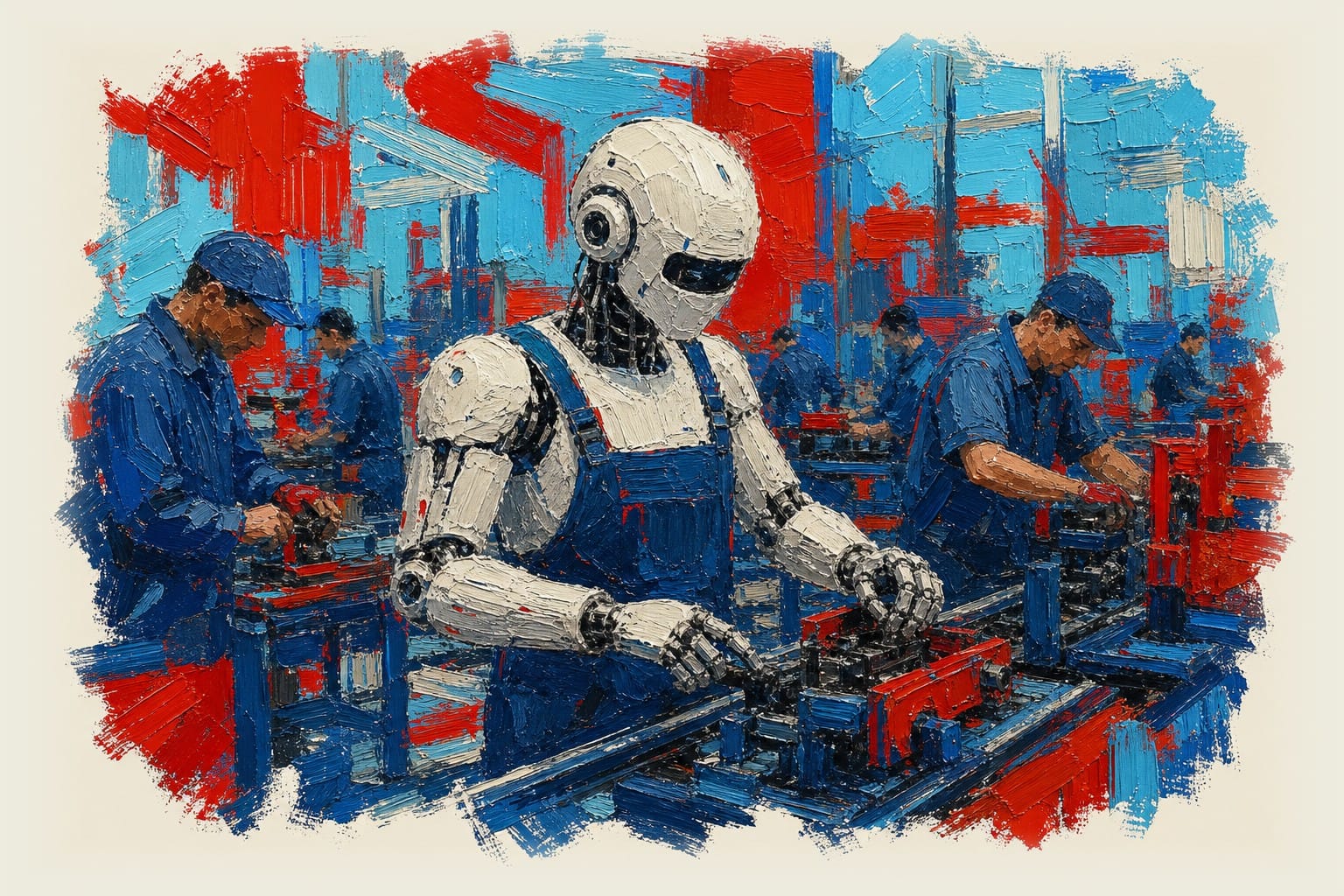
Queensland has committed $750,000 to a new "AI Uplift" trial program, delivered through the ARM Hub, that will help manufacturers identify and implement artificial intelligence solutions. The pitch is familiar: productivity, competitiveness, workforce capability. The mechanism is an expression of interest process open to manufacturers across the state, including regional operators. On the surface it reads as modest, targeted, and reasonable. Below the surface, it has a problem that no amount of program design can fully solve.
Competitive grants select for the already-capable
The problem is not unique to this program. It is baked into the logic of competitive grant funding for technology adoption. To successfully complete an expression of interest, a business needs to clearly articulate what AI opportunity it is pursuing, why it is viable, what the expected outcomes are, and how it will implement the project. That requires analytical capability, time, and some existing familiarity with the technology. In other words, the businesses most likely to win the funding are the businesses least likely to need it.
This is not hypothetical. The ARM Hub CEO's own framing makes the point: "For many manufacturers, the challenge isn't understanding that AI presents an opportunity — it's knowing where to start." If that is the real barrier, an expression of interest process is a peculiar remedy. Businesses that don't know where to start are not well positioned to write a competitive application explaining exactly where they plan to start and how.
A factory that cannot write a grant application about AI is not going to be transformed by winning one.
There is a deeper selection effect operating here too. AI adoption in Australian businesses is already skewed toward larger, better-resourced firms. Recent ABS data, covered here at The Bearing, shows that around 12 per cent of firms were using AI in 2024-25, but adoption rates among small businesses lagged significantly behind larger operators. The manufacturers most likely to have the internal capacity to write a compelling AI Uplift application are the ones already experimenting with the technology. The ones genuinely stuck are, by definition, the ones least able to demonstrate their readiness to a grant panel.
$750,000 across Queensland is a press release, not an industrial policy
None of this means AI cannot transform manufacturing. It almost certainly can, and is doing so in economies that have invested heavily in industrial automation and advanced production processes. The question is whether a $750,000 competitive grant program is a meaningful mechanism for driving that transformation, or whether it is primarily a way of funding projects that would have happened anyway, while generating a ministerial announcement.
The $750,000 figure itself deserves scrutiny. Spread across a state the size of Queensland, funding what will presumably be a handful of trial projects, this is not an industrial policy. It is closer to a pilot with a press release attached. There is nothing wrong with pilots as such — they can generate useful evidence about what works. But the program would need rigorous evaluation built into its design from the outset, and nothing in the announcement suggests that is the intention. "Expressions of interest are now open" is not an evaluation framework.
The ARM Hub has the expertise — the question is whether this program uses it
There is a version of this kind of intervention that makes more sense: direct, hands-on technical assistance delivered to businesses before they reach the point of a formal application, the kind of diagnostic support that helps a manufacturer understand what AI could actually do in their specific production context. The ARM Hub has the expertise to do that work. Whether this program is structured to deliver it, or structured to process applications from businesses that have already figured it out, is the question the announcement does not answer.
Government has a legitimate role in reducing information asymmetries and lowering the cost of technology adoption for businesses that lack scale. But that role is better served by building capability than by running funding competitions. A factory that cannot write a grant application about AI is not going to be transformed by winning one.
The Uplift program may produce some genuine outcomes. The businesses that do receive support may use it well. But the structural incentives of competitive grant funding push the money toward the already-capable, and $750,000 is not large enough to overcome that with sheer volume. Queensland's manufacturers deserve industrial policy that is designed around the actual barrier, not the one that fits neatly into an expression of interest form.
Frequently Asked Questions
What is Queensland's Manufacturing AI Uplift program?
It is a $750,000 state government initiative delivered through the ARM Hub that funds manufacturers to identify and implement AI solutions. Businesses apply through a competitive expression of interest process open to operators across Queensland, including regional manufacturers.
Why might competitive grants fail to help the manufacturers who need AI assistance most?
Writing a competitive grant application requires analytical capability, time, and existing familiarity with the technology being proposed. Manufacturers that genuinely lack AI capability are least equipped to produce a compelling application — meaning the funding tends to flow toward businesses that were already on track to adopt AI without it.
How does Australia's small business AI adoption rate compare to larger firms?
Around 12 per cent of Australian businesses were using AI in 2024-25, but small businesses adopted at significantly lower rates than larger operators. This gap means programs designed around competitive applications are likely to replicate existing adoption patterns rather than close them.
What would a more effective government program for manufacturing AI adoption look like?
Direct, hands-on technical assistance delivered before a formal application stage — diagnostic support that helps a manufacturer understand what AI could do in their specific production context — would reach businesses earlier and at lower capability thresholds. Funding competitions reward businesses that have already answered the questions the program is supposed to help them ask.
Is $750,000 enough to make a difference to Queensland's manufacturing sector?
Spread across a state the size of Queensland and funding a handful of trial projects, $750,000 is better understood as a pilot than as industrial policy. Pilots can generate useful evidence, but only if rigorous evaluation is built into the program design from the outset — and the program announcement gives no indication that it is.